Native Plants

Plant Database
Search for native plants by scientific name, common name or family. If you are not sure what you are looking for, try the Combination Search or our Recommended Species lists.
Flaigg, Norman G.
Juglans microcarpa
Juglans microcarpa Berl.
Little Walnut, Texas Walnut, Texas Black Walnut, River Walnut, Nogalito, Nogalillo, Namboca
Juglandaceae (Walnut Family)
Synonym(s):
USDA Symbol: JUMI
USDA Native Status: L48 (N)
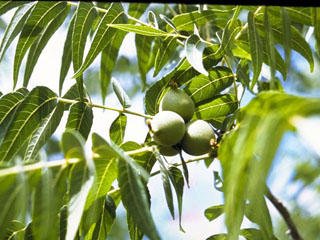
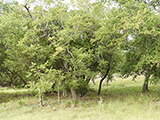
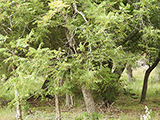
Little Walnut or Texas Walnut is a small, deciduous tree or shrub, usually only 20 ft. in height. Its smooth or lightly furrowed branches form a broad, rounded crown. Pinnate foliage is long, narrow and yellow-green. The nuts of this species are the smallest of genus.
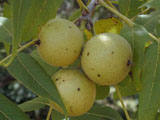
Squirrels and other rodents consume these nuts, which are mostly shell. The specific epithet describes the tiny marblelike fruit.


Plant Characteristics
Duration: PerennialHabit: Tree
Leaf Retention: Deciduous
Leaf Complexity: Pinnate
Breeding System: Flowers Unisexual , Monoecious
Fruit Type: Nut
Size Notes: Up to about 30 feet tall, usually shorter.
Leaf: Green
Bloom Information
Bloom Color: White , GreenBloom Time: Mar , Apr , May , Jun
Distribution
USA: KS , NM , OK , TXNative Distribution: W. OK, KS & TX to s.e. NM and Coahuila and Nuevo Leon in northern Mexico
Native Habitat: Dry, rocky ravines, hillsides & stream banks
Growing Conditions
Water Use: MediumLight Requirement: Part Shade
Soil Moisture: Dry
CaCO3 Tolerance: Low
Cold Tolerant: yes
Heat Tolerant: yes
Soil Description: Rocky soils. Limestone-based, Sandy Loam, Medium Loam, Clay Loam, Clay, Rocky
Conditions Comments: Little walnut or Texas walnut is a small, deciduous tree or shrub. Its smooth or lightly furrowed branches form a broad, rounded crown. Pinnate foliage is long, narrow and yellow-green. It's walnuts are the smallest of the Juglans species.
Benefit
Use Ornamental: Shade treeUse Wildlife: The nuts provide food for wildlife. Fruit-birds, Fruit-mammals, Nesting site, Cover.
Interesting Foliage: yes
Attracts: Birds , Butterflies
Larval Host: Banded hairstreak butterfly
Butterflies and Moths of North America (BAMONA)
|
Banded Hairstreak (Satyrium calanus) 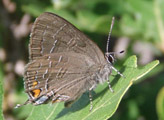 Larval Host |
Propagation
Propagation Material: SeedsDescription: Plant nuts in fall or spring. If nuts are sown in spring, they must be stratified.
Seed Collection: Collect nuts in fall or winter when husks begin to turn black and split open. Remove husks. It is not necessary to remove shell. Sow immediately or keep in moist sand over winter. Nuts lose viability if allowed to dry out.
Seed Treatment: Stratify for 60-120 days at 34-41 degrees.
National Wetland Indicator Status
| Region: | AGCP | AK | AW | CB | EMP | GP | HI | MW | NCNE | WMVE |
| Status: | FAC | FAC | FAC | FAC | FAC |
From the National Organizations Directory
According to the species list provided by Affiliate Organizations, this plant is on display at the following locations:Lady Bird Johnson Wildflower Center - Austin, TX
Texas Discovery Gardens - Dallas, TX
Sibley Nature Center - Midland, TX
Nueces River Authority - Uvalde, TX
Texas Parks and Wildlife Department - Austin, TX
NPSOT - Austin Chapter - Austin, TX
Jacob's Well Natural Area - Wimberley, TX
NPSOT - Williamson County Chapter - Georgetown, TX
Bibliography
Bibref 1186 - Field Guide to Moths of Eastern North America (2005) Covell, C.V., Jr.Bibref 298 - Field Guide to Texas Trees (1999) Simpson, B.J.
Bibref 1185 - Field Guide to Western Butterflies (Peterson Field Guides) (1999) Opler, P.A. and A.B. Wright
Bibref 355 - Landscaping with Native Plants of Texas and the Southwest (1991) Miller, G. O.
Bibref 354 - Native & Naturalized Woody Plants of Austin & the Hill Country (1981) Lynch, D.
Bibref 318 - Native Texas Plants: Landscaping Region by Region (2002) Wasowski, S. & A. Wasowski
Bibref 291 - Texas Wildscapes: Gardening for Wildlife (1999) Damude, N. & K.C. Bender
Bibref 297 - Trees of Central Texas (1984) Vines, Robert A.
Search More Titles in Bibliography
Web Reference
Webref 3 - Flora of North America (2014) Missouri Botanical Garden, St. Louis, MO & Harvard University Herbaria, Cambridge, MA.From the Archive
Wildflower Newsletter 1988 VOL. 5, NO.5 - Penny Campaign Grows Oklahoma Wildflowers, Wildflower Center Collects Honors, Di...Additional resources
USDA: Find Juglans microcarpa in USDA PlantsFNA: Find Juglans microcarpa in the Flora of North America (if available)
Google: Search Google for Juglans microcarpa
Metadata
Record Modified: 2022-10-06Research By: TWC Staff