Native Plants

Plant Database
Search for native plants by scientific name, common name or family. If you are not sure what you are looking for, try the Combination Search or our Recommended Species lists.
Loughmiller, Campbell and Lynn
Amblyolepis setigera
Amblyolepis setigera DC.
Huisache Daisy, Butterfly Daisy, Honey Daisy
Asteraceae (Aster Family)
Synonym(s): Helenium setigerum
USDA Symbol: AMSE
USDA Native Status: L48 (N)
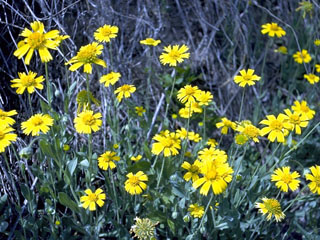
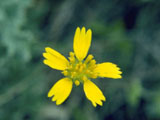
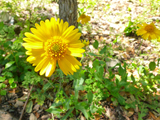
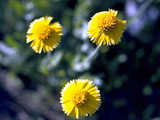
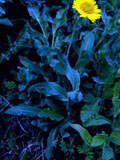
Huisache daisy is so called because it often grows in thick stands under the huisache (Vachellia farnesiana) and other chaparral bushes, forming an almost solid blanket of gold. It grows 6-15 inches tall, with several rough, hairy branches in the upper part. Leaves are without petioles, the upper ones having lobes at the base that extend almost around the stem. The large, yellow flower heads, 1 1/4-2 inches across, are on long stems that are bare on the upper portion. The yellow to orange-yellow center is dome-shaped, and the disc flowers are velvety. The 8-12 ray flowers are up to 1 inch long with 3 or 4 teeth on the rim. Often the toothed portion is noticeably lighter than the rest.
Huisache-daisy often forms thick stands along roads and on hillsides where it provides lavish color when in bloom. The plant has a strong scent.
Plant Characteristics
Duration: AnnualHabit: Herb
Size Notes: Up to about 15 inches tall.
Flower: Flowers 1 to 2 inches
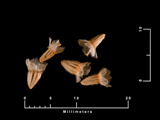
Fruit: Fruit is a cypsela (pl. cypselae). Though technically incorrect, the fruit is often referred to as an achene.
Bloom Information
Bloom Color: YellowBloom Time: Mar , Apr , May , Jun
Distribution
USA: TXNative Distribution: The Panhandle of Texas south through central and west Texas to Tamaulipas, Nuevo Leon, and Coahuila in northeastern Mexico
Native Habitat: Dry, open hillsides & slopes
Growing Conditions
Water Use: LowLight Requirement: Part Shade
Soil Moisture: Dry
Soil Description: Well-drained sand, loam & caliche. Caliche type, Sandy, Sandy Loam, Medium Loam
Conditions Comments: Huisache daisy often grows in thick stands long roads and on hillsides, forming an almost solid blanket of gold. The large, yellow flower head are on long stems that are bare on the upper portion. The yellow to orange-yellow center is dome-shaped, and the disk flowers are velvety. Often the toothed portion is noticeably lighter than the rest. The plant has a strong scent.
Benefit
Use Ornamental: Wildflower meadow, Blooms ornamental, Long-bloomingUse Wildlife: Nectar-Butterflies, Nectar-Bees, Nectar-insects
Conspicuous Flowers: yes
Fragrant Flowers: yes
Attracts: Butterflies
Propagation
Propagation Material: SeedsSeed Collection: Collect seed late spring.
Find Seed or Plants
Order seed of this species from Native American Seed and help support the Wildflower Center.
From the National Organizations Directory
According to the species list provided by Affiliate Organizations, this plant is on display at the following locations:Fredericksburg Nature Center - Fredericksburg, TX
Lady Bird Johnson Wildflower Center - Austin, TX
Texas Parks and Wildlife Department - Austin, TX
NPSOT - Williamson County Chapter - Georgetown, TX
Bibliography
Bibref 318 - Native Texas Plants: Landscaping Region by Region (2002) Wasowski, S. & A. WasowskiBibref 248 - Texas Wildflowers: A Field Guide (1984) Loughmiller, C. & L. Loughmiller
Bibref 291 - Texas Wildscapes: Gardening for Wildlife (1999) Damude, N. & K.C. Bender
Bibref 328 - Wildflowers of Texas (2003) Ajilvsgi, Geyata.
Bibref 286 - Wildflowers of the Texas Hill Country (1989) Enquist, M.
Search More Titles in Bibliography
Additional resources
USDA: Find Amblyolepis setigera in USDA PlantsFNA: Find Amblyolepis setigera in the Flora of North America (if available)
Google: Search Google for Amblyolepis setigera
Metadata
Record Modified: 2016-09-30Research By: MWJ