Native Plants

Q. Who is Mr. Smarty Plants?
A: There are those who suspect Wildflower Center volunteers are the culpable and capable culprits. Yet, others think staff members play some, albeit small, role. You can torture us with your plant questions, but we will never reveal the Green Guru's secret identity.

Did you know you can access the Native Plant Information Network with your web-enabled smartphone?

Ask Mr. Smarty Plants
Ask Mr. Smarty Plants is a free service provided by the staff and volunteers at the Lady Bird Johnson Wildflower Center.

rate this answer

Wednesday - October 24, 2012
From: Bulverde, TX
Region: Southwest
Topic: Compost and Mulch, Poisonous Plants, Shrubs
Title: Suitability of Carolina Cherry Laurel for Bulverde TX
Answered by: Barbara Medford
QUESTION:
The local Home Depot is selling Carolina Cherry Laurel Trees. They look beautiful. Is this a good tree for Bulverde TX..20 miles north of San Antonio? Can it survive? Will it be a high maintenance tree?ANSWER:
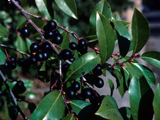
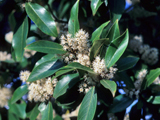
According to this USDA Plant Profile Map, Cherry Laurel grows natively in Travis County, just one county north of Comal County. We believe that is close enough that soils, rainfall and climate should certainly be favorable to this plant. If you will follow this plant link, Prunus caroliniana (Cherry laurel), to our webpage on that plant, you will get a good summary of information about this plant.
For planning its use in a landscape, you might want to particularly take note of this:
"Warning: The seeds, twigs, and leaves of all Prunus species contain hydrocyanic acid and should never be eaten. Leaves of Prunus caroliniana are particularly high in this toxin."
If you have small children playing near this plant, or pets that like to chew things, this is something to consider, but at one time we had volunteer cherry laurels coming up in a landscape which we cultivated and pruned and never had a problem with toxicity.
From that same page, here are the Growing Conditions for that plant:
"Growing Conditions
Water Use: Medium
Light Requirement: Sun , Part Shade
Soil Moisture: Moist
Cold Tolerant: yes
Soil Description: Moist, deep, loamy, well-drained soils. Clay Loam, Medium Loam, Sandy Loam, Sandy
Conditions Comments: Likes the moist, well-drained soils of its natural range. Prolonged saturation can cause root rot, particularly in clay soils. Shallow, nutrient-poor, rocky soils can cause chlorosis and heat stress."
In Central Texas soils the requirement of "well-drained" soils is nearly universal. Adding some compost to the soil when you return it to the hole dug for the plant can certainly help with that. We usually recommend waiting until cooler weather, like November to January, to transplant woody shrubs and trees, to help prevent transplant shock. Just one more thing to think about is that you should check to make sure the plant you purchase is not rootbound, from being too long in that pot. You can deal with it by root pruning; otherwise, the roots will just continue to circle around and around in the ground until they strangle the tree.
From the Image Gallery
More Shrubs Questions
East Texas Natives and Botanical History
May 05, 2011 - I am looking for flowers &/or flowering shrubs that are native to east Texas, especially that would have been in this area over 100 or more years ago.
view the full question and answer
Non-native Lorapetalum chinense from Driftwood TX
March 16, 2012 - In a previous response you said that it would not be wise to plant any trees with the word Chinese in it. Does this apply to Lorapetalum (Chinese Fringe Flower)? I would like to use this plant as a ...
view the full question and answer
Hearty, bushy native plants for windowboxes in Abilene, TX
October 08, 2005 - I live in Abilene, Tx and am a horrible gardener. I would love to have window boxes with some sort of hearty bushy plant. Any suggestions, I'm at a total loss...? Thanks!
view the full question and answer
Living fence of native plants for Ojai, CA
September 20, 2008 - I would like to build a "green fence" about 10-15 feet tall. I live in Ojai, CA where we have VERY hot summers and it goes below freezing every winter. The soil does not seem to drain well..it is e...
view the full question and answer
Replacement for boxwoods in Ohio
February 26, 2014 - I want to replace my boxwood plants but I don't know what would be a good replacement. I have a hydrangea plant that is in the middle and I would like something to go on each side of the hydrangea. I...
view the full question and answer
| Support the Wildflower Center by Donating Online or Becoming a Member today. |