Native Plants

Q. Who is Mr. Smarty Plants?
A: There are those who suspect Wildflower Center volunteers are the culpable and capable culprits. Yet, others think staff members play some, albeit small, role. You can torture us with your plant questions, but we will never reveal the Green Guru's secret identity.

Did you know you can access the Native Plant Information Network with your web-enabled smartphone?

Ask Mr. Smarty Plants
Ask Mr. Smarty Plants is a free service provided by the staff and volunteers at the Lady Bird Johnson Wildflower Center.

rate this answer

Sunday - November 04, 2012
From: Tallahassee, FL
Region: Southeast
Topic: Erosion Control, Groundcovers, Shade Tolerant
Title: Groundcover to prevent erosion in Florida
Answered by: Nan Hampton
QUESTION:
I live on a hill and put in a new side driveway and now I am seeing erosion along the driveway and can see the bottom of my concrete. Grass won't grow because its all shaded. What would be the best groundcover or grass to put down to prevent erosion and tolerate shade. I want to plant now for October and know it may go dormant. I researched and some sites mentioned Liriope muscaria?ANSWER:
First of all, our mission here at the Lady Bird Johnson Wildflower Center is "to increase the sustainable use and conservation of native wildflowers, plants and landscapes." Since Liriope muscari is a native of China and Japan, it would not be a plant that we would recommend. We do have some native plant recommendations, however.
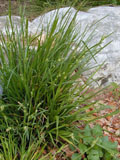
Carex blanda (Eastern woodland sedge) makes a very good evergreen groundcover. Like grasses, it has a fibrous root system that helps fight erosion.
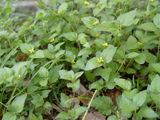
Calyptocarpus vialis (Straggler daisy) does well in sun, part shade or shade. In Tallahassee it would probably remain evergreen.
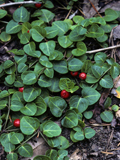
Mitchella repens (Partridgeberry) will grow in part shade or shade.
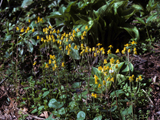
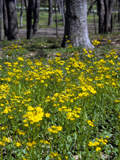
Packera aurea (Golden ragwort) and Packera obovata (Golden groundsel) both make evergreen groundcovers with yellow flowers early in the spring.
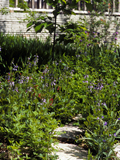
Salvia lyrata (Lyreleaf sage) is evergreen.
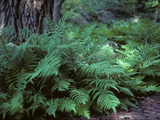
There are several ferns that would make good ground covers in Leon County:
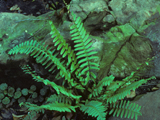
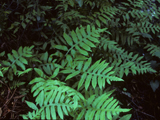
Polystichum acrostichoides (Christmas fern) is evergreen.
Thelypteris kunthii (Wood fern) is semi-evergreen and makes a low maintenance groundcover.
Woodwardia areolata (Netted chainfern) is a deciduous fern that makes a good groundcover.
You might consider using a combination of some of the plants above rather than making a mono-culture of a single type of plant.
From the Image Gallery
More Erosion Control Questions
Low growing erosion control plants for lakeside in Washington Township NJ
May 12, 2013 - I live on a small lake in Northern NJ and have installed beautiful Boulders along the water to help stop erosion. Now I want to add plants along the property but would like low growing, soil retentio...
view the full question and answer
Groundcover for erosion control in Missouri
July 23, 2008 - Can you suggest a ground cover to stop erosion on a slight slope in my backyard? I live in Missouri - the soil is very poor in this area and has lots of rock underneath the soil. The yard drains int...
view the full question and answer
Grasses for a pasture in Hays County, Texas with horses
March 20, 2015 - I intend to sow grass seed over a few acres of pasture on which I'll have a couple of horses in Driftwood, TX. I'd like to know what variety of seed(s) would be most beneficial to the land - and th...
view the full question and answer
Groundcover plants for slope to prevent erosion
June 05, 2008 - Hi,
I have just made a 3/4 acre pond and the south facing slope is too steep to mow.Can you suggest any ground cover plants I could use to look nice and prevent erosion.
view the full question and answer
Groundcover for Maryland Slope in Deer Country
July 03, 2016 - I have a 20-30% grade hill in Maryland. I am looking for a groundcover plant (for example ivy) that I can plant on the hill. I have the following issues: clay soil, deer, full sun, limited water sourc...
view the full question and answer
| Support the Wildflower Center by Donating Online or Becoming a Member today. |