Native Plants

Q. Who is Mr. Smarty Plants?
A: There are those who suspect Wildflower Center volunteers are the culpable and capable culprits. Yet, others think staff members play some, albeit small, role. You can torture us with your plant questions, but we will never reveal the Green Guru's secret identity.

Did you know you can access the Native Plant Information Network with your web-enabled smartphone?

Ask Mr. Smarty Plants
Ask Mr. Smarty Plants is a free service provided by the staff and volunteers at the Lady Bird Johnson Wildflower Center.

rate this answer

Sunday - May 13, 2012
From: Dallas, GA
Region: Southeast
Topic: Grasses or Grass-like
Title: Speed of bluestem grass spreading in Georgia red clay from Dallas GA
Answered by: Barbara Medford
QUESTION:
How fast does bluestem spread in Georgia red clay?ANSWER:
We are assuming you are referring to bluestem grass. There are two grasses native to Georgia with "bluestem" as part of their common name.
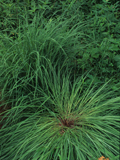
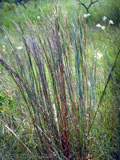
The first, Andropogon gerardii (Big bluestem) is shown on this USDA Plant Profile map as not being native to Paulding County, but is shown as native to Barton County to the north and Dougas County to the south. If you follow the plant link to our webpage on this plant, you will learn that it is a warm season, perennial grass with blue-green stems that grows 4 to 8 ft. tall. Soil Description: Acid or calcareous sands, loams, and clays, so we know it will grow in clay, but no idea how fast.
From our webpage on this grass:
"Big Bluestem needs more moisture to look its best than does Little Bluestem (Schizachyrium scoparium), but it is quite drought-tolerant when in deep prairie soils because of its deep roots. If used in a garden, too much water, shade, or fertilizer can cause it to get top-heavy and fall over. It is moderately tolerant of acidity and salinity and can withstand periodic flooding and high water tables."
For more information see this USDA Natural Resources Conservation website on Big Bluestem.
"Schizachyrium scoparium (Little bluestem) is shown on this USDA Plant Profile map as not growing natively in Paulding County, but does in counties around it. Again from our website on this grass:
"Soil Description: Well-drained soil. Sandy, Sandy Loam, Medium Loam, Clay Loam, Clay, Limestone-based. It readily reseeds so little bluestem is not recommended for small gardens. Little bluestem is tolerant of a wide range of soils but will not tolerate wetlands or sub-irrigated sites."
About the best we could find on speed of growing in this plant is that it is a perennial and will get to about 2 ft. by the first Fall. For more information on this grass, see this Floridata article on Little Bluestem.
Both plants can apparently grow in clay, but there is seldom information on the growing speed of grasses, under any conditions or in any soils.
From the Image Gallery
More Grasses or Grass-like Questions
Seep Muhly in limited sunlight.
July 01, 2015 - Can Seep Muhly withstand just 3 or 4 hours of direct sunlight in an urban setting?
view the full question and answer
Replacement for non-native maiden grasses from Fredericksburg TX
May 25, 2013 - I am trying to replace some maiden grasses that died during the drought. I want an evergreen grass or something soft looking to replace them. I want something that is native and 5 to 6 feet tall to ...
view the full question and answer
Post freeze care for Texas native grasses
January 05, 2008 - Can you tell me the best post-freeze care for Tx native grasses in my garden: lindheimer muhly, gulf muhly, inland sea oats. Mexican feather grass. Do I cut them back? Burn them? Leave them alone?
T...
view the full question and answer
Plants for oak shade from Whitney TX
December 24, 2012 - I live in Whitney, Texas and have a number of beautiful Live Oak trees in a portion of my yard providing deep shade. Asian Jasmine grows in about 5 ft circle around them and then nothing! I have walk ...
view the full question and answer
Groundcover for Shade in Spicewood
September 16, 2015 - We live in Spicewood area in Austin, TX. Our front yard is yellow almost all summer, I was thinking of replacing lawn with a ground cover which can live on once a week sprinkler and no mowing. Also th...
view the full question and answer
| Support the Wildflower Center by Donating Online or Becoming a Member today. |