Native Plants

Q. Who is Mr. Smarty Plants?
A: There are those who suspect Wildflower Center volunteers are the culpable and capable culprits. Yet, others think staff members play some, albeit small, role. You can torture us with your plant questions, but we will never reveal the Green Guru's secret identity.

Did you know you can access the Native Plant Information Network with your web-enabled smartphone?

Ask Mr. Smarty Plants
Ask Mr. Smarty Plants is a free service provided by the staff and volunteers at the Lady Bird Johnson Wildflower Center.

rate this answer

Sunday - August 23, 2009
From: Tippecanoe, OH
Region: Mid-Atlantic
Topic: Invasive Plants
Title: Invasive native mint in Tippecanoe OH
Answered by: Barbara Medford
QUESTION:
I have a problem with Mentha Arvensis, I raise sheep and goats and they will not eat this. The mint is starting to take over my 65 acre farm,Q.What is best way to rid this plant so I do not lose my grazing fields?ANSWER:
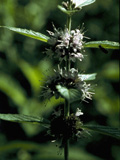
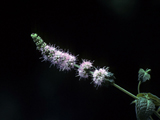
Mentha arvensis (wild mint) is one of the very few mints native to North America and the mints, can, indeed be invasive. Your sheep and goats are smart not to eat it. From the Conditions Comments on our Native Plant Database page on this plant:
"Warning: The fruit of this plant is toxic and may be fatal if ingested in large quantities. It is especially dangerous to children, who may mistake the fruit for grapes. Sensitivity to a toxin varies with a person’s age, weight, physical condition, and individual"
The plant is native not only to Ohio but to the area in and around Harrison County, so you are kind of stuck with it. It likes moist conditions and part shade. The Lady Bird Johnson Wildflower Center recommends neither for nor against herbicides, and in this case, that would be difficult. You would have to spray the whole field with a broad-leaf plant, or dicot, herbicide, hoping to preserve the grasses, or monocots, that the livestock could actually graze on. To do that, you would probably have to remove your stock to some other location, and you could never be absolutely sure you had eradicated the wild mint. This problem is the kind of thing that state agricultural universities are trained to handle, and you can contact some experts through the Ohio State University Extension Office-Harrison County. Since this plant is both native to your area and invasive, as well as having poisonous parts, this is surely not the first time the Extension Office has dealt with the problem. Hopefully, they will be prepared to offer you a solution you can work with.
From our Native Plant Image Gallery

More Invasive Plants Questions
Mowing wildflower concerns from Lockhart TX
March 30, 2012 - I went to the Texas Highway Department (Texas Department of Transportation) web site and sent them a concern or complaint about them or independent contractors shredding the roadsides before the blueb...
view the full question and answer
Invasive iceplant in Hawaii
October 29, 2008 - Last time I checked Hawaii was in North America. Invasive or not, iceplant continues to be a much used ground cover etc for golf courses, sides of the freeway and many many City and County projects pr...
view the full question and answer
Conversion of patch of bermuda grass to native perennial garden in Texas
March 20, 2006 - My wife and I want to take a section of our front lawn that is currently in Bermuda grass and plant some native perennials with lots of flowers. The area will be a quarter-circle in a corner of the la...
view the full question and answer
Ants and garden plants for Austin
November 03, 2012 - I am needy of companion plants that compliment and work well with the Lantana, Mexican Heather , and in the new beds that I am preparing where I was thinking in part to have passion flower (though is ...
view the full question and answer
Controlling Passionflora Incarnata propagation
March 20, 2012 - Would a cinderblock raised bed, 8 inches in height, be sufficient to contain the roots of passiflora incarnata and keep them from traveling to places where I don't want the vine? Are the roots deepe...
view the full question and answer
| Support the Wildflower Center by Donating Online or Becoming a Member today. |