Native Plants

Q. Who is Mr. Smarty Plants?
A: There are those who suspect Wildflower Center volunteers are the culpable and capable culprits. Yet, others think staff members play some, albeit small, role. You can torture us with your plant questions, but we will never reveal the Green Guru's secret identity.

Did you know you can access the Native Plant Information Network with your web-enabled smartphone?

Ask Mr. Smarty Plants
Ask Mr. Smarty Plants is a free service provided by the staff and volunteers at the Lady Bird Johnson Wildflower Center.

rate this answer

Sunday - October 05, 2008
From: Monroe, NY
Region: Northeast
Topic: Pruning, Shrubs
Title: Preservation of a Lantana Tree in New York
Answered by: Barbara Medford
QUESTION:
I have a Lantana Tree that grew beautiful over the summer, now Winter is coming and I don't know what to do with this tree, I live in Monroe, New York. Could you please help me out. Thank you.ANSWER:
Before we get into the discussion of an actual Lantana Tree, we want you to know that there is a shrub, Viburnum lantanoides (hobblebush), that is sometimes referred to in retail trade as a Viburnum Lantana. We don't think this is what you have, but take a look at the picture when you follow the plant link above, and see. If that is what you have, it is native to New York, and will survive just fine outside this winter. It may die back a little, but can be pruned and refreshed in the Spring.
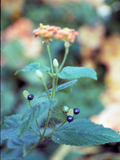
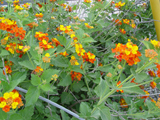
However, we're thinking you actually purchased something called a Lantana Tree. Here is a picture we found when we Googled "Lantana Tree". This is probably a cultivar or selection of the native Lantana urticoides (West Indian shrubverbena) which has been pruned and trained, in greenhouses, up into a tree form. There are many hybridized types of lantana and some non-native, although this one is native to North America. All of them, however, are tropical to sub-tropical in nature. In Texas, in all but the southern part of the state, its branches will die back in the winter and emerge again in the spring. You could, of course, try to get your lantana into a pot, and move it into the house, or the greenhouse, if you have one. We would warn you that it attracts whiteflies, which you really don't want indoors or in a greenhouse. We also want to mention that the berries of the lantana are extremely poisonous, and should not be where a child or pet might graze on them. If you don't want to go the moving indoors route, you could let it sit out there for the winter, trim it back in the spring, and see if it re-emerges. We would be surprised if it did, but it's a tough, native plant and maybe it can take the cold in New York.


More Pruning Questions
Fragrant foundation plants for sunny, dry area in Illinois
August 26, 2009 - We need suggestions of what to plant on the south side of our house heave sun and rather dry soil. We just took out old dead bushes. Would prefer something that flowers and smells nice that would gr...
view the full question and answer
Leaf loss on Cenizo in Bertram TX
November 17, 2009 - I need help with a purple sage (Leucophyllum frutescens) problem. Most of one of my plants started having paler, more greyish leaves, then the leaves began to fall off. It seemed to still look healthy...
view the full question and answer
Care of poppy plants
July 10, 2013 - I bought a tiny poppy grow kit at Target for 99 cents. Amazingly, they have grown into numerous large and very healthy plants, though they don't all appear to be the same species. Some have grown to ...
view the full question and answer
Pruning of native perennial blooming plants
March 22, 2008 - Hello -
I am still a newbie at using Native Texas plants (but loving them!), and I need pruning assistance. When (and how much) do I prune: hot lips salvia, hummingbird bush (anisthcanthus wrightii...
view the full question and answer
Transplanting and Pruning Callicarpa
August 21, 2014 - I saw the previous question about Callicarpa from the guy in Texas and I have two questions based on the response. In SW Vermont, is late fall still the best time to transplant my Callicarpas? Also, i...
view the full question and answer
| Support the Wildflower Center by Donating Online or Becoming a Member today. |