Native Plants

Q. Who is Mr. Smarty Plants?
A: There are those who suspect Wildflower Center volunteers are the culpable and capable culprits. Yet, others think staff members play some, albeit small, role. You can torture us with your plant questions, but we will never reveal the Green Guru's secret identity.

Did you know you can access the Native Plant Information Network with your web-enabled smartphone?

Ask Mr. Smarty Plants
Ask Mr. Smarty Plants is a free service provided by the staff and volunteers at the Lady Bird Johnson Wildflower Center.

rate this answer

Tuesday - April 29, 2008
From: Pflugerville, TX
Region: Southwest
Topic: Trees
Title: Information about FanTex ash.
Answered by: Nan Hampton
QUESTION:
I live in central Texas and recenty planted Fan-tex ash trees thinking that they were similar to the native Texas ash. I am beginning to beleive that this tree has more in common with the Arizona ash than the Texas Ash. Can you give me some information on this?ANSWER:
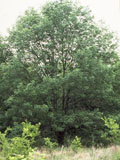
Fantex is a cultivar of Fraxinus velutina (Arizona ash). Rather, Fantex is a "sport", or mutant form, of ash that was selected and developed by Fanick's Nursery in San Antonio for its different leaf type—its leaves are smooth; whereas the regular F. velutina leaves are somewhat fuzzy on the underside. There is, however, great variety in the texture of the leaves of this species. Additionally, Fantex apparently has a thicker leaf and is sterile (producing no seeds). It is always grafted onto Fraxinus velutina root stock according to the Pima Arizona Cooperative Extension. There are those who sing its praises and those who don't. The Modesto ash, another popular cultivar of F. velutina, is a male clone and thus produces no seed litter. It has come under attack, at least in California, by fungus.
Fraxinus albicans (Texas ash) is a different species altogether. You can read descriptions of F. velutina and F. texensis from Florida Cooperative Extension Service and compare them.

More Trees Questions
What about planting a Colorado Blue Spruce in Rapid City, SD?
May 13, 2009 - What would be the best tree to plant in my small front yard that would be low maintenance? I live in Rapid City, SD, and we are landscaping our front yard. We were thinking of Colorado Blue Spruce b...
view the full question and answer
Need suggestions for plants for a privacy screen for a pecan orchard in Chappell Hill, TX.
September 21, 2011 - Mr. Smarty Plants,
My family has just begun converting our land in Chappell Hill, TX (Washington County) into a pecan orchard. We had to clear a lot of the overgrowth around the edge of the proper...
view the full question and answer
Need options for smaller trees in neighborhoods in Austin, TX.
May 25, 2012 - Please discuss smaller tree options for typical Austin neighborhood yards. These houses are built close together on the sides, and only have smallish back yards. They just don't have space for big 50...
view the full question and answer
Pin Oak Dropping Leaves Early
December 17, 2015 - I have a large pin oak that's losing it's leaves at this time. Is this too early? I have been watering the tree during the hot, dry weather and overall the tree looks healthy and has a good crop of ...
view the full question and answer
Grafting stone fruit
April 02, 2009 - Do you know of anyone grafting the new low chill stone fruit trees to the Mexican plum to minimize cotton rot? Or would it even work?
view the full question and answer
| Support the Wildflower Center by Donating Online or Becoming a Member today. |