Native Plants

Plant Database
Search for native plants by scientific name, common name or family. If you are not sure what you are looking for, try the Combination Search or our Recommended Species lists.
Weyand, Phyllis
Viburnum edule
Viburnum edule (Michx.) Raf.
Squashberry, Moosewood Viburnum, Few-flowered Cranberry Bush
Caprifoliaceae (Honeysuckle Family)
Synonym(s): Viburnum pauciflorum
USDA Symbol: vied
USDA Native Status: L48 (N), AK (N), CAN (N), SPM (N)
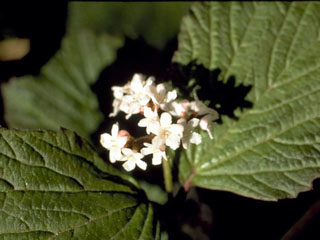
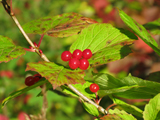
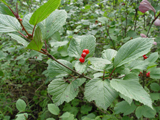
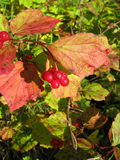
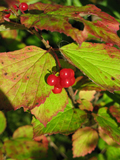
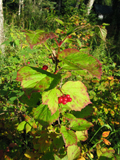
A straggling to erect shrub, 2-7 ft. tall, sometimes taller, with smooth, leafy branches. Leaves are sometimes 3-lobed and always palmately veined. White flowers occur in dense, broad, flat-topped clusters on short branches. The fruit is yellow, becoming red or orange in late fall. Straggly shrub with opposite, 3-lobed leaves and sour, edible red berries.
Except in fall, when this plant adds a vivid splash of color to northern forests, Moosewood Viburnum is often overlooked, being rather straggly in appearance. There are more than 100 species of viburnum in the world, 15 of which occur in North America, primarily in the northern latitudes.
Plant Characteristics
Duration: PerennialHabit: Shrub
Leaf Retention: Deciduous
Fruit Type: Drupe
Size Notes: Up to about 12 feet tall, often much shorter.
Autumn Foliage: yes
Fruit: Red, Orange
Bloom Information
Bloom Color: WhiteBloom Time: May , Jun , Jul , Aug
Distribution
USA: AK , CO , ID , ME , MI , MN , MT , NH , NY , OR , PA , SD , VT , WA , WI , WYCanada: AB , BC , MB , NB , NL , NS , NT , NU , ON , PE , QC , SK , YT
Native Distribution: Lab. to AK, s. on mts. or cool slopes to n. New England, n.e. MN, CO & n. OR
Native Habitat: Moist, wooded areas
Growing Conditions
Light Requirement: Sun , Part Shade , ShadeSoil Moisture: Moist
Soil Description: Cool, moist soils.
Conditions Comments: The fruit is highly valued for jam.
Benefit
Use Wildlife: Fruit attracts gamebirds, songbirds and mammals.Conspicuous Flowers: yes
Attracts: Birds
Propagation
Seed Collection: Collect the fruit as soon as it has turned a orange-red color. Store seeds with pulp on at 41 degrees.Seed Treatment: If seeds must be stored, they will need a period of stratification.
Commercially Avail: yes
Find Seed or Plants
View propagation protocol from Native Plants Network.
National Wetland Indicator Status
| Region: | AGCP | AK | AW | CB | EMP | GP | HI | MW | NCNE | WMVE |
| Status: | FACU | FACW | FACW | FACW | FACW | FACW |
Bibliography
Bibref 841 - Native Alternatives to Invasive Plants (2006) Burrell, C. C.Search More Titles in Bibliography
Web Reference
Webref 62 - Burke Herbarium Image Collection (2020) University of WashingtonWebref 23 - Southwest Environmental Information Network (2009) SEINet - Arizona Chapter
From the Archive
Wildflower Newsletter 1990 VOL. 7, NO.2 - Preservation Blooms in Recreated Prairies, New Wildflower Center Prairie Welcome...Additional resources
USDA: Find Viburnum edule in USDA PlantsFNA: Find Viburnum edule in the Flora of North America (if available)
Google: Search Google for Viburnum edule
Metadata
Record Modified: 2023-05-31Research By: TWC Staff