Native Plants

Plant Database
Search for native plants by scientific name, common name or family. If you are not sure what you are looking for, try the Combination Search or our Recommended Species lists.
Cressler, Alan
Thuja plicata
Thuja plicata Donn ex D. Don
Western Red Cedar, Western Arborvitae, Canoe Cedar
Cupressaceae (Cypress Family)
Synonym(s):
USDA Symbol: thpl
USDA Native Status: L48 (N), AK (N), CAN (N)
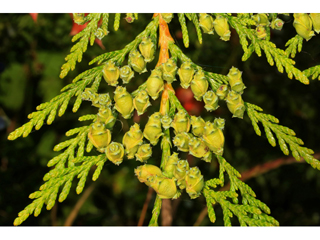
Western Arborvitae or Western Red Cedar is a narrow, pyramidal to squat-statured tree, buttressed at the base, tapering upward to a simple or divided apex. It usually maintains its lower branches. The evergreen’s typical height is 50-75 ft., but it can grow to 200 ft. The aromatic foliage is bright green and scale-like, forming horizontal sprays which bronzes to crimson-purple in winter. Large to very large tree with tapering trunk, buttressed at base, and with a narrow, conical crown of short, spreading branches drooping at ends; foliage is resinous and aromatic.
Particularly resistant to rot, Western Red Cedar is the chief wood for shingles and one of the most important for siding, utility poles, fenceposts, paneling, outdoor-patio construction, and boatbuilding. Indians of the Northwest Coast carved their famous totem poles and split lumber for their lodges from this durable softwood. The name "Canoe Cedar" refers to the special war canoes hollowed out of giant trunks. Indians also used the wood for boxes, batons, and helmets and the fibrous inner bark for rope, roof thatching, blankets, and cloaks. The largest Western Red Cedar measures 21' (6.4 m) in diameter, ranking second only to the Giant Sequoia (Sequoiadendron giganteum) among native trees; however, this species is not among the tallest.
From the Image Gallery
Plant Characteristics
Duration: PerennialHabit: Tree
Leaf Retention: Evergreen
Leaf Complexity: Simple
Fruit Type: Cone
Size Notes: Up to about 200 feet tall.
Leaf: Green
Bloom Information
Bloom Color: Red , PurpleBloom Time: Apr
Distribution
USA: AK , CA , ID , MT , OR , WACanada: AB , BC
Native Distribution: S. AK, s. to n. CA & n.w. MT
Native Habitat: Moist flats; river banks; swamps
Growing Conditions
Water Use: MediumLight Requirement: Part Shade , Shade
Soil Moisture: Moist , Wet
CaCO3 Tolerance: Medium
Soil Description: Moist, slightly acidic soils.
Conditions Comments: Western red cedar is a very useful, ornamental conifer. It responds nicely to pruning and is sometimes used as hedge material. It has a slow to medium growth rate, is susceptible to bagworm and heart rot, and is pH adaptable.
Benefit
Use Other: First Nations of the Pacific coast carved totem poles out of this tree. (Hosie)Attracts: Butterflies
Larval Host: Rosner's Hairstreak (Callophrys rosneri)
Propagation
Description: Cuttings taken in Dec. or Jan. and treated with hormone root very well. Western cedar is also easily grown from layers or seeds. Occasional dormant seeds are found which require stratification.Seed Treatment: Stratify at 34-41 degrees for 30-60 days. No treatment may give satisfactory results.
Commercially Avail: yes
Find Seed or Plants
View propagation protocol from Native Plants Network.
National Wetland Indicator Status
| Region: | AGCP | AK | AW | CB | EMP | GP | HI | MW | NCNE | WMVE |
| Status: | FAC | FAC | UPL | FAC |
From the National Organizations Directory
According to the species list provided by Affiliate Organizations, this plant is on display at the following locations:Santa Barbara Botanic Garden - Santa Barbara, CA
Bibliography
Bibref 841 - Native Alternatives to Invasive Plants (2006) Burrell, C. C.Search More Titles in Bibliography
Web Reference
Webref 38 - Flora of North America (2019) Missouri Botanical Garden, St. Louis, MO & Harvard University Herbaria, Cambridge, MA.Additional resources
USDA: Find Thuja plicata in USDA PlantsFNA: Find Thuja plicata in the Flora of North America (if available)
Google: Search Google for Thuja plicata
Metadata
Record Modified: 2023-03-23Research By: TWC Staff