Native Plants

Plant Database
Search for native plants by scientific name, common name or family. If you are not sure what you are looking for, try the Combination Search or our Recommended Species lists.
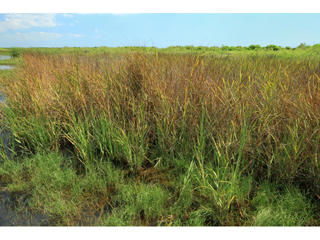
Cressler, Alan
Spartina alterniflora
Spartina alterniflora Loisel.
Saltmarsh Cordgrass, Saltwater Cordgrass, Salt Cordgrass, Smooth Cordgrass
Poaceae (Grass Family)
Synonym(s): Spartina alterniflora var. glabra, Spartina alterniflora var. pilosa
USDA Symbol: spal
USDA Native Status: L48 (N), CAN (N)
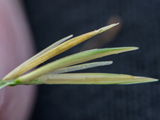
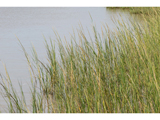
The dominant grass in coastal plains of eastern North America, Saltmarsh Cordgrass grows 3 to 8 feet tall in moist, sandy coastal regions that are brackish to very salty. Its leaves are green with silvery white undersides. Flowers are 4 to 12 inch spikes appearing late summer through fall, with seeds ripening soon after. Roots are deep and fibrous, with rhizomatous colonization.
A great plant for wildlife gardens in coastal areas of eastern North America, Saltmarsh Cordgrass requires full sun, moist to wet, preferably sandy soil, and lots of room, as it tends to form thick mats over time. The silvery undersides of its leaves are attractive in the wind and make a handsome addition to a coastal prairie garden, especially when combined with fall-blooming perennials like goldenrod and gayfeather.
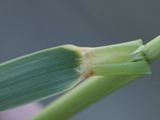
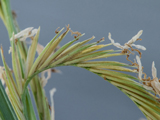
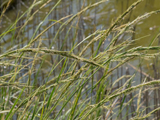
Plant Characteristics
Duration: PerennialHabit: Grass/Grass-like
Root Type: Fibrous
Leaf Arrangement: Alternate
Leaf Complexity: Simple
Leaf Venation: Parallel
Inflorescence: Spike
Fruit Type: Caryopsis
Size Notes: Normally 3 to 6 feet tall, but can grow to 8 feet, or can remain at less than 2 feet if ground is extremely salty.
Leaf: Green with silvery underside
Bloom Information
Bloom Color: YellowBloom Time: Apr , May
Distribution
USA: AL , CA , CT , DE , FL , GA , LA , MA , MD , ME , MS , NC , NH , NJ , NY , RI , SC , TX , VA , WACanada: NB , NL , NS , PE
Native Distribution: Atlantic Provinces of Canada south to coastal Texas and south to South America. Zones 5 to 9.
Native Habitat: Salt and brackish tidal marshes (mid-tide up to Mean High Tide level). Also seasonally flooding coastal savanna with scattered Coastal Live Oaks (Quercus virginiana).
Growing Conditions
Water Use: HighLight Requirement: Sun
Soil Moisture: Wet
Soil pH: Alkaline (pH>7.2) , Acidic (pH<6.8)
CaCO3 Tolerance: Low
Drought Tolerance: Low
Soil Description: Clay, Loam, Sand, Brackish to Salty
Benefit
Use Ornamental: The dominant grass in Southeastern coastal areas, this grass would do well in coastal prairie gardens. Its silvery leaves combine well with fall-blooming perennials like Liatris and Solidago.Use Wildlife: Geese feed on roots in winter. Leaves browsed by muskrats and deer. Seeds eaten by a variety of birds.
Interesting Foliage: yes
Attracts: Birds
Deer Resistant: No
Butterflies and Moths of North America (BAMONA)
|
Louisiana eyed silkmoth (Automeris louisiana) 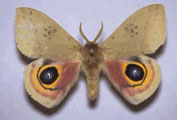 Larval Host |
Propagation
Propagation Material: Root DivisionMr. Smarty Plants says
When to plant grasses on Long Island, NY
December 06, 2009
Dear Mr. Smarty Plants;
Are there any grass seeds that I can plant NOW, early December, on Long Island, NY? The planting environment is on and near a sandy bluff on a bayshore, where it can be windy ...
view the full question and answer
National Wetland Indicator Status
| Region: | AGCP | AK | AW | CB | EMP | GP | HI | MW | NCNE | WMVE |
| Status: | OBL | OBL | OBL | OBL | OBL | OBL |
Bibliography
Bibref 1186 - Field Guide to Moths of Eastern North America (2005) Covell, C.V., Jr.Bibref 1185 - Field Guide to Western Butterflies (Peterson Field Guides) (1999) Opler, P.A. and A.B. Wright
Bibref 1620 - Gardening with Native Plants of the South (Reprint Edition) (2009) Wasowski, S. with A. Wasowski
Search More Titles in Bibliography
Additional resources
USDA: Find Spartina alterniflora in USDA PlantsFNA: Find Spartina alterniflora in the Flora of North America (if available)
Google: Search Google for Spartina alterniflora
Metadata
Record Modified: 2015-12-14Research By: TWC Staff