Native Plants

Plant Database
Search for native plants by scientific name, common name or family. If you are not sure what you are looking for, try the Combination Search or our Recommended Species lists.
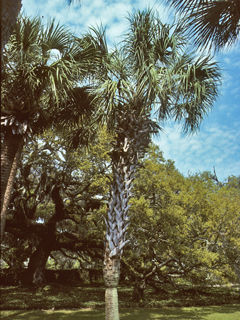
Wasowski, Sally and Andy
Sabal palmetto
Sabal palmetto (Walter) Lodd. ex Schult. & Schult. f.
Cabbage Palmetto, Cabbage Palm
Arecaceae (Palm Family)
Synonym(s): Corypha palmetto, Inodes schwarzii, Sabal jamesiana
USDA Symbol: sapa
USDA Native Status: L48 (N)
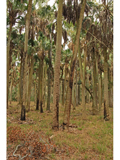
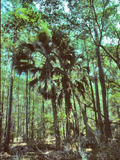
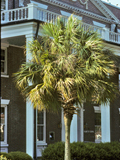
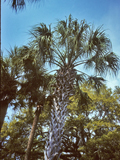
Cabbage palm is a 30-40 ft. (sometimes taller) palm tree with fan-shaped leaves supported by hard, woody stalks. Cabbage palms are evergreens, shedding older leaves (stalk and all) as new ones emerge from the growing tip. The trunk is of uniform diameter from base to summit and mostly branchless. White flowers are numerous in large, much-branched, drooping clusters and are followed by shiny, black fruits. Medium-sized, spineless, evergreen palm with stout, unbranched trunk and very large, fan-shaped leaves spreading around top.
The trunks are used for wharf pilings, docks, and poles. Brushes and whisk brooms are made from young leafstalk fibers, and baskets and hats from the leaf blades. An ornamental and street tree, it is the northernmost New World palm and one of the hardiest. Formerly, plants were killed in order to eat the large leaf buds as a cabbagelike salad. The names are from the Spanish palmito, meaning "small palm."
Plant Characteristics
Duration: PerennialHabit: Tree
Leaf Retention: Evergreen
Fruit Type: Drupe
Size Notes: Up to about 100 feet tall, often much shorter.
Leaf: Gray-Green
Bloom Information
Bloom Color: WhiteBloom Time: Jun , Jul
Distribution
USA: FL , GA , LA , NC , SCNative Distribution: Coastal areas from NC south to FL, the Bahamas, and Cuba
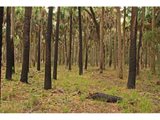
Native Habitat: Brackish marshes; hammocks; coastal prairies
Growing Conditions
Water Use: MediumLight Requirement: Part Shade
CaCO3 Tolerance: Low
Soil Description: Sandy soils.
Conditions Comments: Cabbage palm is not known to occur naturally more than 75 miles from the coast. It is immune to salt spray. Old leaves brown and hang from the base of the crown. Unless they are trimmed away, this creates great habitat for desirable birds and undesirable rodents. The decision to trim or not to trim is a matter of preference. The tree does fine either way. A "delicacy" known as swamp cabbage is produced from the bud or embryonic leaves of the tree, thus the common name. Removing the bud kills the palm so this practice is discouraged. Trunk wounds also seriously harm or kill the tree.
Benefit
Use Wildlife: An extremely important tree to natural ecosystems, providing habitat to reptiles, insects, mammals, birds and even other plants – the seeds of which germinate in the damp, protected recesses of leaf stems and trunk.Use Food: Tips of new leaves gathered and consumed in spring by indigenous people.
Conspicuous Flowers: yes
Propagation
Description: Propagation is only from seed.Commercially Avail: yes
National Wetland Indicator Status
| Region: | AGCP | AK | AW | CB | EMP | GP | HI | MW | NCNE | WMVE |
| Status: | FAC | FACW |
From the National Organizations Directory
According to the species list provided by Affiliate Organizations, this plant is on display at the following locations:Tohono Chul Park, Inc. - Tucson, AZ
Georgia Native Plant Society - Atlanta, GA
Wellspring Organic Farm and Education Center - West Bend, WI
Bibliography
Bibref 1620 - Gardening with Native Plants of the South (Reprint Edition) (2009) Wasowski, S. with A. WasowskiBibref 841 - Native Alternatives to Invasive Plants (2006) Burrell, C. C.
Bibref 1243 - The Southeastern Indians (1976) Hudson, Charles
Search More Titles in Bibliography
Additional resources
USDA: Find Sabal palmetto in USDA PlantsFNA: Find Sabal palmetto in the Flora of North America (if available)
Google: Search Google for Sabal palmetto
Metadata
Record Modified: 2015-07-22Research By: TWC Staff