Native Plants

Plant Database
Search for native plants by scientific name, common name or family. If you are not sure what you are looking for, try the Combination Search or our Recommended Species lists.
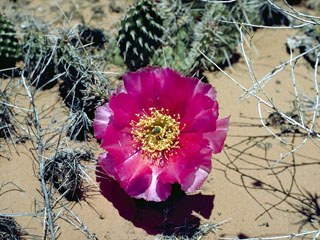
Gammill, Lynn Crosby
Opuntia basilaris
Opuntia basilaris Engelm. & J.M. Bigelow
Beavertail Prickly Pear, Beavertail Pricklypear, Beavertail Cactus
Cactaceae (Cactus Family)
Synonym(s):
USDA Symbol: opba2
USDA Native Status: L48 (N)
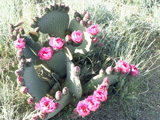
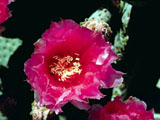
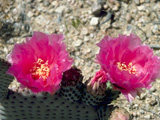
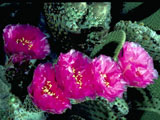
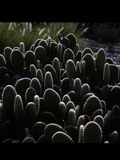
Flat, grayish-green, leafless, jointed stems in a clump, lack large spines and have vivid rose or reddish-lavender flowers on upper edge of joint. Beaver-tail Cactus is a low-growing prickly pear, 4-16 in. high, with brilliant, magenta flowers. The pads of this cactus lack the long, straight spines of other prickly pears but are covered with miniscule, gray-blue bristles with barbed tips.
The gray-green stems, low growth, and brilliant flowers, which often nearly cover the plant, make this a popular ornamental in hot, dry climates. It need not be dug up; a joint broken from a plant will quickly root in dry sand. Opuntia with flat joints are called Prickly Pear. In the Southwest, if the fruits are juicy and edible, they are called tunas by people of Spanish-American heritage. The fruits of Opuntia basilaris, though, are hard and dry. They are not utilized as food.
Plant Characteristics
Duration: PerennialHabit: Cactus/Succulent
Fruit Type: Berry
Size Notes: Up to about 16 inches high, almost oval joints 4-8 inches long.
Flower: Flowers 2 1/2 to 3 1/4 inches long and across.
Bloom Information
Bloom Color: Red , Pink , PurpleBloom Time: Feb , Mar , Apr , May , Jun
Bloom Notes: Diurnal.
Distribution
USA: AZ , CA , NV , UTNative Distribution: S.w. UT to s. CA, s. to n. Mex.
Native Habitat: Rocky or sandy plains, valleys, washes & canyons in deserts
Growing Conditions
Water Use: LowLight Requirement: Sun
Soil Moisture: Dry
Heat Tolerant: yes
Soil Description: Sandy or gravelly soils.
Conditions Comments: Minimum temperature 45F
Value to Beneficial Insects
Special Value to Native BeesThis information was provided by the Pollinator Program at The Xerces Society for Invertebrate Conservation.
Propagation
Description: Sow seed.Seed Treatment: No treatment is necessary.
Commercially Avail: yes
From the National Organizations Directory
According to the species list provided by Affiliate Organizations, this plant is on display at the following locations:Santa Barbara Botanic Garden - Santa Barbara, CA
Bibliography
Bibref 1140 - Cacti (1991) Clive Innes and Charles GlassBibref 995 - Native Landscaping from El Paso to L.A. (2000) Wasowski, S. and A. Wasowski
Search More Titles in Bibliography
Web Reference
Webref 38 - Flora of North America (2019) Missouri Botanical Garden, St. Louis, MO & Harvard University Herbaria, Cambridge, MA.Additional resources
USDA: Find Opuntia basilaris in USDA PlantsFNA: Find Opuntia basilaris in the Flora of North America (if available)
Google: Search Google for Opuntia basilaris
Metadata
Record Modified: 2023-03-14Research By: TWC Staff