Native Plants

Plant Database
Search for native plants by scientific name, common name or family. If you are not sure what you are looking for, try the Combination Search or our Recommended Species lists.
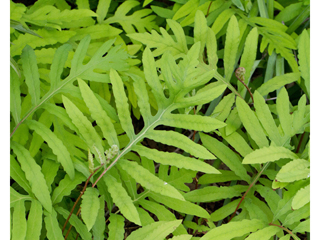
Holmes, James Garland
Onoclea sensibilis
Onoclea sensibilis L.
Sensitive Fern, Bead Fern, Sympathy Fern
Dryopteridaceae (Wood Fern Family)
Synonym(s):
USDA Symbol: onse
USDA Native Status: L48 (N), CAN (N), SPM (N)
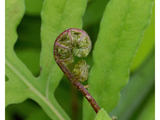
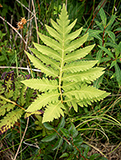
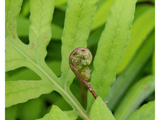
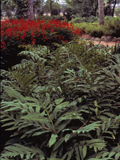
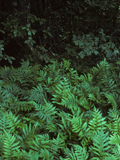
Sensitive fern varies in height from a few inches to more than 3 ft. Its sterile fronds, which wither early, are light to brown-mottled green and deeply cut into long lobes which almost reach the stem. Twice-pinnate fertile fronds appear in late summer and, though dead, remain upright through winter. Fiddleheads appear in the spring in shades of pale red. The roots colonize but are usually shallow, though hefty. The stalks of this fern are said to have a decorative, "beaded" appearance, lending the plant one of its common names, Bead Fern.
Common name is derived from the early sensitivity of this fern to frost.
Plant Characteristics
Duration: PerennialHabit: Herb , Fern
Leaf Retention: Deciduous
Size Notes: Up to about 3 feet tall.
Leaf: Light green
Bloom Information
Bloom Color: Not ApplicableBloom Notes: Non-flowering, sporulating plant. Sporulates Jun - Nov. Spores borne in globose bodies at the tip of a stalk separate from the leaves.
Distribution
USA: AL , AR , CO , CT , DC , DE , FL , GA , IA , IL , IN , KS , KY , LA , MA , MD , ME , MI , MN , MO , MS , NC , ND , NE , NH , NJ , NY , OH , OK , PA , RI , SC , SD , TN , TX , VA , VT , WI , WVCanada: NB , NL , NS , ON , PE
Native Distribution: Newfoundland to Sask., s. to n. FL & TX; also collected in Douglas Co., CO. Eastern North America, Zones 4 to 8.
Native Habitat: Moist woodlands, floodplains, stream banks, swamps, marshes
Growing Conditions
Water Use: Medium , HighLight Requirement: Part Shade , Shade
Soil Moisture: Moist , Wet
Soil pH: Acidic (pH<6.8)
Drought Tolerance: Low
Soil Description: Various loose, acidic, moist to wet soils. Sandy, Sandy Loam, Medium Loam, Limestone-based.
Conditions Comments: Can grow in very wet soils as long as there is adequate oxygen. It cannot tolerate sour clay or stagnant water. Also, does not tolerate freezing well, turns black even in light frost.
Benefit
Use Ornamental: Bog or pond area, Water gardenUse Wildlife: Shelters salamanders and frogs
Use Other: Cut fronds good for dried flower arrangements
Interesting Foliage: yes
Attracts: Birds
Propagation
Propagation Material: Root DivisionDescription: Propagate by rhizome division or spores.
Commercially Avail: yes
Maintenance: If it gets too aggressive for your tastes, thin it out.
National Wetland Indicator Status
| Region: | AGCP | AK | AW | CB | EMP | GP | HI | MW | NCNE | WMVE |
| Status: | FACW | FACW | FACW | FACW | FACW | FACW |
From the National Organizations Directory
According to the species list provided by Affiliate Organizations, this plant is on display at the following locations:Pineywoods Native Plant Center - Nacogdoches, TX
Delaware Nature Society - Hockessin, DE
Mt. Cuba Center - Hockessin, DE
Bibliography
Bibref 1620 - Gardening with Native Plants of the South (Reprint Edition) (2009) Wasowski, S. with A. WasowskiBibref 1231 - Guide To the Ferns of Grey and Bruce Counties, Ontario (1999) Owen Sound Field Naturalists
Bibref 318 - Native Texas Plants: Landscaping Region by Region (2002) Wasowski, S. & A. Wasowski
Bibref 1294 - The Midwestern Native Garden: Native Alternatives to Nonnative Flowers and Plants An Illustrated Guide (2011) Adelman, Charlotte and Schwartz, Bernard L.
Search More Titles in Bibliography
Additional resources
USDA: Find Onoclea sensibilis in USDA PlantsFNA: Find Onoclea sensibilis in the Flora of North America (if available)
Google: Search Google for Onoclea sensibilis
Metadata
Record Modified: 2017-11-09Research By: TWC Staff