Native Plants

Plant Database
Search for native plants by scientific name, common name or family. If you are not sure what you are looking for, try the Combination Search or our Recommended Species lists.
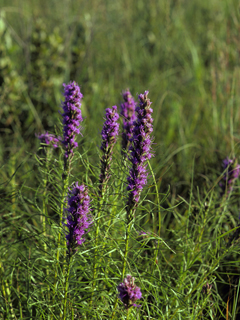
Wasowski, Sally and Andy
Liatris punctata
Liatris punctata Hook.
Dotted Blazing Star, Dotted Gayfeather, Dotted Liatris, Purples
Asteraceae (Aster Family)
Synonym(s):
USDA Symbol: lipu
USDA Native Status: L48 (N), CAN (N)
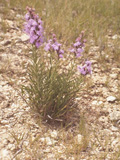
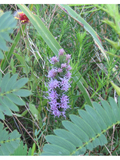
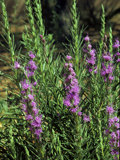
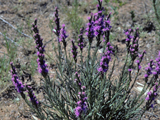
The erect, unbranched stems of this perennial may be solitary but are usually in clusters, 1-3 ft. tall. Several stems bear narrow, crowded heads with rose-lavender flowers arranged in slender wands. Numerous narrow leaves are crowded along the stem as they intermingle with the tufted flowers. Disc flowers crowd together to form a lavender spike encompassing the top third or half of the stem.
Rayless heads of purple flowers and slender, often plume-like bristles on the fruits generally identify this complex genus of the East that barely extends into the West.
The species name punctata means dotted and refers to the speckled leaves.

Plant Characteristics
Duration: PerennialHabit: Herb
Size Notes: Up to about 3 feet tall.
Leaf: Green
Fruit: Fruit is a cypsela (pl. cypselae). Though technically incorrect, the fruit is often referred to as an achene.
Bloom Information
Bloom Color: Pink , PurpleBloom Time: Aug , Sep , Oct , Nov
Distribution
USA: AR , CO , IA , IL , KS , LA , MI , MN , MO , MT , ND , NE , NM , OH , OK , SD , TN , TX , WI , WYCanada: AB , MB , SK
Native Distribution: Alt. to NM, e. to MI, IA, w. MO, AR & TX; naturalized eastward
Native Habitat: Loess hills; prairies
Growing Conditions
Water Use: MediumLight Requirement: Sun
Soil Moisture: Dry
CaCO3 Tolerance: Low
Soil Description: Well-drained, sandy, calcareous soils.
Conditions Comments: A long taproot makes this the most drought-tolerant of the gayfeathers. A bushier plant is formed if it is cut back or mowed during the growing season. This is a long-lived plant that is tolerant of alkaline soils.
Benefit
Use Ornamental: This plant makes an excellent cut flower and, if cut at the beginning of its bloom, will retain its purple color and make an excellent dry flower for arrangements. Gay feather is also a good choice for container gardens.Use Wildlife: Liatris spp. attract butterflies.
Use Medicinal: Pulverized roots eaten to improve appetite. Powdered entire plant for tea for heart pains. Boiled root applied to swellings. Tea for stomachache, bladder and kidney problems.
Conspicuous Flowers: yes
Attracts: Birds
Value to Beneficial Insects
Special Value to Native BeesSpecial Value to Bumble Bees
This information was provided by the Pollinator Program at The Xerces Society for Invertebrate Conservation.
Propagation
Description: Scarified seeds may be sown outside in late fall or stored, stratified and sown the following spring. Some sources suggest spring seedlings will appear by simply laying the flowering stalk in an outdoor seedbed and covering with 1/2 in. of soil in the fall. Gay feather can also be established by dividing corms in late fall to early spring. Lift the mature clump and separate the corms with a sharp knife: replant and water thoroughly. Allow 2 feet between plants in a perennial border.Seed Collection: Wait until the flower heads on the entire stalk have turned fluffy tan before collecting. Bring the stalks inside to air-dry then shake or brush the nutlets from the heads. Seeds can be stored with chaff in sealed, refrigerated containers.
Seed Treatment: Scarification (lightly nick with knife) and stratification (3 months at 40 degrees).
Commercially Avail: yes
Maintenance: Staking the stems will keep the flower spikes from falling over. A moist, fertile soil may cause a plant to develop long, slender spikes which flop over. They sometimes can be prevented from falling over by keeping the plant dry in July and August. Volunteer plants can be limited by cutting stalks to the ground after the bloom fades. New stalks grow in the spring.
Find Seed or Plants
Find seed sources for this species at the Native Seed Network.
View propagation protocol from Native Plants Network.
Mr. Smarty Plants says
Native grasses for medians in Colorado Springs
June 11, 2010
Our city has stopped watering our historic landscaped medians due to severe budget shortfalls. The medians were historically tree boulevards but have had curb and gutter and blue grass added over th...
view the full question and answer
From the National Organizations Directory
According to the species list provided by Affiliate Organizations, this plant is on display at the following locations:Brackenridge Field Laboratory - Austin, TX
Nueces River Authority - Uvalde, TX
Native Seed Network - Corvallis, OR
Bibliography
Bibref 610 - Edible wild plants of the prairie : an ethnobotanical guide (1987) Kindscher, K.Bibref 946 - Gardening with Prairie Plants: How to Create Beautiful Native Landscapes (2002) Wasowski, Sally
Bibref 318 - Native Texas Plants: Landscaping Region by Region (2002) Wasowski, S. & A. Wasowski
Bibref 1294 - The Midwestern Native Garden: Native Alternatives to Nonnative Flowers and Plants An Illustrated Guide (2011) Adelman, Charlotte and Schwartz, Bernard L.
Search More Titles in Bibliography
Web Reference
Webref 38 - Flora of North America (2019) Missouri Botanical Garden, St. Louis, MO & Harvard University Herbaria, Cambridge, MA.From the Archive
Wildflower Newsletter 1990 VOL. 7, NO.4 - Research Update, Wild-Collecting Endangers Natives, Director's Report, Maryland ...Wildflower Newsletter 1995 VOL. 12, NO.1 - Night of the Wildflowers a Tremendous Success, Congressmen Pickle and Andrews Ho...
Additional resources
USDA: Find Liatris punctata in USDA PlantsFNA: Find Liatris punctata in the Flora of North America (if available)
Google: Search Google for Liatris punctata
Metadata
Record Modified: 2022-12-29Research By: TWC Staff