Native Plants

Plant Database
Search for native plants by scientific name, common name or family. If you are not sure what you are looking for, try the Combination Search or our Recommended Species lists.
Brundage, Stephanie
Larrea tridentata
Larrea tridentata (DC.) Coville
Creosote Bush, Greasewood, Hediondilla, Governadora, Guamis
Zygophyllaceae (Creosote-Bush Family)
Synonym(s):
USDA Symbol: latr2
USDA Native Status: L48 (N)
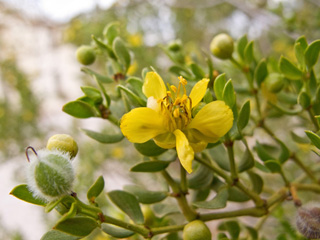
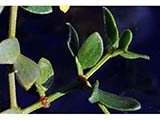
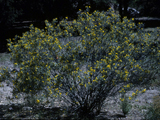
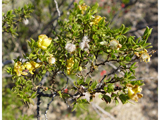
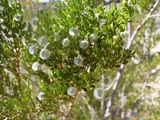
Creosote-bush is a 3-5 ft., evergreen shrub which can reach 10 ft. and has numerous flexible stems usually arising from the base at an angle. Its slender, irregularly branching stems bear tiny, rich-green, aromatic leaflets. The small, compound leaves, 1/5-2/5 inch long, are composed of 2 leaflets. They are opposite, united at the base, pointed at the tip, dark to yellowish-green, strong-scented, and often sticky with resin. These provide a background for small but prolific, yellow, velvety flowers, followed by fluffy, white fruit. The flowers are inconspicuous except under favorable conditions, when they are prominent, giving the bush a yellowish cast. They are 1/4-1/2 inch long, with 5 petals, 10 stamens, and 1 pistil. Stems are gray with dark nodes, giving a jointed appearance.
Creosote Bush is the most characteristic species of the hot deserts of North America. Its pungence fills the air following rains. Decoctions from its leaves are used as antiseptics and emetics. Many “bunches” of plants are actually clones. The foliage hides species of grasshoppers, praying mantids, and crickets that occur only on this plant. Leafy galls caused by a fly, the Creosote Gall Midge (Asphondylia spp.) are often numerous.
Plant Characteristics
Duration: PerennialHabit: Shrub
Leaf Retention: Evergreen
Fruit Type: Schizocarp
Size Notes: Up to about 10 feet tall, usually shorter.
Flower: Flowers 1/2 inch
Fruit: White
Bloom Information
Bloom Color: YellowBloom Time: Jan , Feb , Mar , Apr , May , Jun , Jul , Aug , Sep , Oct , Nov , Dec
Bloom Notes: May flower year-round, following rains.
Distribution
USA: AZ , CA , NM , NV , TX , UTNative Distribution: W. TX to s.w. UT, AZ, s. CA, south to central Mex.
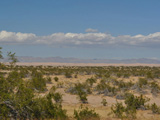
Native Habitat: Flat desert areas
Growing Conditions
Water Use: LowLight Requirement: Part Shade
Soil Moisture: Dry
Cold Tolerant: yes
Heat Tolerant: yes
Soil Description: Loose, well-drained sand or loam. Sandy, Sandy Loam, Medium Loam, Caliche type
Conditions Comments: Drought-tolerant creosote bush is the dominant shrub in desert areas, covering thousands of square miles. It may not be a distinct species of L. divaricata. The shrub can be sheared like boxwood, pick-pruned to a small, graceful shrub, or pruned to make a small tree. Tip pruning increases density. Nothing will grow under creosote bush because of toxins it gives off. Leaves are sticky with a creosote resin. Produces a refreshing scent after rains. The main bloom period is in the spring, but blossoms will occur later depending on available moisture.
Benefit
Use Ornamental: Showy, Aromatic, Long-living, Blooms ornamental, Fruits ornamental, Desert landscapeUse Wildlife: Provides cover for desert wildlife. Nectar-insects, Cover, Nesting site, Browse, Fruit-birds
Conspicuous Flowers: yes
Fragrant Flowers: yes
Deer Resistant: High
Value to Beneficial Insects
Special Value to Native BeesSpecial Value to Bumble Bees
Special Value to Honey Bees
This information was provided by the Pollinator Program at The Xerces Society for Invertebrate Conservation.
Propagation
Propagation Material: SeedsDescription: Seeds germinate slowly. Hulling dramatically improves germination. Sow seeds in a warm, well-drained dark place. This species is difficult to root from cuttings.
Seed Collection: Collect ripe fruits in late spring through summer by stripping the plants. Air dry and fumigate the fruits before storage.
Seed Treatment: Scarification of the hard seed coat induces germination. Soak in distilled water overnight.
Commercially Avail: yes
Find Seed or Plants
Find seed sources for this species at the Native Seed Network.
From the National Organizations Directory
According to the species list provided by Affiliate Organizations, this plant is on display at the following locations:Santa Barbara Botanic Garden - Santa Barbara, CA
Native Seed Network - Corvallis, OR
Bibliography
Bibref 355 - Landscaping with Native Plants of Texas and the Southwest (1991) Miller, G. O.Bibref 995 - Native Landscaping from El Paso to L.A. (2000) Wasowski, S. and A. Wasowski
Bibref 318 - Native Texas Plants: Landscaping Region by Region (2002) Wasowski, S. & A. Wasowski
Bibref 248 - Texas Wildflowers: A Field Guide (1984) Loughmiller, C. & L. Loughmiller
Bibref 291 - Texas Wildscapes: Gardening for Wildlife (1999) Damude, N. & K.C. Bender
Search More Titles in Bibliography
Web Reference
Webref 38 - Flora of North America (2019) Missouri Botanical Garden, St. Louis, MO & Harvard University Herbaria, Cambridge, MA.Webref 23 - Southwest Environmental Information Network (2009) SEINet - Arizona Chapter
From the Archive
Wildflower Newsletter 1995 VOL. 12, NO.3 - Explore the Big Bend With the Wildflower Center, Education Director\'s Report, T...Additional resources
USDA: Find Larrea tridentata in USDA PlantsFNA: Find Larrea tridentata in the Flora of North America (if available)
Google: Search Google for Larrea tridentata
Metadata
Record Modified: 2023-02-15Research By: TWC Staff