Native Plants

Plant Database
Search for native plants by scientific name, common name or family. If you are not sure what you are looking for, try the Combination Search or our Recommended Species lists.
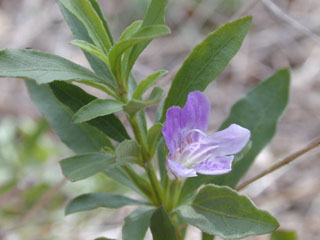
Marcus, Joseph A.
Dyschoriste linearis
Dyschoriste linearis (Torr. & A. Gray) Kuntze
Snake Herb, Polkadots, Narrowleaf Dyschoriste
Acanthaceae (Acanthus Family)
Synonym(s):
USDA Symbol: dyli
USDA Native Status: L48 (N)
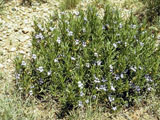
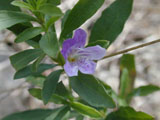
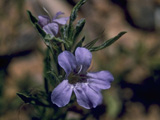
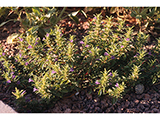
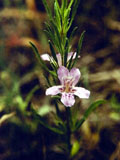
Several erect stems, 6-12 inches tall, grow from the root of this plant, the branches and stems are covered with stiff, coarse hairs. The leaves are opposite, 3/4-2 3/4 inches long, attached directly to the 4-sided stem. The 2-lipped flowers are 1/2-1 inch long and up to 1 inch across, lavender to purple, with purple stripes in the throat. They grow in the leaf axils on very short stems and are somewhat tucked in between the leaves, scattered here and there on the main stem.
Pale lavender to purple, two-lipped bell-shaped flowers occur in leaf axils in late spring and repeats in late summer with sufficient moisture.
In 2009 Wildflower Center volunteer Valerie Bugh discovered Phydanis bicolor (Bicolor Flea Beetle) adults feed on this species. It was the first reported observation of the beetle species' food host. (Reslit: 3185).
Plant Characteristics
Duration: PerennialHabit: Herb
Root Type: Fibrous
Leaf Retention: Deciduous
Leaf Complexity: Simple
Leaf Shape: Oblanceolate
Leaf Venation: Pinnate
Leaf Pubescence: Puberulent
Leaf Margin: Ciliate
Leaf Apex: Acuminate
Leaf Base: Cuneate
Breeding System: Flowers Bisexual
Fruit Type: Capsule
Size Notes: Up to about 1 foot tall, sometimes taller.
Leaf: green
Flower: Flowers 27 mm long
Bloom Information
Bloom Color: PurpleBloom Time: Apr , May , Jun , Jul , Aug , Sep , Oct
Distribution
USA: OK , TXNative Habitat: Found on rocky-grassy slopes, silty flats or above caprock in most of the western two thirds of Texas. Well-drained sand, loam, clay, limestone.
Growing Conditions
Water Use: LowLight Requirement: Sun
Soil Moisture: Moist , Wet
Heat Tolerant: yes
Soil Description: a variety of sandy, silty, or rocky soils with good drainage
Conditions Comments: Erect, upright, coarsely hairy herb with multiple, mostly unbranched, square stems. Rigid leaves linear-oblong or narrowly spathulate with fringed edges. Pale lavender to purple, two-lipped bell-shaped flowers occur in leaf axils in late spring and repeats in late summer with sufficient moisture.
Benefit
Conspicuous Flowers: yesAttracts: Butterflies
Deer Resistant: Minimal
Propagation
Commercially Avail: yesFrom the National Organizations Directory
According to the species list provided by Affiliate Organizations, this plant is on display at the following locations:Fredericksburg Nature Center - Fredericksburg, TX
Lady Bird Johnson Wildflower Center - Austin, TX
Texas Discovery Gardens - Dallas, TX
Sibley Nature Center - Midland, TX
Stengl Biological Research Station - Smithville, TX
NPSOT - Austin Chapter - Austin, TX
NPSOT - Williamson County Chapter - Georgetown, TX
Bibliography
Bibref 281 - Shinners & Mahler's Illustrated Flora of North Central Texas (1999) Diggs, G. M.; B. L. Lipscomb; B. O'Kennon; W. F...Bibref 248 - Texas Wildflowers: A Field Guide (1984) Loughmiller, C. & L. Loughmiller
Bibref 328 - Wildflowers of Texas (2003) Ajilvsgi, Geyata.
Bibref 286 - Wildflowers of the Texas Hill Country (1989) Enquist, M.
Search More Titles in Bibliography
Web Reference
Webref 23 - Southwest Environmental Information Network (2009) SEINet - Arizona ChapterResearch Literature
Reslit 3185 - Collection Records and First Adult Host Record for Phydanis bicolor Horn (Coleoptera: Chrysomelidae: Galerucinae: Alticini), An Uncommonly Encountered Texas Flea Beetle (2010) Riley, Edward G., and Quinn, Michael A.This information was provided by the Florida WIldflower Foundation.
Search More Titles in Research Literature
Additional resources
USDA: Find Dyschoriste linearis in USDA PlantsFNA: Find Dyschoriste linearis in the Flora of North America (if available)
Google: Search Google for Dyschoriste linearis
Metadata
Record Modified: 2023-02-07Research By: TWC Staff, TMH, JSC