Native Plants

Plant Database
Search for native plants by scientific name, common name or family. If you are not sure what you are looking for, try the Combination Search or our Recommended Species lists.
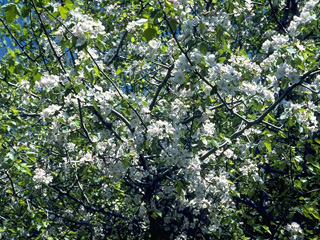
Bransford, W.D. and Dolphia
Crataegus mollis
Crataegus mollis Scheele
Downy Hawthorn, White Thorn, Whitethorn, Scarlet Hawthorn, Scarlet Haw, Red Haw, Downy Thorn
Rosaceae (Rose Family)
Synonym(s): Crataegus albicans, Crataegus arkansana, Crataegus brachyphylla, Crataegus cibaria, Crataegus gravida, Crataegus induta, Crataegus invisa, Crataegus lacera, Crataegus limaria, Crataegus mollis var. dumetosa, Crataegus mollis var. gigantea, Crataegus mollis var. incisifolia, Crataegus mollis var. sera, Crataegus noelensis, Crataegus pedicellata var. albicans, Crataegus placens
USDA Symbol: crmo2
USDA Native Status: L48 (N), CAN (N)
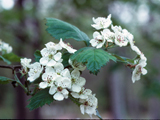
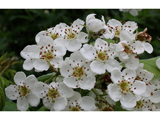
Handsome tree with tall trunk and compact, rounded crown of spreading branches, large broad hairy leaves, many large flowers, and large scarlet fruit. Downy hawthorn is wide-spreading tree, 20-40 ft. in height, with horizontal branching and varying degrees of thorniness. The bark of the short trunk is silvery and scaly. Profuse, flat-topped clusters of white, rose-like blossoms are followed by persistent, tiny, red "apples." Medium-green, fuzzy foliage is usually aborted in early fall due to infections. Little harm is done, since the species is not known for fall color.
One of the largest trees of its genus, Downy Hawthorn was originally called "White Thorn." It was introduced into European gardens as early as 1683. The common and Latin species names both refer to the soft hairy foliage.
Plant Characteristics
Duration: PerennialHabit: Shrub , Tree
Leaf Retention: Deciduous
Fruit Type: Pome
Size Notes: Up to about 40 feet tall.
Autumn Foliage: yes
Fruit: Red
Bloom Information
Bloom Color: WhiteBloom Time: Mar , Apr , May , Jun
Distribution
USA: AL , AR , CT , GA , IA , IL , IN , KS , KY , LA , MA , ME , MI , MN , MO , MS , ND , NE , NH , NJ , NY , OH , OK , PA , SD , TN , TX , VA , VT , WI , WVCanada: NS , ON , QC
Native Distribution: W. NY to extreme e. ND, s. to AL, LA & OK
Native Habitat: Woodland borders; alluvial thickets; sandy hillsides; fields; roadsides
Growing Conditions
Light Requirement: Sun , Part Shade , ShadeSoil Moisture: Dry , Moist
Drought Tolerance: High
Soil Description: Variable.
Conditions Comments: This is an extremely variable tree which will tolerate dry soils. It is very susceptible to a number of leaf diseases including rust blights. It should not be planted near red cedar, an alternate host of several rusts. This is one the of first hawthorns to bloom in spring. The long, sharp thorns are hazardous.
Benefit
Use Wildlife: Habitat for many birds and other wildlife. Only a few birds like the fruit of Crataegus and, consequently, they remain effective for a long time.Use Medicinal: Dried leaves or flowers have been administered in capsules, teas and tinctures for treating heart and circulatory problems. Studies have shown that hawthorn dilates blood vessels, thereby improving circulation, increasing oxygen supply to the heart and stabilizing blood pressure. (Kershaw)
Warning: Plant has thorns or prickles.
Conspicuous Flowers: yes
Fragrant Flowers: yes
Value to Beneficial Insects
Special Value to Native BeesSupports Conservation Biological Control
This information was provided by the Pollinator Program at The Xerces Society for Invertebrate Conservation.
Propagation
Description: Propagate using treated seed planted in fall. May not germinate until the second year.Seed Treatment: Warm stratify at 70-77 degrees for 120 days followed by 135 days at 41 degrees.
Commercially Avail: yes
National Wetland Indicator Status
| Region: | AGCP | AK | AW | CB | EMP | GP | HI | MW | NCNE | WMVE |
| Status: | FAC | FACU | FAC | FAC | FAC |
Bibliography
Bibref 298 - Field Guide to Texas Trees (1999) Simpson, B.J.Bibref 946 - Gardening with Prairie Plants: How to Create Beautiful Native Landscapes (2002) Wasowski, Sally
Search More Titles in Bibliography
Web Reference
Webref 38 - Flora of North America (2019) Missouri Botanical Garden, St. Louis, MO & Harvard University Herbaria, Cambridge, MA.Webref 23 - Southwest Environmental Information Network (2009) SEINet - Arizona Chapter
Additional resources
USDA: Find Crataegus mollis in USDA PlantsFNA: Find Crataegus mollis in the Flora of North America (if available)
Google: Search Google for Crataegus mollis
Metadata
Record Modified: 2023-05-09Research By: TWC Staff