Native Plants

Plant Database
Search for native plants by scientific name, common name or family. If you are not sure what you are looking for, try the Combination Search or our Recommended Species lists.
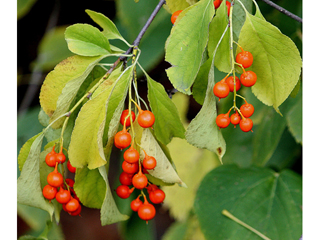
Smith, R.W.
Celastrus scandens
Celastrus scandens L.
American Bittersweet
Celastraceae (Bittersweet Family)
Synonym(s):
USDA Symbol: cesc
USDA Native Status: L48 (N), CAN (N)
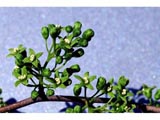
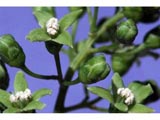
A high-climbing or sprawling woody vine, reaching 30 ft. or more. Deciduous leaves are simple, ovate and dark-green; greenish-yellow in fall. Small, greenish flowers are followed by a showy, orange capsule that splits open to expose a crimson aril. A twining, woody vine that produces small green flowers and distinctive bicolored fruits. The fruit is held in drooping clusters.
This native species is being replaced in the Northeast by the more aggressive Asiatic Bittersweet (C. orbiculatus) which has escaped from cultivation. It has flowers and showy scarlet fruit arising from the axils of the leaves.
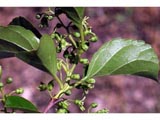
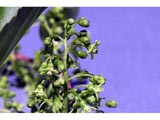
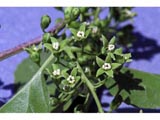
Plant Characteristics
Duration: PerennialHabit: Vine
Leaf Retention: Deciduous
Fruit Type: Capsule
Size Notes: Climber, stems up to about 50 feet long.
Leaf: Green
Autumn Foliage: yes
Fruit: Red, Orange
Bloom Information
Bloom Color: Yellow , Green , BrownBloom Time: May , Jun
Distribution
USA: AL , AR , CT , DC , DE , GA , IA , IL , IN , KS , KY , LA , MA , MD , ME , MI , MN , MO , MS , MT , NC , ND , NE , NH , NJ , NY , OH , OK , PA , RI , SC , SD , TN , TX , VA , VT , WI , WV , WYCanada: MB , NB , ON , QC
Native Distribution: Que. to Man. & e. MT, s. to GA & AL mts., TX & WY
Native Habitat: Woodlands; bluffs; stream banks; rocky hillsides; thickets; fence rows; roadsides
Growing Conditions
Water Use: HighLight Requirement: Sun , Part Shade , Shade
Soil Moisture: Dry , Moist
Soil pH: Circumneutral (pH 6.8-7.2)
CaCO3 Tolerance: Medium
Drought Tolerance: High
Soil Description: Well-drained soils.
Benefit
Warning: POISONOUS PARTS: All parts, seeds. Low toxicity if eaten. Symptoms include vomiting, diarrhea, loss of conciousness. (Poisonous Plants of N.C.)Attracts: Birds
Propagation
Description: Sow seeds in fall or stratify and sow in spring. Bittersweet can also be propagated by root cuttings, layers, suckers, hardwood and softwood cuttings. Treatment of cuttings is not necessary, but it may hasten rooting.Seed Collection: Collect seeds as soon as the capsules separate and expose arils. Spread fruit in shallow layers and allow to air dry for 2-3 weeks. Remove seeds by flailing or rubbing on a screen. Allow to dry another week. Store dried seed in sealed containers at 34-38 degrees.
Seed Treatment: Stratify for 2-6 months at 41 degrees.
Commercially Avail: yes
Find Seed or Plants
Find seed sources for this species at the Native Seed Network.
Mr. Smarty Plants says
Vines for shade in North-Central Georgia
August 07, 2009
I am looking for something to hide a 6' wood fence that will grow in almost full shade. I have an area approx 2 feet wide to plant in. Since the fence and planting areas are stepped -- about 8 feet f...
view the full question and answer
National Wetland Indicator Status
| Region: | AGCP | AK | AW | CB | EMP | GP | HI | MW | NCNE | WMVE |
| Status: | FACU | FACU | FACU | UPL | FACU | FACU | FACU |
From the National Organizations Directory
According to the species list provided by Affiliate Organizations, this plant is on display at the following locations:Texas Discovery Gardens - Dallas, TX
Native Seed Network - Corvallis, OR
Mt. Cuba Center - Hockessin, DE
Bibliography
Bibref 841 - Native Alternatives to Invasive Plants (2006) Burrell, C. C.Bibref 1294 - The Midwestern Native Garden: Native Alternatives to Nonnative Flowers and Plants An Illustrated Guide (2011) Adelman, Charlotte and Schwartz, Bernard L.
Search More Titles in Bibliography
Web Reference
Webref 3 - Flora of North America (2014) Missouri Botanical Garden, St. Louis, MO & Harvard University Herbaria, Cambridge, MA.Additional resources
USDA: Find Celastrus scandens in USDA PlantsFNA: Find Celastrus scandens in the Flora of North America (if available)
Google: Search Google for Celastrus scandens
Metadata
Record Modified: 2022-10-03Research By: TWC Staff