Native Plants

Plant Database
Search for native plants by scientific name, common name or family. If you are not sure what you are looking for, try the Combination Search or our Recommended Species lists.
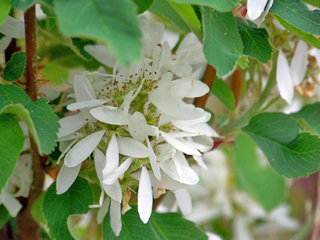
Glase, Terry
Amelanchier alnifolia
Amelanchier alnifolia (Nutt.) Nutt. ex M. Roem.
Saskatoon Serviceberry, Western Serviceberry, Juneberry
Rosaceae (Rose Family)
Synonym(s):
USDA Symbol: amal2
USDA Native Status: L48 (N), AK (N), CAN (N)
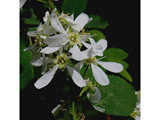
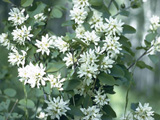
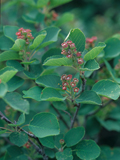
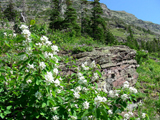
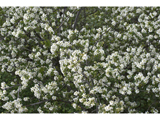
This is typically an erect shrub, 3-18 ft. tall. In rich soils, a single trunk may develop and attain 30 ft. in height. Compact clusters of fragrant, white flowers emerge just before small, light-green, oval leaves appear. The small, sweet, blue berries ripen by early summer. Fall color is orange to red and takes place for long periods.
Plant Characteristics
Duration: PerennialHabit: Shrub
Leaf Retention: Deciduous
Leaf Arrangement: Alternate
Leaf Complexity: Simple
Leaf Shape: Cordate , Elliptic , Ovate
Leaf Venation: Pinnate
Leaf Margin: Entire , Serrate
Inflorescence: Raceme
Fruit Type: Pome
Size Notes: Height 4-15 feet, spread 6-8 feet.
Leaf: Green in summer, yellow to reddish in the fall.
Autumn Foliage: yes
Fruit: Blue or purplish. to 1/4 inch across.
Bloom Information
Bloom Color: WhiteBloom Time: Apr , May , Jun
Distribution
USA: AK , CA , CO , IA , ID , MN , MT , ND , NE , NV , OR , SD , UT , WA , WYCanada: AB , BC , MB , ON , PE , SK , YT
Native Distribution: S. Man. to AK, s. to n.w. IA, n. NE, NM, AZ & CA
Native Habitat: Moist stream banks to drier hillsides; open woods
Growing Conditions
Water Use: MediumLight Requirement: Sun , Part Shade , Shade
Soil Moisture: Dry , Moist
CaCO3 Tolerance: High
Drought Tolerance: High
Soil Description: Well-drained soils.
Conditions Comments: This species has been developed for commercial fruit production. Its berries are 1/3-1/2 in. in diameter and blue-purple. Though it is adaptable to a variety of soil and moisture conditions, it shows some drought intolerance. It often suckers to form colonies. Under favorable conditions, individual bushes may be in bloom for as long as a month.
Benefit
Use Ornamental:Use Wildlife: Berries provide food for mammals and birds, and the dense growth provides shelter. The shrub has good nutrient levels throughout the year. It is browsed mostly in spring when it provides good forage for cattle, goats, sheep, and wild ungulates, although in concentrated doses the twigs and leaves, which contain cyanide compounds can fatally poison these animals.
Use Food: The fruit of this and related species are eaten fresh, prepared in puddings, pies, and muffins, and dried like raisins and currants. Indigenous people used the fruit in soups, stews, meat dishes, pemmican and dried cakes.
Use Medicinal: Boiled cambium can be used as a disinfectant. Root infusions were used to prevent miscarriages. Juice was used to cure stomach ailments, and it is a mild laxative. Eye and eardrops were made from mature berries.
Use Other: Arrows and pipe stems made from shoots.
Conspicuous Flowers: yes
Fragrant Flowers: yes
Interesting Foliage: yes
Attracts: Birds , Butterflies
Larval Host: Attracts orange tip and elfin butterflies.
Value to Beneficial Insects
Special Value to Native BeesThis information was provided by the Pollinator Program at The Xerces Society for Invertebrate Conservation.
Butterflies and Moths of North America (BAMONA)
|
California Hairstreak (Satyrium californica) 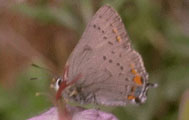 Larval Host |
Propagation
Description: This species can be rooted from early spring hardwood cuttings or softwood cutting taken in the summer. Layering or separation of suckers from parent plants is another means of increase. Sow untreated seeds in fall or cold-stratified seed in spring.Seed Collection: Collect fruits as soon as they ripen (if you can beat the birds) and clean seeds immediately to prevent fermentation. Fertile seeds are dark brown with a leathery seed coat. Seed extraction is usually by macerating the fruit and washing them over screens. Air dry and store in sealed, refrigerated containers for up to five years.
Seed Treatment: Cold-moist stratification for 90-120 days.
Commercially Avail: yes
Find Seed or Plants
Find seed sources for this species at the Native Seed Network.
View propagation protocol from Native Plants Network.
National Wetland Indicator Status
| Region: | AGCP | AK | AW | CB | EMP | GP | HI | MW | NCNE | WMVE |
| Status: | UPL | FACU | FACU | FACU | FACU | FACU |
From the National Organizations Directory
According to the species list provided by Affiliate Organizations, this plant is on display at the following locations:Native Seed Network - Corvallis, OR
Bibliography
Bibref 1186 - Field Guide to Moths of Eastern North America (2005) Covell, C.V., Jr.Bibref 1185 - Field Guide to Western Butterflies (Peterson Field Guides) (1999) Opler, P.A. and A.B. Wright
Bibref 946 - Gardening with Prairie Plants: How to Create Beautiful Native Landscapes (2002) Wasowski, Sally
Search More Titles in Bibliography
Additional resources
USDA: Find Amelanchier alnifolia in USDA PlantsFNA: Find Amelanchier alnifolia in the Flora of North America (if available)
Google: Search Google for Amelanchier alnifolia
Metadata
Record Modified: 2013-06-21Research By: TWC Staff