Native Plants

Plant Database
Search for native plants by scientific name, common name or family. If you are not sure what you are looking for, try the Combination Search or our Recommended Species lists.
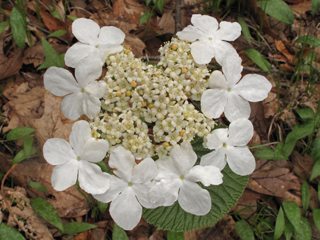
Cressler, Alan
Viburnum lantanoides
Viburnum lantanoides Michx.
Hobblebush
Caprifoliaceae (Honeysuckle Family)
Synonym(s): Viburnum alnifolium, Viburnum grandifolium
USDA Symbol: VILA11
USDA Native Status: L48 (N), CAN (N)
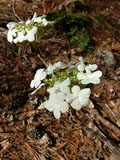
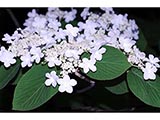
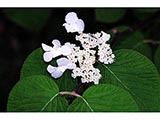
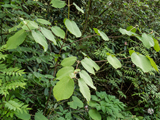
A 6-12 ft., open, straggling shrub, often with pendulous outer branches which root where they touch the ground. Flat-topped clusters of white flowers have a lacy effect similar to some hydrangeas and contrast well with the medium green foliage. Berries change from red to blue. The fall foliage is usually bright red. This shrub has fragrant, flat-topped clusters of small, white flowers, the outer flowers larger than the inner ones.
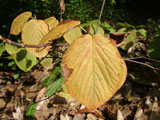
This straggly shrub has beautiful bronze-red or purple- pin autumn coloration and is used by wildlife for food and cover. Its branches often bend and take root, tripping or "hobbling" passers-by; hence its common name.
Plant Characteristics
Duration: PerennialHabit: Shrub
Leaf Retention: Deciduous
Fruit Type: Drupe
Size Notes: Up to about 12 feet tall.
Leaf: Green.
Autumn Foliage: yes
Fruit: Black, Green, Purple, Red.
Bloom Information
Bloom Color: White , PinkBloom Time: May , Jun
Bloom Notes: Sometimes pinkish.
Distribution
USA: CT , GA , MA , MD , ME , NC , NH , NJ , NY , OH , PA , RI , TN , VA , VT , WVCanada: NB , NS , ON , PE , QC
Native Distribution: Extreme n.e. OH to RI, n. to ME and Maritime; also s. through mts. to SC
Native Habitat: Rich, moist woods; stream banks; swamps
Growing Conditions
Water Use: MediumLight Requirement: Sun , Part Shade , Shade
Soil Moisture: Moist
Soil pH: Acidic (pH<6.8)
CaCO3 Tolerance: High
Soil Description: Moist, gravelly or sandy, acid loams.
Conditions Comments: Arching branches root at tips. Transplants well.
Benefit
Use Wildlife: Gamebirds, songbirds and mammals eat fruit; browsers eat twigs and leavesConspicuous Flowers: yes
Attracts: Butterflies
Larval Host: Spring Azure
Butterflies and Moths of North America (BAMONA)
|
Spring Azure (Celastrina "ladon" ) 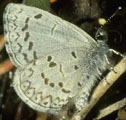 Larval Host |
Propagation
Seed Collection: Collect the fruit as soon as it has turned a dark blue-black color. Store seeds with pulp on at 41 degrees.Commercially Avail: yes
National Wetland Indicator Status
| Region: | AGCP | AK | AW | CB | EMP | GP | HI | MW | NCNE | WMVE |
| Status: | FAC | FACU | FACU |
From the National Organizations Directory
According to the species list provided by Affiliate Organizations, this plant is on display at the following locations:Mt. Cuba Center - Hockessin, DE
Bibliography
Bibref 1186 - Field Guide to Moths of Eastern North America (2005) Covell, C.V., Jr.Bibref 1185 - Field Guide to Western Butterflies (Peterson Field Guides) (1999) Opler, P.A. and A.B. Wright
Search More Titles in Bibliography
Web Reference
Webref 23 - Southwest Environmental Information Network (2009) SEINet - Arizona ChapterAdditional resources
USDA: Find Viburnum lantanoides in USDA PlantsFNA: Find Viburnum lantanoides in the Flora of North America (if available)
Google: Search Google for Viburnum lantanoides
Metadata
Record Modified: 2022-10-21Research By: TWC Staff