Native Plants

Plant Database
Search for native plants by scientific name, common name or family. If you are not sure what you are looking for, try the Combination Search or our Recommended Species lists.
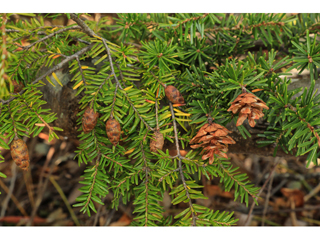
Cressler, Alan
Tsuga caroliniana
Tsuga caroliniana Engelm.
Carolina Hemlock
Pinaceae (Pine Family)
Synonym(s):
USDA Symbol: TSCA2
USDA Native Status: L48 (N)
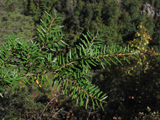
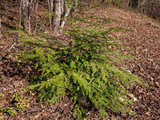
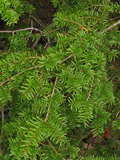
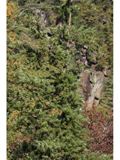
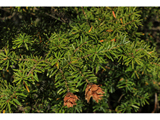
Carolina hemlock is an airy, spiry-topped evergreen with a tapering trunk and short, stout, often pendulous branches forming a evenly pyramidal head. The glossy, dark-green needles radiate around the stem creating a bottle-brush effect. Usually grows 40-60 ft. in height.
Plant Characteristics
Duration: PerennialHabit: Tree
Leaf Retention: Evergreen
Leaf Complexity: Simple
Breeding System: Flowers Unisexual , Monoecious
Fruit Type: Cone
Size Notes: Up to about 95 feet tall, often shorter.
Leaf: Dark Green
Bloom Information
Bloom Color: YellowBloom Time: Apr
Distribution
USA: GA , NC , SC , TN , VANative Distribution: S.w. VA to n. GA
Native Habitat: Dry slopes, bluffs & rocky areas; occasionally in moist places
Growing Conditions
Water Use: MediumLight Requirement: Part Shade
Soil Moisture: Moist
CaCO3 Tolerance: None
Soil Description: Moist to dry, well-drained soils.
Conditions Comments: Carolina hemlock is more compact and darker green than Eastern hemlock. It is also more tolerant of city conditions. It is not easily found in the nursery trade, however, even though it is considered a prized ornamental. Droughty conditions are not tolerated.
Propagation
Description: Layering has proven successful, as has propagation by seed and cuttings. Cutting must be treated.Seed Collection: Cones mature in one season.
Seed Treatment: A 2-4 month stratification at 40 degrees hastens germination.
Commercially Avail: yes
From the National Organizations Directory
According to the species list provided by Affiliate Organizations, this plant is on display at the following locations:Mt. Cuba Center - Hockessin, DE
Bibliography
Bibref 1620 - Gardening with Native Plants of the South (Reprint Edition) (2009) Wasowski, S. with A. WasowskiSearch More Titles in Bibliography
Web Reference
Webref 3 - Flora of North America (2014) Missouri Botanical Garden, St. Louis, MO & Harvard University Herbaria, Cambridge, MA.Additional resources
USDA: Find Tsuga caroliniana in USDA PlantsFNA: Find Tsuga caroliniana in the Flora of North America (if available)
Google: Search Google for Tsuga caroliniana
Metadata
Record Modified: 2022-09-26Research By: TWC Staff