Native Plants

Plant Database
Search for native plants by scientific name, common name or family. If you are not sure what you are looking for, try the Combination Search or our Recommended Species lists.
Smith, R.W.
Tilia americana
Tilia americana L.
American Basswood, American Linden, Lime Tree, Bee Tree
Tiliaceae (Linden Family)
Synonym(s):
USDA Symbol: TIAM
USDA Native Status: L48 (N), CAN (NI)
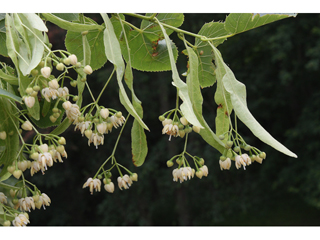
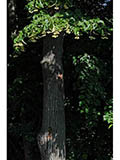
American Basswood is a stately, wide-spreading tree, 60-80 ft. tall, occasionally growing taller. Conical in its younger form, the crown becomes rounded with age. Broadly oval leaves sometimes change to yellow in fall but often turn brown and become somewhat unsightly. This deciduous tree tends to sprout at the base, producing a clump of tall trees around what was the original tree. Flowers are inconspicuous but fragrant. Large tree with long trunk and a dense crown of many small, often drooping branches and large leaves; frequently has two or more trunks, and sprouts in a circle from a stump.
American Basswood, the northernmost basswood species, is a handsome shade and street tree. When flowering, the trees are full of bees, hence the name "Bee-tree"; this species is favored by bees over others and produces a strongly flavored honey. The soft, light wood is especially useful for making food boxes, yardsticks, furniture, and pulpwood. Indians made ropes and woven mats from the tough fibrous inner bark.

Plant Characteristics
Duration: PerennialHabit: Tree
Leaf Retention: Deciduous
Leaf Complexity: Simple
Fruit Type: Nut
Size Notes: Up to about 100 feet tall.
Leaf: Green
Autumn Foliage: yes
Fruit: Tan or brown, nut-like.
Bloom Information
Bloom Color: YellowBloom Time: Apr , May , Jun , Jul
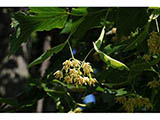
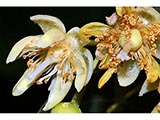
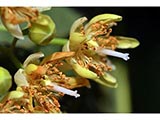
Bloom Notes: The fragrant, creamy-yellowy flowers are borne on axillary cymes with partially adnate foliaceous bracts.
Distribution
USA: AL , AR , CT , DC , DE , FL , GA , IA , IL , IN , KS , KY , LA , MA , MD , ME , MI , MN , MO , MS , NC , ND , NE , NH , NJ , NY , OH , OK , PA , RI , SC , SD , TN , TX , VA , VT , WI , WVCanada: MB , NB , ON , QC
Native Distribution: S. Que. to s.e. Man. & e. ND, s. to w. NC, TN, LA & e. TX, with disjunct populations in central Texas
Native Habitat: Upland, deciduous woods; north & east slopes of mesic ravines
Growing Conditions
Water Use: MediumLight Requirement: Sun , Part Shade , Shade
Soil Moisture: Dry , Moist
Soil pH: Circumneutral (pH 6.8-7.2)
CaCO3 Tolerance: Low
Soil Description: Moist, rich, well-drained, loamy soils.
Conditions Comments: American lindens are used as specimen plants because of their attractive form, leaves and fragrant flowers. The dense shade they create limits ground cover options. The species is susceptible to a variety of disease and insect problems. Foliage-feeding insects are a particular nuisance. Trees grow at a medium to fast rate.
Benefit
Use Medicinal: A hot bath with basswood flowers, followed by a cup of linden-flower tea, is said to soothe cold symptoms and enhance sleep. The flowers are also used in beauty products. (Kershaw)Use Other: Native peoples and settlers soaked the inner bark in water to separate its tough fibres, which were then used to make ropes, nets, mats, shoes, clothing and thread. Some tribes carved ritual masks on living trees, then split the masks away to hollow and dry the inside. If the tree survived, the mask was believed to have supernatural powers. (Kershaw)
Conspicuous Flowers: yes
Fragrant Flowers: yes
Attracts: Birds
Value to Beneficial Insects
Special Value to Native BeesSpecial Value to Honey Bees
Supports Conservation Biological Control
This information was provided by the Pollinator Program at The Xerces Society for Invertebrate Conservation.
Propagation
Description: Untreated seeds germinate in 2-3 years. Seeds germinate most easily if fruits are collected as they first turn slightly brown and are planted immediately. Mechanical or chemical pretreatment of the hard pericarp and seed coat hastens germination.Seed Collection: Seeds germinate most easily if fruits are collected as they first turn slightly brown. For storage, dry seeds and store at room temperature up to two years.
Seed Treatment: Scarify mechanically or soak in concentrated sulfuric acid and moist chill for 3 months.
Commercially Avail: yes
Find Seed or Plants
View propagation protocol from Native Plants Network.
National Wetland Indicator Status
| Region: | AGCP | AK | AW | CB | EMP | GP | HI | MW | NCNE | WMVE |
| Status: | FACU | FACU | FACU | FACU | FACU | FACU | FACU |
From the National Organizations Directory
According to the species list provided by Affiliate Organizations, this plant is on display at the following locations:Pineywoods Native Plant Center - Nacogdoches, TX
Delaware Nature Society - Hockessin, DE
Mt. Cuba Center - Hockessin, DE
Bibliography
Bibref 1620 - Gardening with Native Plants of the South (Reprint Edition) (2009) Wasowski, S. with A. WasowskiSearch More Titles in Bibliography
Web Reference
Webref 38 - Flora of North America (2019) Missouri Botanical Garden, St. Louis, MO & Harvard University Herbaria, Cambridge, MA.Webref 23 - Southwest Environmental Information Network (2009) SEINet - Arizona Chapter
Additional resources
USDA: Find Tilia americana in USDA PlantsFNA: Find Tilia americana in the Flora of North America (if available)
Google: Search Google for Tilia americana
Metadata
Record Modified: 2023-05-23Research By: TWC Staff