Native Plants

Plant Database
Search for native plants by scientific name, common name or family. If you are not sure what you are looking for, try the Combination Search or our Recommended Species lists.
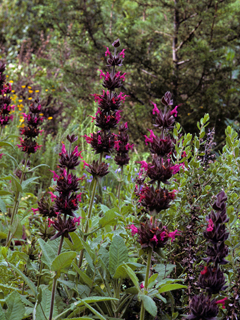
Wasowski, Sally and Andy
Salvia spathacea
Salvia spathacea Greene
Hummingbird Sage, Pitcher Sage
Lamiaceae (Mint Family)
Synonym(s):
USDA Symbol: SASP3
USDA Native Status: L48 (N)
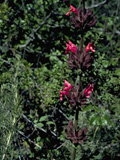
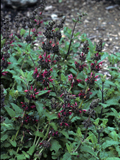
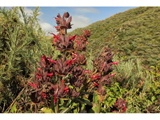
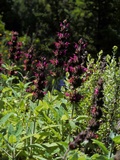
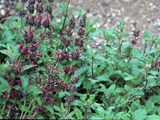
This perennial spreads by rhizomes and bears upright stems with several pairs of broad, quilted, light-green, aromatic leaves. The flower spikes rise above the leaves to 2-3 ft. in height and bear large, tubular, magenta-colored flowers.
As its name suggests, this plant is often visited by hummingbirds.
Plant Characteristics
Duration: PerennialHabit: Herb
Size Notes: Up to about 3 feet tall.
Fruit: Nutlets.
Bloom Information
Bloom Color: Red , PinkBloom Time: Feb , Mar , Apr , May , Jun , Jul , Aug
Distribution
USA: CANative Distribution: C. & s. CA Coast Ranges
Native Habitat: Open or shaded slopes below 2000 ft.
Growing Conditions
Light Requirement: Part ShadeSoil Moisture: Moist
Soil Description: Various mesic to slightly moist soils.
Conditions Comments: This perennial is easy to grow and deer proof.
Propagation
Description: Propagate by divisions, rooted sections, or seed sown outdoors in fall.Seed Collection: Collect the seeds as the capsules begin to dry but before they have dropped the seeds. Spread seeds in thin layers to dry a few days before storing in sealed, refrigerated containers.
Seed Treatment: No treatment is necessary.
Commercially Avail: yes
From the National Organizations Directory
According to the species list provided by Affiliate Organizations, this plant is on display at the following locations:Santa Barbara Botanic Garden - Santa Barbara, CA
Bibliography
Bibref 995 - Native Landscaping from El Paso to L.A. (2000) Wasowski, S. and A. WasowskiSearch More Titles in Bibliography
Web Reference
Webref 30 - Calflora (2018) CalfloraWebref 37 - Calscape (2019) California Native Plant Society
Webref 23 - Southwest Environmental Information Network (2009) SEINet - Arizona Chapter
Additional resources
USDA: Find Salvia spathacea in USDA PlantsFNA: Find Salvia spathacea in the Flora of North America (if available)
Google: Search Google for Salvia spathacea
Metadata
Record Modified: 2023-02-27Research By: TWC Staff