Native Plants

Plant Database
Search for native plants by scientific name, common name or family. If you are not sure what you are looking for, try the Combination Search or our Recommended Species lists.
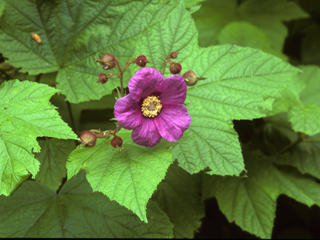
Wasowski, Sally and Andy
Rubus odoratus
Rubus odoratus L.
Purple-flowering Raspberry, Thimbleberry
Rosaceae (Rose Family)
Synonym(s):
USDA Symbol: RUOD
USDA Native Status: L48 (N), CAN (N)
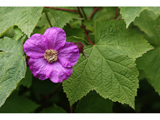
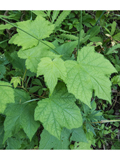
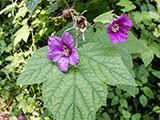
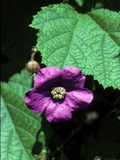
A suckering shrub, 3-6 ft. high and 6-12 ft. wide which forms broad patches. Five-lobed, maple-like, dark green leaves become pale yellow in fall. Large, pinkish-purple flowers occur singly or in few-flowered clusters. Fruit is a broadly rounded, red to purple berry. Canes are thornless, yellow- to orange-brown, and exfoliating. This erect, shrubby, thornless plant has rose-lavender flowers in loose clusters; new branches have bristly hairs.
Thimbleberry (R. parviflorus), with very similar white flowers and similar but smaller leaves, occurs from Alaska to Mexico and northeast to Ontario. Baked-apple Berry (R. chamaemorus), is a dwarf form only 12" (30 cm) tall, with a solitary white flower, an amber-colored berry, and leaves similar to the above, but smaller. It is found on mountaintops in New England and northward into Canada. All other species in the East have compound leaves and usually spiny stems.

Plant Characteristics
Duration: PerennialHabit: Subshrub
Leaf Retention: Deciduous
Fruit Type: Aggregate , Drupe
Size Notes: Up to about 6 feet tall.
Leaf: Green
Autumn Foliage: yes
Fruit: Red, aggregated drupelets.
Bloom Information
Bloom Color: Pink , PurpleBloom Time: Jun , Jul , Aug
Distribution
USA: AL , CT , DC , DE , GA , IL , IN , KY , MA , MD , ME , MI , NC , NH , NJ , NY , OH , PA , RI , TN , VA , VT , WI , WVCanada: NB , NS , ON , QC
Native Distribution: S. ME to MI, s. to NC & TN; also n. IL
Native Habitat: Moist, shady places; woods edges
Growing Conditions
Water Use: MediumLight Requirement: Sun , Part Shade , Shade
Soil Moisture: Moist
Soil pH: Acidic (pH<6.8)
CaCO3 Tolerance: Medium
Soil Description: Gravelly, sandy, or deep forest loams.
Conditions Comments: Thimbleberry spreads rapidly from creeping, underground stems and can become a nuisance, but is a striking plant for large wooded areas. Relatively immune to pests and diseases. Berries are insipid, but edible.
Benefit
Use Wildlife: Very high for songbirds, game birds, and large and small mammals.Conspicuous Flowers: yes
Fragrant Flowers: yes
Fragrant Foliage: yes
Attracts: Birds
Value to Beneficial Insects
Special Value to Native BeesSpecial Value to Bumble Bees
Special Value to Honey Bees
Provides Nesting Materials/Structure for Native Bees
This information was provided by the Pollinator Program at The Xerces Society for Invertebrate Conservation.
Propagation
Description: Information about propagation by seed or cuttings is scarce because plants are so easily obtained by digging up suckers.Seed Collection: Rubus fruits should be collected as soon as ripe to prevent losses to birds. The seeds can be extracted by macerating in water.
Seed Treatment: The hard, impermeable seed coat needs scarification. Both H2SO4 and sodium hypochlorite have been used. Scarification is sometimes followed by a complex combination of warm and cold stratification.
Commercially Avail: yes
From the National Organizations Directory
According to the species list provided by Affiliate Organizations, this plant is on display at the following locations:Mt. Cuba Center - Hockessin, DE
Bibliography
Bibref 841 - Native Alternatives to Invasive Plants (2006) Burrell, C. C.Bibref 1294 - The Midwestern Native Garden: Native Alternatives to Nonnative Flowers and Plants An Illustrated Guide (2011) Adelman, Charlotte and Schwartz, Bernard L.
Search More Titles in Bibliography
Web Reference
Webref 38 - Flora of North America (2019) Missouri Botanical Garden, St. Louis, MO & Harvard University Herbaria, Cambridge, MA.Webref 23 - Southwest Environmental Information Network (2009) SEINet - Arizona Chapter
Additional resources
USDA: Find Rubus odoratus in USDA PlantsFNA: Find Rubus odoratus in the Flora of North America (if available)
Google: Search Google for Rubus odoratus
Metadata
Record Modified: 2023-05-11Research By: TWC Staff