Native Plants

Plant Database
Search for native plants by scientific name, common name or family. If you are not sure what you are looking for, try the Combination Search or our Recommended Species lists.
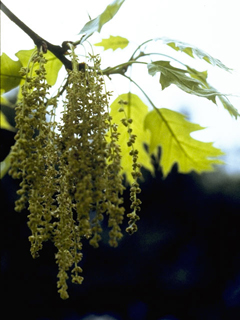
Vick, Albert F. W.
Quercus rubra var. ambigua
Quercus rubra L. var. ambigua (A. Gray) Fernald
Northern Red Oak
Fagaceae (Beech Family)
Synonym(s): Quercus borealis, Quercus rubra var. borealis
USDA Symbol: QURUA
USDA Native Status: L48 (N), CAN (N)
From the Image Gallery
Plant Characteristics
Duration: PerennialHabit: Tree
Leaf Arrangement: Alternate
Leaf Complexity: Simple
Leaf Venation: Pinnate
Breeding System: Flowers Unisexual , Monoecious
Inflorescence: Catkin
Fruit Type: Nut
Bloom Information
Bloom Color: Green , BrownBloom Time: Mar , Apr , May
Distribution
USA: AR , CT , DE , IA , IL , IN , KS , LA , MA , MD , ME , MI , MN , MO , NC , NH , NJ , NY , OH , OK , PA , RI , SC , VA , VT , WI , WVCanada: NB , ON , PE , QC
Benefit
Use Food: EDIBLE PARTS: Acorns (nuts) are edible after tannins are leached or boiled out. Gather nuts during the fall from September to October. Only gather the ripe tan-to-brown acorns, rather than the unripe green ones. remove bitterness, shell the brown, ripe acorns and remove any corky skin layers, dice the meat, and boil the chunks in water from 15 to 30 minutes until the water turns brown. Then pour off the water and repeat the process until the water clears, indicating that the tannic acid has been removed. During the last boiling, salt water can be added; then the acorns can be deep fried or mixed in a soup. Finely chopped acorn meats can be added to bread doughs and muffin batters. After the leaching process, acorn meat can be frozen. To make flour, the boiled acorn meat can be split in two and dried by slowly baking in a 200 degree oven with the door cracked to allow moisture to escape. Crush or grind and use as a thickener or a flour. Another method is to roast the fresh acorn to work well in a grinder or blender. After grinding, place the flour into a cloth bag and boil to leach out bitterness. Leached acorns, after they are roasted until brittle, can be ground and used as a marginal coffee substitute. (Poisonous Plants of N.C.)Warning: POISONOUS PARTS: Acorns (seeds of nuts) and young leaves. Low toxicity if eaten. Symptoms include stomach pain, constipation and later bloody diarrhea, excessive thirst and urination. (Poisonous Plants of N.C.)
Attracts: Butterflies
Larval Host: Hickory Hairstreak (Satyrium caryaevorum), Edwards' Hairstreak (S. edwardsii)
Butterflies and Moths of North America (BAMONA)
|
Hickory Hairstreak (Satyrium caryaevorus) 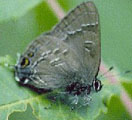 Larval Host |
From the National Organizations Directory
According to the species list provided by Affiliate Organizations, this plant is on display at the following locations:Mt. Cuba Center - Hockessin, DE
Bibliography
Bibref 1186 - Field Guide to Moths of Eastern North America (2005) Covell, C.V., Jr.Bibref 1185 - Field Guide to Western Butterflies (Peterson Field Guides) (1999) Opler, P.A. and A.B. Wright
Search More Titles in Bibliography
Additional resources
USDA: Find Quercus rubra var. ambigua in USDA PlantsFNA: Find Quercus rubra var. ambigua in the Flora of North America (if available)
Google: Search Google for Quercus rubra var. ambigua
Metadata
Record Modified: 2007-01-01Research By: TWC Staff