Native Plants

Plant Database
Search for native plants by scientific name, common name or family. If you are not sure what you are looking for, try the Combination Search or our Recommended Species lists.
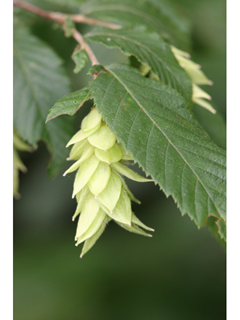
Fannon, Carolyn
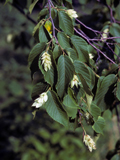
Ostrya virginiana
Ostrya virginiana (Mill.) K. Koch
Eastern Hop-hornbeam, American Hop-hornbeam, Woolly Hop-hornbean, Eastern Ironwood, Roughbark Ironwood, Ironwood, Deerwood, Leverwood
Betulaceae (Birch Family)
Synonym(s): Ostrya virginiana var. lasia, Ostrya virginiana var. virginiana
USDA Symbol: OSVI
USDA Native Status: L48 (N), CAN (N)
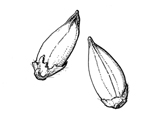

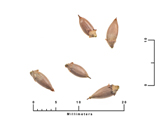
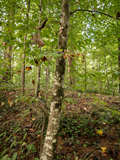
Plant Characteristics
Duration: PerennialHabit: Tree
Leaf Retention: Deciduous
Leaf Arrangement: Alternate
Leaf Complexity: Simple
Leaf Venation: Pinnate
Breeding System: Flowers Unisexual , Monoecious
Fruit Type: Nut
Size Notes: Up to about 60 feet tall, often shorter.
Leaf: Green
Autumn Foliage: yes
Fruit: Green, Brown
Bloom Information
Bloom Color: White , Yellow , Green , BrownBloom Time: Apr
Distribution
USA: AL , AR , CT , DC , DE , FL , GA , IA , IL , IN , KS , KY , LA , MA , MD , ME , MI , MN , MO , MS , NC , ND , NE , NH , NJ , NY , OH , OK , PA , RI , SC , SD , TN , TX , VA , VT , WI , WV , WYCanada: MB , NB , NS , ON , PE , QC
Native Distribution: N.S. to FL Panhandle, w. to Man., e. ND, e. KS & e. TX; also Crook Co., WY
Native Habitat: Well-drained, deciduous woods
Growing Conditions
Water Use: LowLight Requirement: Sun , Part Shade , Shade
Soil Moisture: Dry , Moist
Soil pH: Circumneutral (pH 6.8-7.2)
CaCO3 Tolerance: Medium
Soil Description: Rich, well-drained soils.
Conditions Comments: Hophornbeam is appropriate for shady locations but also does well in sun, developing a broader crown there. It is not sensitive to drought but will not tolerate flooding. Resistant to insects (except the gypsy moth), disease, wind, ice, and most stresses of urban living. Notoriously sensitive to salt. Slow-growing.
Benefit
Use Wildlife: Some food value to songbirds and small mammals.Use Other: This is one of the hardest and toughest of the native woods. It was once used for runners on sleighs. (Hosie)
Only occasionally does this tree grow as much as 30 feet high, or produce a trunk a foot thick, nor does it occur abundantly enough to make it commercially profitable. (Peattie)
Conspicuous Flowers: yes
Attracts: Birds
Propagation
Description: Sow immediately after collection or pre-treat and sow in early spring.Seed Collection: Collect seeds when involucres begin to dry – late summer through October. Wear gloves as the seed clusters can cause itchy fingers. Spread in shallow layers to complete drying. Beat fruit in a sack and separate from the debris by winnowing. Cold stratification is the best means of storing over winter.
Commercially Avail: yes
Find Seed or Plants
View propagation protocol from Native Plants Network.
National Wetland Indicator Status
| Region: | AGCP | AK | AW | CB | EMP | GP | HI | MW | NCNE | WMVE |
| Status: | FACU | FACU | FACU | FACU | FACU | FACU |
From the National Organizations Directory
According to the species list provided by Affiliate Organizations, this plant is on display at the following locations:Pineywoods Native Plant Center - Nacogdoches, TX
Delaware Nature Society - Hockessin, DE
Georgia Native Plant Society - Atlanta, GA
Mt. Cuba Center - Hockessin, DE
Wildflower Center Seed Bank
LBJWC-MLE-36 Collected 2006-09-28 in Cherokee County by Lady Bird Johnson Wildflower CenterBibliography
Bibref 298 - Field Guide to Texas Trees (1999) Simpson, B.J.Bibref 1620 - Gardening with Native Plants of the South (Reprint Edition) (2009) Wasowski, S. with A. Wasowski
Bibref 841 - Native Alternatives to Invasive Plants (2006) Burrell, C. C.
Bibref 318 - Native Texas Plants: Landscaping Region by Region (2002) Wasowski, S. & A. Wasowski
Search More Titles in Bibliography
Web Reference
Webref 3 - Flora of North America (2014) Missouri Botanical Garden, St. Louis, MO & Harvard University Herbaria, Cambridge, MA.Additional resources
USDA: Find Ostrya virginiana in USDA PlantsFNA: Find Ostrya virginiana in the Flora of North America (if available)
Google: Search Google for Ostrya virginiana
Metadata
Record Modified: 2022-09-23Research By: Joseph A. Marcus