Native Plants

Plant Database
Search for native plants by scientific name, common name or family. If you are not sure what you are looking for, try the Combination Search or our Recommended Species lists.
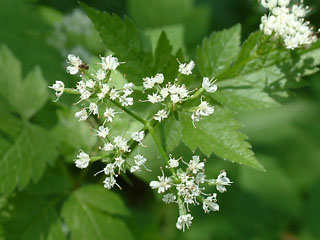
Bloodworth, Stefan
Osmorhiza claytonii
Osmorhiza claytonii (Michx.) C.B. Clarke
Clayton's Sweetroot, Hairy Sweet-cicely, Sweet Jarvil
Apiaceae (Carrot Family)
Synonym(s): Osmorhiza aristata var. brevistylis, Washingtonia claytonii
USDA Symbol: OSCL
USDA Native Status: L48 (N), CAN (N)
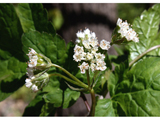
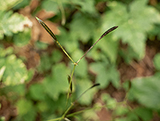
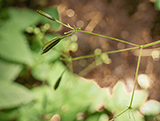
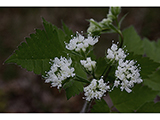
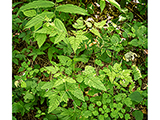
A hairy plant with small sparse compound umbels of white flowers. The 1-3 ft. stems are usually solitary and covered with long, soft hairs. Leaves are divided into threes, two or three times. Open clusters (compound umbel) of small, white flowers rise above the foliage on stalks from upper leaf axils.
The roots of this plant have an anise-like odor when bruised. Several species of this genus occur in the East, among them Anise Root (O. longistylis), which has styles to 1/4 inch (4 mm) long.
Plant Characteristics
Duration: PerennialHabit: Herb
Fruit Type: Schizocarp
Size Notes: Up to about 3 feet tall.
Fruit: Black
Bloom Information
Bloom Color: WhiteBloom Time: May , Jun
Distribution
USA: AL , AR , CT , DC , DE , GA , IA , IL , IN , KS , KY , MA , MD , ME , MI , MN , MO , NC , ND , NE , NH , NJ , NY , OH , PA , RI , SC , SD , TN , VA , VT , WI , WVCanada: MB , NB , NS , ON , PE , QC
Native Distribution: Que., s. to GA mts., n.w. AR & e. KS (more abundant northward)
Native Habitat: Rich woods; wooded slopes.
Growing Conditions
Light Requirement: ShadeSoil Moisture: Moist
Soil Description: Moist, rich soils.
Propagation
Description: Sweet cicely is not easy, but not impossible, to start from seeds.Commercially Avail: yes
Find Seed or Plants
View propagation protocol from Native Plants Network.
National Wetland Indicator Status
| Region: | AGCP | AK | AW | CB | EMP | GP | HI | MW | NCNE | WMVE |
| Status: | FACU | FACU | FACU | FACU | FACU |
Bibliography
Bibref 1294 - The Midwestern Native Garden: Native Alternatives to Nonnative Flowers and Plants An Illustrated Guide (2011) Adelman, Charlotte and Schwartz, Bernard L.Search More Titles in Bibliography
Web Reference
Webref 26 - Minnesota Wildflowers: a field guide to the flora of Minnesota (2009)Webref 23 - Southwest Environmental Information Network (2009) SEINet - Arizona Chapter
Additional resources
USDA: Find Osmorhiza claytonii in USDA PlantsFNA: Find Osmorhiza claytonii in the Flora of North America (if available)
Google: Search Google for Osmorhiza claytonii
Metadata
Record Modified: 2023-02-21Research By: TWC Staff