Native Plants

Plant Database
Search for native plants by scientific name, common name or family. If you are not sure what you are looking for, try the Combination Search or our Recommended Species lists.
Marcus, Joseph A.
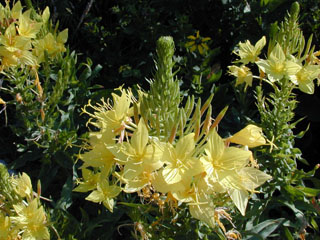
Oenothera rhombipetala
Oenothera rhombipetala Nutt. ex Torr. & A. Gray
Fourpoint Evening-primrose, Four-point Evening Primrose, Diamond Petal Primrose, Greater Four-point Evening-primrose
Onagraceae (Evening Primrose Family)
Synonym(s): Oenothera heterophylla var. rhombipetala, Raimannia rhombipetala
USDA Symbol: OERH
USDA Native Status: L48 (N)
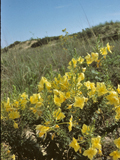
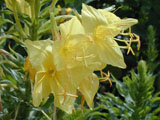
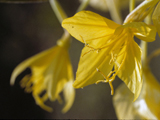
As a biennial, this plant produces a rosette of leaves the first year and in the second year an erect, leafy stem 1-3+ ft. tall. The loose flowering spike is composed of yellow, 2-3 in. flowers, each with four wide petals which taper to a blunt point. The flowers open in the evening and wither the following morning.
Often seen along roadsides. In the South this plant will continue to bloom through the summer if well watered.


Plant Characteristics
Duration: AnnualHabit: Herb
Leaf Retention: Deciduous
Fruit Type: Capsule
Size Notes: Up to about 5 feet tall, often shorter.
Bloom Information
Bloom Color: YellowBloom Time: May , Jun , Jul , Aug , Sep , Oct
Distribution
USA: AR , IA , IL , KS , LA , MI , MN , MO , ND , NE , NM , OK , SC , SD , TX , WINative Distribution: Locally from n. IN to e. MN & s.w. SD, s. to TX; naturalized eastward
Native Habitat: Prairie, Plains, Meadows, Pastures, Savannas, Woodlands' edge, Opening
Growing Conditions
Water Use: LowLight Requirement: Sun , Part Shade
Soil Moisture: Dry
Soil Description: Sandy, Sandy Loam
Conditions Comments: This plant can be naturalized in a meadow but it is best in the garden where it receives summer water. It can be grown from seed sown in situ or transplanted when very small as it has a taproot. To bloom, it has to winter over, although it sometimes bloom the first spring. It seeds out best in bare areas and under parent plants so you may want to keep an area just for evening primroses. In the South this plant will continue to bloom through the summer if watered well.
Benefit
Use Ornamental: Color, Attractive, ShowyUse Medicinal: Leaves used for poultice.
Conspicuous Flowers: yes
Nectar Source: yes
Value to Beneficial Insects
Special Value to Native BeesThis information was provided by the Pollinator Program at The Xerces Society for Invertebrate Conservation.
Propagation
Propagation Material: SeedsDescription: Seed sown in fall
Commercially Avail: yes
Maintenance: Prevent complete soil dryness, Remove spent blossoms, Maintain mulch layer, Fertilize in spring with rose food
Find Seed or Plants
Order seed of this species from Native American Seed and help support the Wildflower Center.
Find seed sources for this species at the Native Seed Network.
National Wetland Indicator Status
| Region: | AGCP | AK | AW | CB | EMP | GP | HI | MW | NCNE | WMVE |
| Status: | FACU | FACU | FACU | FACU | FACU | FACU |
From the National Organizations Directory
According to the species list provided by Affiliate Organizations, this plant is on display at the following locations:Native Seed Network - Corvallis, OR
Bibliography
Bibref 766 - Dale Groom's Texas Gardening Guide (2002) Groom, D.Bibref 610 - Edible wild plants of the prairie : an ethnobotanical guide (1987) Kindscher, K.
Bibref 318 - Native Texas Plants: Landscaping Region by Region (2002) Wasowski, S. & A. Wasowski
Bibref 286 - Wildflowers of the Texas Hill Country (1989) Enquist, M.
Search More Titles in Bibliography
Web Reference
Webref 38 - Flora of North America (2019) Missouri Botanical Garden, St. Louis, MO & Harvard University Herbaria, Cambridge, MA.Webref 23 - Southwest Environmental Information Network (2009) SEINet - Arizona Chapter
Additional resources
USDA: Find Oenothera rhombipetala in USDA PlantsFNA: Find Oenothera rhombipetala in the Flora of North America (if available)
Google: Search Google for Oenothera rhombipetala
Metadata
Record Modified: 2023-02-21Research By: DEW, JSC, WFS