Native Plants

Plant Database
Search for native plants by scientific name, common name or family. If you are not sure what you are looking for, try the Combination Search or our Recommended Species lists.
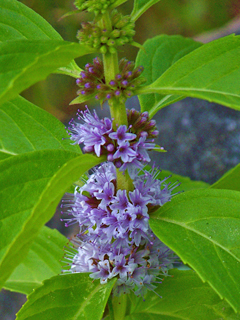
Glase, Terry
Mentha arvensis
Mentha arvensis L.
Wild Mint
Lamiaceae (Mint Family)
Synonym(s): Mentha arvensis ssp. borealis, Mentha arvensis ssp. haplocalyx, Mentha arvensis var. canadensis, Mentha arvensis var. glabrata, Mentha arvensis var. lanata, Mentha arvensis var. sativa, Mentha arvensis var. villosa, Mentha canadensis, Mentha gentilis, Mentha glabrior, Mentha penardii
USDA Symbol: MEAR4
USDA Native Status: L48 (N), AK (N), CAN (N), SPM (N)
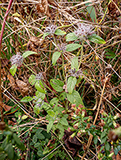
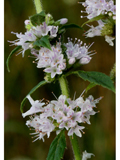
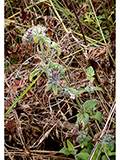
Dense whorls of tiny, white, pale pink, or lavender, bell-shaped flowers nearly hidden by the opposite leaves in hairy leaf axils on the square stems of a branched, minty-smelling plant.
One of the few native mints, this aromatic perennial has glands containing essential oils, and the leaves are used as flavorings in sauces, jellies, and beverages. The genus name Mentha comes from Mintho, mistress of Pluto, ruler of Hades. His jealous queen, Proserpine, upon learning of Mintho, trampled her, transforming her into a lowly plant forever to be walked upon. Pluto made this horrible fate more tolerable by willing that the more the plant was trampled, the sweeter it would smell. The 4-lobed and nearly symmetrical clusters of flowers along the stem distinguish this so-called "true mint" from many others that have flowers in slender spikes at the stem tips or in upper axils.

Plant Characteristics
Duration: PerennialHabit: Herb
Size Notes: Up to about 32 inches tall.
Leaf: Green
Fruit: Nutlets, 4.
Bloom Information
Bloom Color: White , Pink , PurpleBloom Time: Jun , Jul , Aug , Sep
Distribution
USA: AK , AR , AZ , CA , CO , CT , DC , DE , IA , ID , IL , IN , KS , KY , MA , MD , ME , MI , MN , MO , MT , NC , NE , NH , NJ , NM , NV , NY , OH , OR , PA , RI , SD , TN , TX , UT , VA , VT , WA , WI , WV , WYCanada: MB , NB , NL , NS , PE , QC
Native Distribution: Throughout North America, except from Florida west to Louisiana and Oklahoma, and Arctic.
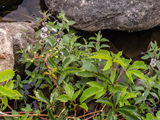
Native Habitat: Moist places, especially along streams.
Growing Conditions
Water Use: MediumLight Requirement: Part Shade
Soil Moisture: Moist , Wet
CaCO3 Tolerance: Medium
Benefit
Use Food: This aromatic perennial has glands containing essential oils, and the leaves are used as flavourings in sauces, jellies, and beverages. (Niering)Warning: The fruit of this plant is toxic and may be fatal if ingested in large quantities. It is especially dangerous to children.
Conspicuous Flowers: yes
Fragrant Flowers: yes
Interesting Foliage: yes
Fragrant Foliage: yes
Value to Beneficial Insects
Special Value to Native BeesThis information was provided by the Pollinator Program at The Xerces Society for Invertebrate Conservation.
Find Seed or Plants
Find seed sources for this species at the Native Seed Network.
National Wetland Indicator Status
| Region: | AGCP | AK | AW | CB | EMP | GP | HI | MW | NCNE | WMVE |
| Status: | FACW | FACW | FACW | FACW | FACW | FACW | FACW | FACW |
From the National Organizations Directory
According to the species list provided by Affiliate Organizations, this plant is on display at the following locations:Native Seed Network - Corvallis, OR
Bibliography
Bibref 1294 - The Midwestern Native Garden: Native Alternatives to Nonnative Flowers and Plants An Illustrated Guide (2011) Adelman, Charlotte and Schwartz, Bernard L.Search More Titles in Bibliography
Web Reference
Webref 23 - Southwest Environmental Information Network (2009) SEINet - Arizona ChapterAdditional resources
USDA: Find Mentha arvensis in USDA PlantsFNA: Find Mentha arvensis in the Flora of North America (if available)
Google: Search Google for Mentha arvensis
Metadata
Record Modified: 2023-04-06Research By: TWC Staff