Native Plants

Plant Database
Search for native plants by scientific name, common name or family. If you are not sure what you are looking for, try the Combination Search or our Recommended Species lists.
Bransford, W.D. and Dolphia
Iris tenax
Iris tenax Douglas ex Lindl.
Toughleaf Iris, Tough-leaf Iris, Oregon Iris
Iridaceae (Iris Family)
Synonym(s):
USDA Symbol: IRTE
USDA Native Status: L48 (N)
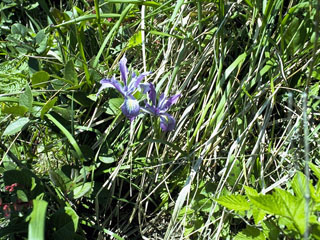
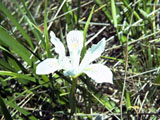
A tufted perennial with narrow, grass-like leaves and showy flowers on thin, wand-like stems to 14 in. tall. Leaves slightly exceed the flower stem in height. The flower of this species shows considerable variation in color. Large, delicate, lavender to deep purple to cream to yellow (rarely white) flowers, commonly with dark violet veins, grow at top of short stalks in dense clumps of leaves. Flowers usually occur singly but sometimes in pairs.
In the Willamette Valley of Oregon these handsome flowers provide brilliant color displays along highways. Tenax, Latin for "tenacious," refers to the tough leaves; Native Americans used fibers from the edges of the leaves of some western species to make strong, pliable rope and cord.
Plant Characteristics
Duration: PerennialHabit: Herb
Fruit Type: Capsule
Size Notes: Up to about 14 inches tall.
Leaf: Yellow-Green
Bloom Information
Bloom Color: White , Pink , Yellow , PurpleBloom Time: Apr , May , Jun , Jul , Aug
Bloom Notes: Rarely white.
Distribution
USA: CA , OR , WACanada: BC
Native Distribution: S.w. WA, s. to s.w. OR; intermittent to n. CA as var. klamathensis
Native Habitat: Open prairies; logged land; open areas in oak & conifer forests
Growing Conditions
Water Use: MediumLight Requirement: Part Shade
Soil Moisture: Dry
CaCO3 Tolerance: Medium
Soil Description: Drier, well-drained soils.
Conditions Comments: Good rock garden plant. Does not spread quickly, but will form large clumps.
Benefit
Use Wildlife: HummingbirdsWarning: Some Iris species are known to be poisonous to humans and animals if eaten (especially the rhizome, or root), and it is likely that all irises contain toxins. Plant juices can cause blisters on the skin. POISONOUS PARTS: Rhizomes (thickened roots) and rootstocks, fresh or dry. Minor skin irritation when touched, low toxicity if ingested. Symptoms include nausea, vomiting, abdominal pain, diarrhea, elevated temperature following ingestion; skin irritation upon contact with seeds, rootstock, or cell sap. Toxic Principle: Irisin, iridin, or irisine. (Poisonous Plants of N.C.)
Conspicuous Flowers: yes
Attracts: Hummingbirds
Propagation
Seed Collection: Easily collected from the large capsules.Commercially Avail: yes
Find Seed or Plants
Find seed sources for this species at the Native Seed Network.
From the National Organizations Directory
According to the species list provided by Affiliate Organizations, this plant is on display at the following locations:Native Seed Network - Corvallis, OR
Bibliography
Bibref 928 - 100 easy-to-grow native plants for Canadian gardens (2005) Johnson, L.; A. LeyerleSearch More Titles in Bibliography
Web Reference
Webref 38 - Flora of North America (2019) Missouri Botanical Garden, St. Louis, MO & Harvard University Herbaria, Cambridge, MA.Webref 23 - Southwest Environmental Information Network (2009) SEINet - Arizona Chapter
Additional resources
USDA: Find Iris tenax in USDA PlantsFNA: Find Iris tenax in the Flora of North America (if available)
Google: Search Google for Iris tenax
Metadata
Record Modified: 2023-02-14Research By: TWC Staff