Native Plants

Plant Database
Search for native plants by scientific name, common name or family. If you are not sure what you are looking for, try the Combination Search or our Recommended Species lists.
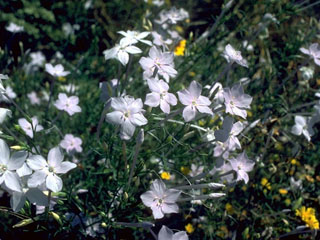
Loughmiller, Campbell and Lynn
Ipomopsis longiflora
Ipomopsis longiflora (Torr.) V.E. Grant
Flaxflowered Ipomopsis, Pale Trumpets, Paleflower Gilia, White-flower Skyrocket, White-flowered Gilia
Polemoniaceae (Phlox Family)
Synonym(s):
USDA Symbol: IPLO2
USDA Native Status: L48 (N)
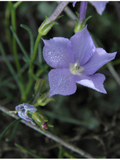
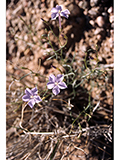
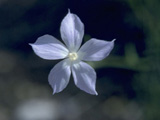
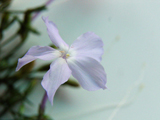
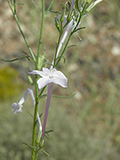
Slender stemmed, upright or somewhat sprawling annual or biennial, to 40 in. in height. Clusters of white or lavender, trumpet-shaped flowers occur at branch tips. The flower tube is long and narrow with a bloadly flaring rim. The leaves are inconspicuous. Slender, pale blue-violet, pale blue, or white, trumpet-shaped flowers, borne singly or in pairs, spreading from axils of upper bracts.
The flowers look almost too delicate for the intense heat of the desert and plains, but this rather ungainly plant is vigorous and often grows in profusion. At night moths attracted to the pale flowers feed on the nectar.
Plant Characteristics
Duration: AnnualHabit: Herb
Fruit Type: Capsule
Size Notes: Up to about 40 inches tall.
Bloom Information
Bloom Color: White , Blue , VioletBloom Time: Mar , Apr , May , Jun , Jul , Aug , Sep , Oct , Nov
Distribution
USA: AZ , CO , KS , NE , NM , OK , SD , TX , UTNative Distribution: NE to TX, w. to UT & AZ
Native Habitat: Dry plains; mesas
Growing Conditions
Light Requirement: SunSoil Moisture: Dry
Soil Description: Dry sandy, rocky or calcareous soils.
Propagation
Description: Easily grown from fall-sown seed. Sow two years in a row.Commercially Avail: yes
From the National Organizations Directory
According to the species list provided by Affiliate Organizations, this plant is on display at the following locations:Sibley Nature Center - Midland, TX
Bibliography
Bibref 281 - Shinners & Mahler's Illustrated Flora of North Central Texas (1999) Diggs, G. M.; B. L. Lipscomb; B. O'Kennon; W. F...Bibref 248 - Texas Wildflowers: A Field Guide (1984) Loughmiller, C. & L. Loughmiller
Bibref 328 - Wildflowers of Texas (2003) Ajilvsgi, Geyata.
Search More Titles in Bibliography
Web Reference
Webref 23 - Southwest Environmental Information Network (2009) SEINet - Arizona ChapterAdditional resources
USDA: Find Ipomopsis longiflora in USDA PlantsFNA: Find Ipomopsis longiflora in the Flora of North America (if available)
Google: Search Google for Ipomopsis longiflora
Metadata
Record Modified: 2023-02-14Research By: TWC Staff