Native Plants

Plant Database
Search for native plants by scientific name, common name or family. If you are not sure what you are looking for, try the Combination Search or our Recommended Species lists.
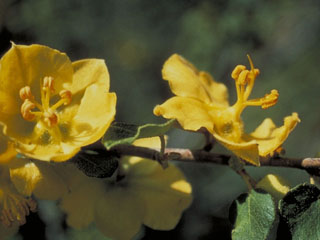
Hardie-Scott, Linda
Fremontodendron californicum
Fremontodendron californicum (Torr.) Coville
California Flannelbush, Northern Flannelbush, Northern Fremontia, California Slippery Elm
Sterculiaceae (Cacao Family)
Synonym(s): Fremontia californica, Fremontia californica ssp. crassifolia, Fremontia californica ssp. obispoensis, Fremontia californica var. diegensis, Fremontia californica var. integra, Fremontia californica var. napensis, Fremontia californica var. typica, Fremontia californica var. viridis, Fremontia crassifolia, Fremontia napensis, Fremontia obispoensis, Fremontodendron californicum ssp. californicum, Fremontodendron californicum ssp. crassifolium, Fremontodendron californicum ssp. napense, Fremontodendron californicum ssp. obispoense
USDA Symbol: FRCA6
USDA Native Status: L48 (N)
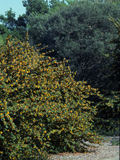
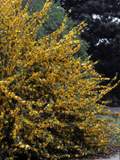
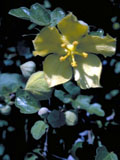
California flannelbush is an open, spreading shrub, usually to 12 ft., with olive-green, felted leaves. The large, yellow flowers are in great showy masses and tend to bloom one at a time.
Plant Characteristics
Duration: PerennialHabit: Shrub
Leaf Retention: Evergreen
Fruit Type: Capsule
Size Notes: Up to about 30 feet tall, usually much shorter.
Leaf: Green
Bloom Information
Bloom Color: Red , YellowBloom Time: Mar , Apr , May , Jun , Jul , Aug , Sep , Oct , Nov , Dec
Bloom Notes: Sepals usually yellow, lobes sometimes red at bases and margins.
Distribution
USA: AZ , CANative Distribution: Most of CA, c. AZ & Baja CA
Native Habitat: Dry, granitic, north slopes; 3000 to 6000 ft.
Growing Conditions
Water Use: LowLight Requirement: Part Shade
Soil Moisture: Dry
CaCO3 Tolerance: Low
Soil Description: Dry, well-drained, granitic soils.
Conditions Comments: Drought-tolerant. Fast-growing to 5 ft. Not for deer areas.
Propagation
Description: Propagate by seed or softwood cuttings.Seed Collection: Collect when the capsules begin to split.
Seed Treatment: Seeds require scarification in hot water followed by cold-moist stratification at 35 degrees for 12-16 weeks to obtain germination.
Commercially Avail: yes
Find Seed or Plants
Find seed sources for this species at the Native Seed Network.
From the National Organizations Directory
According to the species list provided by Affiliate Organizations, this plant is on display at the following locations:Santa Barbara Botanic Garden - Santa Barbara, CA
Native Seed Network - Corvallis, OR
Bibliography
Bibref 841 - Native Alternatives to Invasive Plants (2006) Burrell, C. C.Bibref 995 - Native Landscaping from El Paso to L.A. (2000) Wasowski, S. and A. Wasowski
Bibref 1218 - Tending the Wild: Native American Knowledge and the Management of California's Natural Resources (2006) Anderson, M. Kat
Search More Titles in Bibliography
Web Reference
Webref 30 - Calflora (2018) CalfloraWebref 38 - Flora of North America (2019) Missouri Botanical Garden, St. Louis, MO & Harvard University Herbaria, Cambridge, MA.
Additional resources
USDA: Find Fremontodendron californicum in USDA PlantsFNA: Find Fremontodendron californicum in the Flora of North America (if available)
Google: Search Google for Fremontodendron californicum
Metadata
Record Modified: 2022-10-18Research By: TWC Staff