Native Plants

Plant Database
Search for native plants by scientific name, common name or family. If you are not sure what you are looking for, try the Combination Search or our Recommended Species lists.
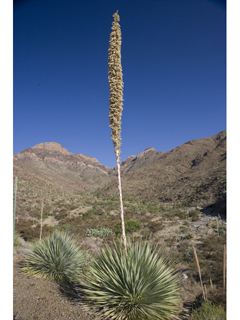
Braden, Al
Dasylirion wheeleri
Dasylirion wheeleri S. Watson
Common Sotol, Sotol, Desert Spoon, Desert Candle
Liliaceae (Lily Family)
Synonym(s):
USDA Symbol: DAWH2
USDA Native Status: L48 (N)
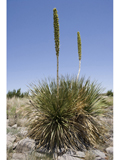
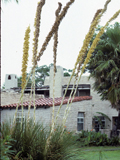
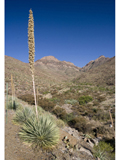
Thousands of tiny greenish-white flowers in a long, narrow cluster that grows from a dense bunch of many slender, spiny leaves.
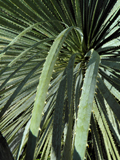
Desert Spoon plants may be treated in the same manner as Agaves to produce food and liquor (sotol). The tough leaves are woven into mats and baskets and used for thatching. The broad, spoon-like base is often used in dried floral arrangements. The smaller Smooth-leaved Sotol (D. leiophyllum), which grows on limestone in southern New Mexico, western Texas, and northern Mexico, has teeth that curve toward the leaf base.
Plant Characteristics
Duration: PerennialHabit: Shrub
Leaf Retention: Evergreen
Leaf Complexity: Simple
Leaf Shape: Linear
Breeding System: Flowers Unisexual , Dioecious
Fruit Type: Capsule
Size Notes: Leaves up to about 3 feet long. Flower stalk up to about 15 feet tall.
Leaf: Dark Green
Bloom Information
Bloom Color: YellowBloom Time: May , Jun , Jul
Distribution
USA: AZ , NM , TXNative Distribution: W. Texas to s. Arizona.
Native Habitat: Rocky desert slopes.
Growing Conditions
Water Use: LowLight Requirement: Sun
Soil Moisture: Dry
CaCO3 Tolerance: Medium
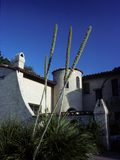
Conditions Comments: Dasylirion wheeleri is a drought tolerant desert plant with an attractive arching rosette of blue-green leaves with sharp teeth along the leaf margins. Placement in the garden should be carefully considered so as not to catch unwary passers-by with thorns. The flower spikes rise dramatically 10 feet above the leaf rosette and attract hummingbirds. Plants have a tendency to rot in heavy soils. To prevent this, provide excellent drainage and use mineral mulches such as crushed limestone or granite instead of a bark mulch.
Benefit
Use Ornamental: Wheeler sotol grown as an ornamental and the broad spoonlike leafbase is often used in dried floral arrangements.Use Wildlife: The sugary trunks and leaf bases of Wheeler sotol have been used to feed cattle during droughts.
Use Food: Indians and Mexicans prepared an alcoholic drink known as sotol by roasting the flower head in a pit for 24 hours and then distilling the juice.
Use Other: The leaves are used to make mats, baskets, ropes, thatch, and paper.
Conspicuous Flowers: yes
Interesting Foliage: yes
Attracts: Hummingbirds
Deer Resistant: High
Find Seed or Plants
Find seed sources for this species at the Native Seed Network.
From the National Organizations Directory
According to the species list provided by Affiliate Organizations, this plant is on display at the following locations:Lady Bird Johnson Wildflower Center - Austin, TX
NPSOT - Austin Chapter - Austin, TX
Native Seed Network - Corvallis, OR
NPSOT - Williamson County Chapter - Georgetown, TX
Bibliography
Bibref 841 - Native Alternatives to Invasive Plants (2006) Burrell, C. C.Bibref 995 - Native Landscaping from El Paso to L.A. (2000) Wasowski, S. and A. Wasowski
Search More Titles in Bibliography
Additional resources
USDA: Find Dasylirion wheeleri in USDA PlantsFNA: Find Dasylirion wheeleri in the Flora of North America (if available)
Google: Search Google for Dasylirion wheeleri
Metadata
Record Modified: 2017-05-10Research By: BJG, GDB