Native Plants

Plant Database
Search for native plants by scientific name, common name or family. If you are not sure what you are looking for, try the Combination Search or our Recommended Species lists.
Lytle, Melody
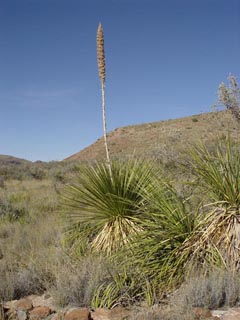
Dasylirion leiophyllum
Dasylirion leiophyllum Engelm. ex Trel.
Green Sotol, Smooth-leaved Sotol, Smooth-leaf Sotol, Sotol, Desert Candle
Liliaceae (Lily Family)
Synonym(s):
USDA Symbol: DALE2
USDA Native Status: L48 (N)
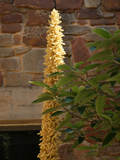
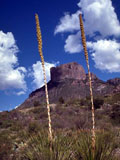
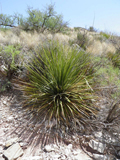
Sotol produces an unbranched flower stalk 5-20 feet tall, with long, dense clusters of small white flowers on the upper third. The flowers are of one sex, male on one plant and female on another. At the base of the plant is a crowded cluster of ribbonlike leaves, 1-3 feet long and 1/3-1/2 inch wide at the base. They have spiny teeth along the margins that curve backward toward the base.
Trunks split open during dry spells, allowing wildlife access to the spongy interior and leaf bases. During droughts, the round, cabbage-like base is sometimes cut up and fed to cattle after the leaves are removed. It is also a source of alcohol and is used commercially in the production of an alcoholic drink (also called sotol).


Plant Characteristics
Duration: PerennialHabit: Shrub
Leaf Retention: Evergreen
Leaf Complexity: Simple
Fruit Type: Capsule
Size Notes: Leaves up to about 3 feet long. Flower stalk up to about 20 feet tall.
Bloom Information
Bloom Color: White , Yellow , GreenBloom Time: May , Jun , Jul
Distribution
USA: NM , TXNative Habitat: Prairie, Plains, Meadows, Pastures, Savannas, Flat desert areas, Chaparral & brush country
Growing Conditions
Water Use: LowLight Requirement: Sun
Soil Moisture: Dry
Cold Tolerant: yes
Heat Tolerant: yes
Soil Description: Sandy, Caliche type, Limestone-based, Igneous
Benefit
Use Ornamental: Easily grown, Security hedge, Rock gardens, Rocky hillsideUse Food: Used by Indians several thousand years who roasted heart and meat at base of leaves in rock-lined pits for 48 hours.
Use Other: Indians used leaves used for weaving baskets and sandals and for thatching.
Conspicuous Flowers: yes
From the National Organizations Directory
According to the species list provided by Affiliate Organizations, this plant is on display at the following locations:NPSOT - Austin Chapter - Austin, TX
Bibliography
Bibref 307 - Edible and Useful Plants of Texas and the Southwest: Including recipes, harmful plants, natural dyes, and textile fibers: A Practical Guide (1999) Tull, D.Bibref 355 - Landscaping with Native Plants of Texas and the Southwest (1991) Miller, G. O.
Bibref 318 - Native Texas Plants: Landscaping Region by Region (2002) Wasowski, S. & A. Wasowski
Bibref 248 - Texas Wildflowers: A Field Guide (1984) Loughmiller, C. & L. Loughmiller
Search More Titles in Bibliography
Web Reference
Webref 38 - Flora of North America (2019) Missouri Botanical Garden, St. Louis, MO & Harvard University Herbaria, Cambridge, MA.Webref 23 - Southwest Environmental Information Network (2009) SEINet - Arizona Chapter
Additional resources
USDA: Find Dasylirion leiophyllum in USDA PlantsFNA: Find Dasylirion leiophyllum in the Flora of North America (if available)
Google: Search Google for Dasylirion leiophyllum
Metadata
Record Modified: 2023-04-11Research By: TWC Staff