Native Plants

Plant Database
Search for native plants by scientific name, common name or family. If you are not sure what you are looking for, try the Combination Search or our Recommended Species lists.
Reveal, James L.
Cornus racemosa
Cornus racemosa Lam.
Gray Dogwood
Cornaceae (Dogwood Family)
Synonym(s): Cornus foemina ssp. racemosa, Cornus paniculata
USDA Symbol: CORA6
USDA Native Status: L48 (N), CAN (N)
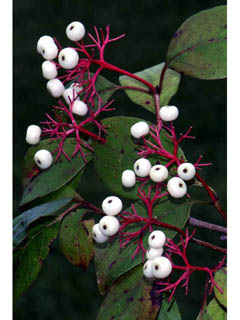
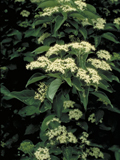
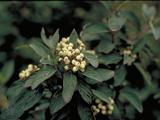
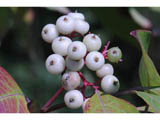
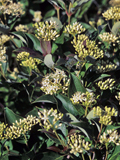
Gray dogwood is a thicket-forming, deciduous shrub to 16 ft. in height with greenish-white blossoms in open, terminal clusters. Young twigs are reddish and the fruit pedicels remain conspicuously red into late fall and early winter. Fruit itself is a white, 1/4 in. drupe that usually does not remain on the shrub for long.
The fruit of this dogwood is eaten by birds and other wildlife.
The genus cornus is Latin for a horn.

Plant Characteristics
Duration: PerennialHabit: Shrub
Leaf Retention: Deciduous
Fruit Type: Drupe
Size Notes: Up to about 16 feet tall.
Leaf: Green
Autumn Foliage: yes
Fruit: White, red stems
Bloom Information
Bloom Color: White , GreenBloom Time: May , Jun , Jul
Distribution
USA: AR , CT , DE , IA , IL , IN , KY , MA , MD , ME , MI , MN , MO , NC , ND , NE , NH , NJ , NY , OH , PA , RI , SC , SD , TX , VA , VT , WI , WVCanada: MB , NB , ON , QC
Native Distribution: ME to Ont. & Man., s. to SC & AR
Native Habitat: Thickets; river bank woods; wet to dry, low, open areas
Growing Conditions
Water Use: MediumLight Requirement: Sun , Part Shade , Shade
Soil Moisture: Moist
Soil pH: Circumneutral (pH 6.8-7.2)
CaCO3 Tolerance: Low
Soil Description: Moist soils.
Conditions Comments: Will adapt to drier sites. Used in erosion control and for wildlife habitat. Resistant to most diseases, insects and physiological problems.
Benefit
Use Wildlife: Fruit eaten by birds and other wildlife. Used by many bird species including Northern Cardinal, Downy Woodpecker, Northern Flicker, and Eastern Bluebird.Conspicuous Flowers: yes
Attracts: Birds , Butterflies
Larval Host: Spring Azure
Value to Beneficial Insects
Supports Conservation Biological ControlThis information was provided by the Pollinator Program at The Xerces Society for Invertebrate Conservation.
Butterflies and Moths of North America (BAMONA)
|
Spring Azure (Celastrina "ladon" ) 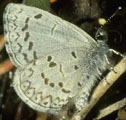 Larval Host |
Propagation
Description: Sow seeds immediately after collection or scarify and stratify and sow the following spring. Cornus spp. will root from softwood or semi-hardwood cuttings taken in summer, hardwood cuttings in winter, and suckers and division and by layering in the earlySeed Treatment: Stratify for 30-60 days at 41 degrees.
Commercially Avail: yes
Mr. Smarty Plants says
Plant identfication
October 21, 2009
Hi...Can you please identfy the tall, evergreen shrub with purple plum-colored foliage that I have noticed in winter locally?...Hope so, need he color! THX
view the full question and answer
National Wetland Indicator Status
| Region: | AGCP | AK | AW | CB | EMP | GP | HI | MW | NCNE | WMVE |
| Status: | FAC | FAC | FAC | FAC | FAC |
From the National Organizations Directory
According to the species list provided by Affiliate Organizations, this plant is on display at the following locations:Delaware Nature Society - Hockessin, DE
Mt. Cuba Center - Hockessin, DE
Bibliography
Bibref 1186 - Field Guide to Moths of Eastern North America (2005) Covell, C.V., Jr.Bibref 1185 - Field Guide to Western Butterflies (Peterson Field Guides) (1999) Opler, P.A. and A.B. Wright
Bibref 946 - Gardening with Prairie Plants: How to Create Beautiful Native Landscapes (2002) Wasowski, Sally
Bibref 841 - Native Alternatives to Invasive Plants (2006) Burrell, C. C.
Search More Titles in Bibliography
Web Reference
Webref 3 - Flora of North America (2014) Missouri Botanical Garden, St. Louis, MO & Harvard University Herbaria, Cambridge, MA.Additional resources
USDA: Find Cornus racemosa in USDA PlantsFNA: Find Cornus racemosa in the Flora of North America (if available)
Google: Search Google for Cornus racemosa
Metadata
Record Modified: 2022-10-03Research By: TWC Staff