Native Plants

Plant Database
Search for native plants by scientific name, common name or family. If you are not sure what you are looking for, try the Combination Search or our Recommended Species lists.
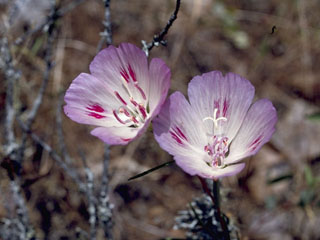
Bransford, W.D. and Dolphia
Clarkia amoena
Clarkia amoena (Lehm.) A. Nelson & J.F. Macbr.
Farewell To Spring, Farewell-to-spring, Herald-of-summer
Onagraceae (Evening Primrose Family)
Synonym(s):
USDA Symbol: CLAM
USDA Native Status: L48 (N), CAN (NI)
An open plant with showy, pink, cup-shaped flowers in a loose inflorescence. Farewell-to-spring is an erect or sprawling annual with showy, 4-petaled, cup-shaped, pink flowers occuring in the axils of several of the uppermost leaves. The large flowers are highlighted with a splash of bright red on each petal. Below the flowers are four reddish sepals which often remain attached after the flower buds have opened. The leaves of this 1-3+ ft. Clarkia are narrow.
As the lush grass watered by spring rains begins to turn gold in the dry heat of summer, Farewell-to-spring begins to flower. The flowers close at night, and reopen in the morning. The genus name honors Captain William Clark of the Lewis and Clark expedition to the Northwest in 1806. There are about 30 species, most in California, some very rare.
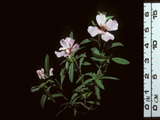
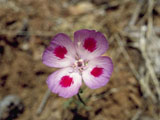
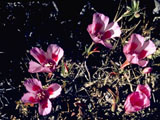
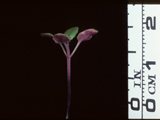
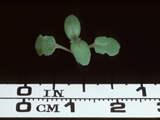
Plant Characteristics
Duration: AnnualHabit: Herb
Fruit Type: Capsule
Size Notes: Stems erect to decumbent, up to about 6 feet long, often much shorter.
Bloom Information
Bloom Color: Pink , PurpleBloom Time: Jun , Jul , Aug
Distribution
USA: CA , OR , WANative Distribution: Coastal areas from B.C. to c. CA
Native Habitat: Coastal slopes & bluffs
Growing Conditions
Light Requirement: Part ShadeSoil Description: Nutrient-poor, sandy loams.
Conditions Comments: Soil should be moist until flowering starts, then it can be quite dry. Seed strains vary in color and habit; some are low and spreading, others tall and erect. Pinch out the central leader to encourage branching and heavy bloom. Do not thin seedlings as crowding encourages blooming.
Benefit
Use Food: Indigenous Californians sowed Clarkia species and gathered the seeds to grind for food.Conspicuous Flowers: yes
Value to Beneficial Insects
Special Value to Native BeesThis information was provided by the Pollinator Program at The Xerces Society for Invertebrate Conservation.
Propagation
Description: Sow seeds after last frost in cold-winter zones. Where winters are milder, sow seeds late summer through fall. Germination is easy and it usually takes less than 90 days from seed to flowering plant.Commercially Avail: yes
Find Seed or Plants
Find seed sources for this species at the Native Seed Network.
From the National Organizations Directory
According to the species list provided by Affiliate Organizations, this plant is on display at the following locations:Native Seed Network - Corvallis, OR
Bibliography
Bibref 1218 - Tending the Wild: Native American Knowledge and the Management of California's Natural Resources (2006) Anderson, M. KatSearch More Titles in Bibliography
Web Reference
Webref 38 - Flora of North America (2019) Missouri Botanical Garden, St. Louis, MO & Harvard University Herbaria, Cambridge, MA.Webref 23 - Southwest Environmental Information Network (2009) SEINet - Arizona Chapter
Additional resources
USDA: Find Clarkia amoena in USDA PlantsFNA: Find Clarkia amoena in the Flora of North America (if available)
Google: Search Google for Clarkia amoena
Metadata
Record Modified: 2023-02-01Research By: TWC Staff