Native Plants

Plant Database
Search for native plants by scientific name, common name or family. If you are not sure what you are looking for, try the Combination Search or our Recommended Species lists.
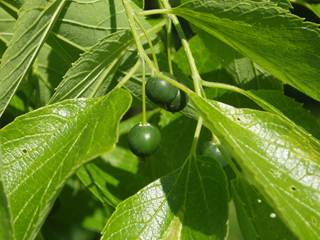
Makin, Julie
Celtis occidentalis
Celtis occidentalis L.
Common Hackberry, Northern Hackberry, American Hackberry, Nettle Tree, Beaverwood, False Elm
Ulmaceae (Elm Family)
Synonym(s): Celtis canina, Celtis occidentalis var. canina, Celtis occidentalis var. cordata, Celtis occidentalis var. crassifolia, Celtis occidentalis var. occidentalis, Celtis occidentalis var. pumila, Celtis pumila var. deamii
USDA Symbol: CEOC
USDA Native Status: L48 (N), CAN (N)
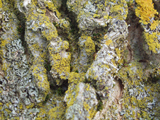
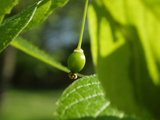
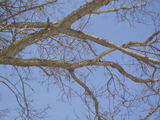
The common hackberry is a 60-100 ft. deciduous tree, varying greatly in response to habitat. The broad crown is often erratic in shape. Tree with rounded crown of spreading or slightly drooping branches, often deformed as bushy growths called witches’-brooms. Older bark is covered with conspicuous, corky projections. The plant foliage is dull-green and rough. Its fall color is not impressive. Orange-brown to dark-purple berries are arranged in clusters.
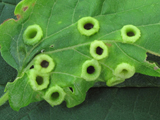
Used for furniture, athletic goods, boxes and crates, and plywood. The common name apparently was derived from "hagberry," meaning "marsh berry," a name used in Scotland for a cherry. Many birds, including quail, pheasants, woodpeckers, and cedar waxwings, consume the sweetish fruits. Branches of this and other hackberries may become deformed due to bushy growths called witches'-brooms produced by mites and fungi. The leaves often bear rounded galls caused by tiny jumping plant lice.
Plant Characteristics
Duration: PerennialHabit: Tree
Leaf Retention: Deciduous
Leaf Arrangement: Alternate
Leaf Complexity: Simple
Inflorescence: Axillary
Fruit Type: Drupe
Size Notes: Up to 100 feet tall.
Leaf: Green
Autumn Foliage: yes
Fruit: Purple, Red
Bloom Information
Bloom Color: Green , BrownBloom Time: Apr , May
Distribution
USA: AL , AR , CO , CT , DC , DE , FL , GA , IA , IL , IN , KS , KY , MA , MD , MI , MN , MO , MS , NC , ND , NE , NH , NJ , NM , NY , OH , OK , PA , RI , SC , SD , TN , TX , UT , VA , VT , WI , WV , WYCanada: MB , ON , QC
Native Distribution: NH to WY, s. to GA, AR & n.w. TX
Native Habitat: Stream banks; flood plains; rocky hillsides of open woods
Growing Conditions
Water Use: LowLight Requirement: Sun , Part Shade , Shade
Soil Moisture: Dry , Moist
Soil pH: Circumneutral (pH 6.8-7.2)
CaCO3 Tolerance: High
Drought Tolerance: High
Soil Description: Rich, moist soils. pH adaptable.
Benefit
Use Wildlife: Hackberries are among the best food and shelter plants for wildlife. The fruit is relished by birds.Use Food: Americans made cakes by pulverizing the entire fruit, including the seed, making a nutritious food that could be stored.
Dakota people used the dried fruit as a spice.
Native Americans used hackberry extracts medicinally, for sore throats, colds, regulation of menstrual periods. (Athenic)
Attracts: Birds , Butterflies
Larval Host: Question Mark, Mourning Cloak, American Snout
Butterflies and Moths of North America (BAMONA)
|
Wild cherry sphinx (Sphinx drupiferarum) 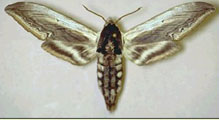 Adult Food Source |
Tawny Emperor (Asterocampa clyton) 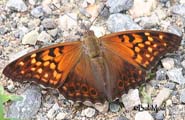 Larval Host |
American Snout (Libytheana carinenta) 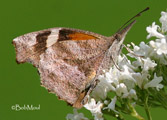 Larval Host |
Question Mark (Polygonia interrogationis) 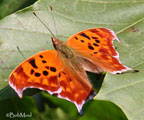 Larval Host |
|
Mourning Cloak (Nymphalis antiopa) 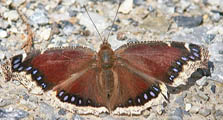 Larval Host |
Propagation
Description: Stratified seed sown in spring or untreated seed sown in fall. Can be rooted from juvenile wood and from root sprouts or suckers.Seed Collection: Pick mature fruits in late summer until winter. Air-dry with pulp on or soak overnight and rub pulp off on screen. Store in sealed, refrigerated containers.
Seed Treatment: Stratify 60-90 days at 41 degrees.
Commercially Avail: yes
Find Seed or Plants
View propagation protocol from Native Plants Network.
National Wetland Indicator Status
| Region: | AGCP | AK | AW | CB | EMP | GP | HI | MW | NCNE | WMVE |
| Status: | FACU | FAC | FACU | FACU | FAC | FAC | FACU |
From the National Organizations Directory
According to the species list provided by Affiliate Organizations, this plant is on display at the following locations:Texas Discovery Gardens - Dallas, TX
Delaware Nature Society - Hockessin, DE
Stengl Biological Research Station - Smithville, TX
Mt. Cuba Center - Hockessin, DE
Bibliography
Bibref 1186 - Field Guide to Moths of Eastern North America (2005) Covell, C.V., Jr.Bibref 298 - Field Guide to Texas Trees (1999) Simpson, B.J.
Bibref 1185 - Field Guide to Western Butterflies (Peterson Field Guides) (1999) Opler, P.A. and A.B. Wright
Bibref 355 - Landscaping with Native Plants of Texas and the Southwest (1991) Miller, G. O.
Bibref 841 - Native Alternatives to Invasive Plants (2006) Burrell, C. C.
Bibref 297 - Trees of Central Texas (1984) Vines, Robert A.
Search More Titles in Bibliography
Additional resources
USDA: Find Celtis occidentalis in USDA PlantsFNA: Find Celtis occidentalis in the Flora of North America (if available)
Google: Search Google for Celtis occidentalis
Metadata
Record Modified: 2015-11-12Research By: TWC Staff