Native Plants

Plant Database
Search for native plants by scientific name, common name or family. If you are not sure what you are looking for, try the Combination Search or our Recommended Species lists.
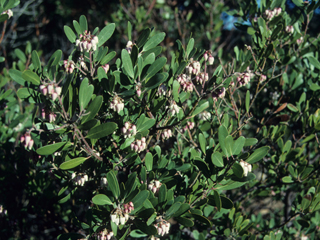
Wasowski, Sally and Andy
Arctostaphylos pungens
Arctostaphylos pungens Kunth
Pointleaf Manzanita, Mexican Manzanita
Ericaceae (Heath Family)
Synonym(s): Arctostaphylos chaloneorum, Arctostaphylos pseudopungens, Arctostaphylos pungens ssp. chaloneorum
USDA Symbol: ARPU5
USDA Native Status: L48 (N)
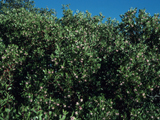
Rounded shrub, often forming dense thickets. Branches with smooth red-brown bark.
A number of small mammals and ground birds eat the berries of this plant.
Plant Characteristics
Duration: PerennialHabit: Shrub
Leaf Retention: Evergreen
Leaf Complexity: Simple
Breeding System: Flowers Bisexual
Fruit Type: Drupe
Size Notes: Up to about 10 feet tall.
Leaf: Dark Green
Bloom Information
Bloom Color: White , PinkBloom Time: Jan , Feb , Mar , Apr , May , Jun
Bloom Notes: White to pale pinkish.
Distribution
USA: AZ , CA , NM , NV , TX , UTNative Distribution: Across the Southwest from California and Nevada to Texas.
Native Habitat: Mixed shrub and sagebrush communities, pinyon-juniper woods, drained sandy to gravelly areas, canyons, lower mountain slopes.
Growing Conditions
Water Use: LowLight Requirement: Part Shade
CaCO3 Tolerance: Low
Benefit
Use Wildlife: Berries consumed by mammals and birds.Use Food: Manzanita berries were used to make a refreshing, cider-like drink by indigenous peoples.
Conspicuous Flowers: yes
Interesting Foliage: yes
Attracts: Birds
Nectar Source: yes
Butterflies and Moths of North America (BAMONA)
|
Splendid royal moth (Citheronia splendens) 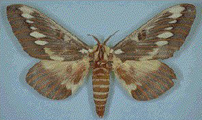 Adult Food Source |
From the National Organizations Directory
According to the species list provided by Affiliate Organizations, this plant is on display at the following locations:Santa Barbara Botanic Garden - Santa Barbara, CA
Bibliography
Bibref 1186 - Field Guide to Moths of Eastern North America (2005) Covell, C.V., Jr.Bibref 1185 - Field Guide to Western Butterflies (Peterson Field Guides) (1999) Opler, P.A. and A.B. Wright
Bibref 1218 - Tending the Wild: Native American Knowledge and the Management of California's Natural Resources (2006) Anderson, M. Kat
Search More Titles in Bibliography
Web Reference
Webref 30 - Calflora (2018) CalfloraWebref 38 - Flora of North America (2019) Missouri Botanical Garden, St. Louis, MO & Harvard University Herbaria, Cambridge, MA.
From the Archive
Wildflower Newsletter 1987 VOL. 4, NO.2 - Wildflowers Provide Activity in Summer, Beautiful Colorado Beckons, What is Rese...Additional resources
USDA: Find Arctostaphylos pungens in USDA PlantsFNA: Find Arctostaphylos pungens in the Flora of North America (if available)
Google: Search Google for Arctostaphylos pungens
Metadata
Record Modified: 2022-10-17Research By: TWC Staff