Native Plants

Plant Database
Search for native plants by scientific name, common name or family. If you are not sure what you are looking for, try the Combination Search or our Recommended Species lists.
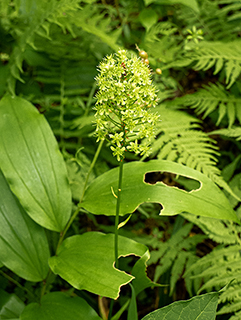
Brundage, Stephanie
Amianthium muscitoxicum
Amianthium muscitoxicum (Walter) A. Gray
Fly Poison, Crow Poison
Liliaceae (Lily Family)
Synonym(s): Chrosperma muscitoxicum, Zigadenus muscitoxicus
USDA Symbol: AMMU
USDA Native Status: L48 (N)
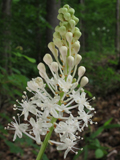
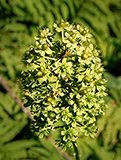
The numerous narrow, elongated leaves and the 12-24 in. flower stalk superficially resemble common hyacinth. Flowers, occuring in a dense, showy raceme are first white, then bronzy-green. Leaves tend to spread outward and arch downward.
Pulp from a crushed bulb, mixed with sugar, is used to poison flies, hence the species name, from the Latin muscae ("flies") and toxicum ("poison"). Bunchflower (Veratrum virginicum) has a somewhat similar white flower; its three petals and three sepals have narrow, stalk-like bases with two dark glands on each; there are several spikes in a cluster.
Plant Characteristics
Duration: PerennialHabit: Herb
Leaf Complexity: Simple
Fruit Type: Capsule
Size Notes: Usually 1 to 2 feet high, occasionally up to 5 feet.
Flower: Flowers in 2 to 6 inch clusters.
Bloom Information
Bloom Color: White , GreenBloom Time: Apr , May , Jun , Jul , Aug
Bloom Notes: A sticky substance coats the blooms, causing them to glisten.
Distribution
USA: AL , AR , DE , FL , GA , KY , LA , MD , MO , MS , NC , NJ , NY , OK , PA , SC , TN , VA , WVNative Distribution: PA to WV & MO, s. to FL, MS & OK
Native Habitat: Mesic woods; seep areas; low pinelands; savannas; meadows; sandhills
Growing Conditions
Water Use: Medium , HighLight Requirement: Part Shade
Soil Moisture: Moist
Soil pH: Acidic (pH<6.8)
Soil Description: Moist, acid soil, rich or poor.
Conditions Comments: Does best with at least 1 or 2 hours of direct sun. Tolerates seasonal flooding.
Benefit
Use Ornamental: Good for low, white color in partial shade in the eastern US.Use Other: Crushed bulbs mixed with sugar can be used as a fly poison.
Warning: This plant contains a very toxic alkaloid, and the entire plant is poisonous, especially the bulb, to humans and livestock if ingested. Sensitivity to a toxin varies with a person’s age, weight, physical condition, and individual susceptibility. Children are most vulnerable because of their curiosity and small size. Toxicity can vary in a plant according to season, the plant’s different parts, and its stage of growth; and plants can absorb toxic substances, such as herbicides, pesticides, and pollutants from the water, air, and soil.
Conspicuous Flowers: yes
Propagation
Propagation Material: Root Division , SeedsDescription: Fly poison can be propagated by division and with difficulty from seed. Plant seed as soon as ripe or in the spring.
Seed Collection: Store seed at room temperature.
National Wetland Indicator Status
| Region: | AGCP | AK | AW | CB | EMP | GP | HI | MW | NCNE | WMVE |
| Status: | FAC | FAC | FAC | FAC |
From the National Organizations Directory
According to the species list provided by Affiliate Organizations, this plant is on display at the following locations:Mt. Cuba Center - Hockessin, DE
Bibliography
Bibref 1620 - Gardening with Native Plants of the South (Reprint Edition) (2009) Wasowski, S. with A. WasowskiSearch More Titles in Bibliography
Web Reference
Webref 38 - Flora of North America (2019) Missouri Botanical Garden, St. Louis, MO & Harvard University Herbaria, Cambridge, MA.Webref 23 - Southwest Environmental Information Network (2009) SEINet - Arizona Chapter
Additional resources
USDA: Find Amianthium muscitoxicum in USDA PlantsFNA: Find Amianthium muscitoxicum in the Flora of North America (if available)
Google: Search Google for Amianthium muscitoxicum
Metadata
Record Modified: 2023-04-10Research By: TWC Staff