Native Plants

Plant Database
Search for native plants by scientific name, common name or family. If you are not sure what you are looking for, try the Combination Search or our Recommended Species lists.
Marcus, Joseph A.
Acanthocereus tetragonus
Acanthocereus tetragonus (L.) Humm.
Triangle Cactus, Barbed-wire Cactus, Chaco
Cactaceae (Cactus Family)
Synonym(s): Acanthocereus floridanus, Acanthocereus pentagonus, Cactus tetragonus, Cereus pentagonus
USDA Symbol: ACTE4
USDA Native Status: L48 (N), HI (I), VI (N)
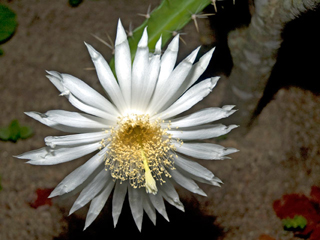
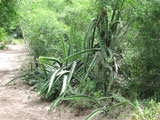
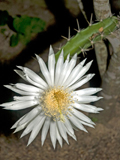
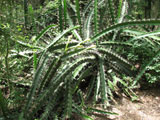
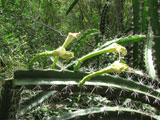
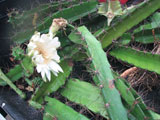
Sprawling, clambering or arching-accumbent stems to several meters (up to 2m growth per year), Ribs are sharply-angled, usually 3 on mature stems, 4-5 on juvenile stems. Spiney. Spines variable, usually about 8 per areaole, 2.5-5cm long. Night-flowering, fully open flower 10-20cm in diameter, inner tepals are pure white, slightly fragrant. Fruits are shiny, red and sweet-tasting.
Triangle cactus has large, fragrant white blooms that open at night during the summer and attract hummingbird moths. This cactus is hardy to about 20 degrees Fahrenheit.
Plant Characteristics
Duration: PerennialHabit: Cactus/Succulent
Root Type: Fibrous
Leaf Retention: Semi-evergreen
Breeding System: Flowers Bisexual
Fruit Type: Berry
Size Notes: Up to about 6 feet tall by 12 feet across.
Flower: Flowers 10-20 cm. Outer tepals greenish-white. Inner tepals pure white. Stamens yellow
Fruit: Red. About 5 cm.
Bloom Information
Bloom Color: WhiteBloom Time: Jul , Aug , Sep
Bloom Notes: Night-flowering, usually opening near midnight, closing at or about dawn. Flowers are large and slightly fragrant.
Distribution
USA: FL , TXNative Distribution: Coastal areas of South Texas, Florida, West Indies, Mexico, Central America and northern South America.
Native Habitat: Thickets in sandy, coastal areas.
Growing Conditions
Water Use: Low , MediumLight Requirement: Part Shade
Soil Moisture: Dry , Moist
Drought Tolerance: High
Heat Tolerant: yes
Soil Description: Sandy, moist soils.
Benefit
Use Ornamental: Garden curiosity.Use Wildlife: In Florida, endangered Key Largo woodrats eat the stems.
Use Food: Fruit is edible and sweet.
Warning: Painfully spiney plants. May be a garden aggressive.
Conspicuous Flowers: yes
Interesting Foliage: yes
Attracts: Butterflies
Nectar Source: yes
Propagation
Propagation Material: Seeds , Semi-hardwood CuttingsDescription: May be propagated by seed or by stem cuttings.
Seed Collection: Seed should be removed from fruit pulp and thorougly dried before sowing.
National Wetland Indicator Status
| Region: | AGCP | AK | AW | CB | EMP | GP | HI | MW | NCNE | WMVE |
| Status: | FAC | UPL | FACU | UPL |
Bibliography
Bibref 1119 - Florida Keys Wildflowers: A Guide to the Common Wildflowers of the Florida Keys (2004) Hammer, Roger L.Bibref 293 - Manual of the Vascular Plants of Texas (1979) Correll, D. S. & M. C. Johnston
Search More Titles in Bibliography
Additional resources
USDA: Find Acanthocereus tetragonus in USDA PlantsFNA: Find Acanthocereus tetragonus in the Flora of North America (if available)
Google: Search Google for Acanthocereus tetragonus
Metadata
Record Modified: 2010-06-07Research By: Joseph A. Marcus