Native Plants

Q. Who is Mr. Smarty Plants?
A: There are those who suspect Wildflower Center volunteers are the culpable and capable culprits. Yet, others think staff members play some, albeit small, role. You can torture us with your plant questions, but we will never reveal the Green Guru's secret identity.

Did you know you can access the Native Plant Information Network with your web-enabled smartphone?

Ask Mr. Smarty Plants
Ask Mr. Smarty Plants is a free service provided by the staff and volunteers at the Lady Bird Johnson Wildflower Center.

rate this answer

Friday - July 15, 2011
From: Washington, DC
Region: Mid-Atlantic
Topic: Non-Natives
Title: Need suggestions for alternatives for Crape Myrtle in Washington, DC.
Answered by: Jimmy Mills
QUESTION:
What can you recommend as native alternatives to the shorter (garden-sized) crape myrtle cultivars?ANSWER:
To get an idea of the size of plants we need to look for, I consulted this link from North Carolina State University and found that dwarf cultivars of Crape Myrtle range from 5 to 20’.
The Houston Chapter of the Native Plant Society of Texas (NPSOT) has a program called NICE (Natives Instead of Common Exotics) that encourages people to utilize native plants in their landscape, and provides suggested alternatives for the exotics. Below is an excerpted list of “Bird and Butterfly Plants” which has several alternatives for crape myrtle.
Small Trees:
Use:
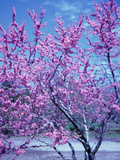
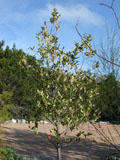
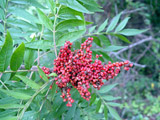
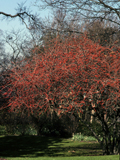
Mexican Plum, Redbud, Green Hawthorn, Deciduous Holly, Cherry Laurel, Wild Crab Apple, American Holly, Red Buckeye, Sweet Bay Magnolia, Farkleberry, Smooth Sumac, Flame-Leaf Sumac, Tooth-Ache Tree
Instead of Exotics:
Bradford Pear, Crape Myrtle, Wax Leaf Ligustrum, Red tip Photinia
Medium Sized Trees:
Use:
Red Buckeye, American Hop Hornbeam, Hornbeam, Gum Bumelia, Flowering Dogwood, Rough-leaf Dogwood,
Mexican Plum, Redbud, Carolina Buckthorn, Drummond Red Maple, Green Hawthorn, American Holly
Instead of Exotics:
Bradford Pear, Chinese Elm (also known as lacebark, Drake, Allee, Bosque Elm), Crape Myrtle, Red tip Photinia,
Chinese Tallow, Goldenrain Tree, Chinese Umbrella Tree (also known as Chinaberry Tree or Melia), Mimosa,
This sort of looks overwhelming but if we utilize our Native Plant Database, we might can make it manageable.
First, lets select a few plants that could be possibilities. ( Redbud, Cherry Laurel, Flame-leaf sumac, Deciduous Holly). Now go to the the Database and enter each plant name (one at a time) in the “Search native plant database” box. Click the “go” button, and you will get the NPIN page for that plant. Things to look for on the page: the scientific name of the plant, a description of the plant that includes its mature size, growth requirements such as amount of water, light needed, and soil type, and other plant characteristics. Scroll down to the “Additional Resources” box and click on the plant name next to USDA plants. The page that comes up contains a distribution map that shows the geographical areas where the plant grows.
Do this for all of the plants on our short list, and if you are still having fun, continue on through the long list and see what strikes your fancy.
Our Suppliers Directory can help you locate businesses in your area that sell the plants you select .
From the Image Gallery
More Non-Natives Questions
Alternative for Pittosporum limelight
March 22, 2012 - Is it ok to plant a Pittosporum limelight by pool? Don't want bees! Needs to be 6 feet. Thanks.
view the full question and answer
Is Crape Myrtle Native?
July 20, 2015 - Hello, I live in Frisco, TX. Can you tell me is there any Crape Myrtle which is native to Frisco, TX.
view the full question and answer
Correction of tree name from Bay Point CA
October 16, 2013 - The tree should of been Mulberry don't know how it was changed!!
Tuesday - October 15, 2013
From: Bay Point, CA
Region: California
Topic: Non-Natives, Cacti and Succulents, Trees
Title: Non-...
view the full question and answer
White spots on Hibiscus leaves
August 06, 2008 - My hibiscus trees have white spots or splotches on the leaves. What is it and what can I do to get rid of it?
Also, the birds are eating my tomatoes faster than i can grow them. I've used the owl &...
view the full question and answer
Care of Dracaena fragrans, cultivar
July 09, 2007 - I just recently purchased a tree which I was told was called a Dracaena or also corn plant. I can not seem to find a site that will inform me on how to take care of this tree. If you can please let ...
view the full question and answer
| Support the Wildflower Center by Donating Online or Becoming a Member today. |