Native Plants

Q. Who is Mr. Smarty Plants?
A: There are those who suspect Wildflower Center volunteers are the culpable and capable culprits. Yet, others think staff members play some, albeit small, role. You can torture us with your plant questions, but we will never reveal the Green Guru's secret identity.
Did you know you can access the Native Plant Information Network with your web-enabled smartphone?

Ask Mr. Smarty Plants
Ask Mr. Smarty Plants is a free service provided by the staff and volunteers at the Lady Bird Johnson Wildflower Center.

rate this answer

Friday - March 11, 2011
From: Austin, TX
Region: Southwest
Topic: Edible Plants, Herbs/Forbs
Title: Information about Cedar Sage from Austin
Answered by: Barbara Medford
QUESTION:
I am new to the Austin area and was wondering about cedar sage (salvia roemeriana). Is this plant considered aromatic, non-aromatic of chia? And, other than the edible flower are other parts of the plants used?ANSWER:
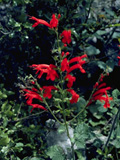
Follow this plant link Salvia roemeriana (Cedar sage) to our page on this plant to learn about growing season, blooming, etc. It is aromatic, as it belongs to the Lamiaceae, or mint, family. This is also why the plant is considered highly deer-resistant, because deer don't ordinarily approach aromatic plants, unless they are really hungry, which is usually. This USDA Plant Profile map shows Cedar Sage as being native to this part of the state.
We must be a little out of things, because the only time we had heard of "chia" was in reference to the funny little animals that "grew" fur. However, we did a little more searching and found this from drweil.com:
"Chia is an edible seed that comes from the desert plant Salvia hispanica, a member of the mint family that grows abundantly in southern Mexico. You may have seen chia sprouts growing on the novelty planters called Chia Pets, but historically, the seeds have been the most important part of the plant. In pre-Columbian times they were a main component of the Aztec and Mayan diets and were the basic survival ration of Aztec warriors. I've read that one tablespoon was believed to sustain an individual for 24 hours. The Aztecs also used chia medicinally to stimulate saliva flow and to relieve joint pain and sore skin."
So, insofar as chia is a member of the Salvia genus, it is related to Cedar Sage. It is, however, native to southern Mexico and therefore not in our Native Plant Database. The seeds are apparently the important thing, considered to be a good source of Omega-3 fatty acids. We could find no reference to the seeds of Cedar Sage as being a similar source, but neither did we find anything saying that their seeds were poisonous. So, if you're interested, we guess you could give them a try. We learn something new every day.
From the Image Gallery
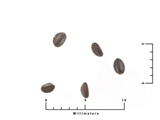
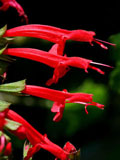
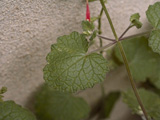
More Edible Plants Questions
Edibility of fruit of Passiflora incarnata
July 19, 2007 - We have Passion flower vines growing, blooming and producing fruit all over our property and the land nearby. They are growing wild. We are near Greensboro, Georgia which is barely in the Northeast pa...
view the full question and answer
Niagara and Concord grape crop failure
September 01, 2008 - Hi, I have been growing niagara grapes and concord grapes for 3 years now and this year I found myself without any fruits. The plant itself if full of leaves and is healthy. I was wondering why this w...
view the full question and answer
Are palm tree leaves poisonous?
May 03, 2010 - Hello, I am doing a "Menu" on Hawaii and I was wondering if palm tree leaves are edible. I have to make menu items and i was thinking palm tree leaves could be included..
If you know please answer!...
view the full question and answer
Information on edible tubers of hog potato from Austin
November 10, 2011 - I inquired a while back about hog potato or Hoffmannseggia glauca. You gave me some information on the plant but no information on when the plant produces the edible tubers. Also how long does it take...
view the full question and answer
Native American barberry with edible fruit in New Mexico
December 06, 2008 - HI I am looking for a native american burberry plant with edible fruit. I love Persian cuisine, and they use the dried fruit of the burberry plant in a rice dish that I would like to recreate. I liv...
view the full question and answer
| Support the Wildflower Center by Donating Online or Becoming a Member today. |