Native Plants

Q. Who is Mr. Smarty Plants?
A: There are those who suspect Wildflower Center volunteers are the culpable and capable culprits. Yet, others think staff members play some, albeit small, role. You can torture us with your plant questions, but we will never reveal the Green Guru's secret identity.

Did you know you can access the Native Plant Information Network with your web-enabled smartphone?

Ask Mr. Smarty Plants
Ask Mr. Smarty Plants is a free service provided by the staff and volunteers at the Lady Bird Johnson Wildflower Center.

rate this answer

Tuesday - September 29, 2009
From: Weatherford, TX
Region: Southwest
Topic: Transplants, Shrubs
Title: Problems with transplanting cenizo in Weatherford TX
Answered by: Barbara Medford
QUESTION:
I tried to transplant a Silverado Sage into a large pot but within 1 day it started wilting. Could it be the soil? I used potting soil not soil from the ground which is a sandy soil.ANSWER:
That's an easy one. Your Leucophyllum frutescens (Texas barometer bush), sometimes sold by the trade name 'Silverado Sage,' has transplant shock. What we don't know is how it happened. About the best we can do is tell you what might have happened, so you can avoid doing it again the next time you transplant.
The first possibility is, if you just purchased it and brought it home, it may have been in a stressed condition from the way it was being cared for at the nursery. It could have been in the pot for so long that its roots were wrapped around in the shape of the pot, and are possibly strangling the plant. When you purchase a commercially potted plant, always lift it out of the pot to see if it is rootbound.
Another thing is that the cenizo has a taproot. It is always more difficult to transplant a woody plant with a taproot; damage to that root could cause death to the plant. In its natural habitat, the cenizo is a desert shrub. It has low water needs, does best in sun or part shade, and should not be fertilized. You should never fertilize a plant that is stressed, and most native plants don't need fertilizer because they are already adapted to the climate, soils and rainfall where they are growing. It is very important that this plant have good drainage; it will suffer it if has water standing on its roots.
No matter what caused the transplant shock, here is what to try to see if you can help it recover. Trim off from 1/4 to 1/3 of the upper branches. Keep the pot in sun or part shade, water infrequently and do not fertilize. Even though the cenizo is evergreen and can bloom 12 months of the year, depending on rainfall, it will be in a semi-dormant state during the fall and winter, which should give it an opportunity to regroup and come back with new growth in the spring.
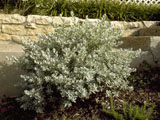
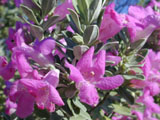
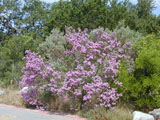
From our Native Plant Image Gallery:

More Shrubs Questions
Shrubs to stabilize steep slope in California
February 03, 2010 - Suggest shrubs to stabilize steep bank that are drought resistant and resistant to too much rain. Cape honeysuckle? oleander? bottle brush? What?
view the full question and answer
Should flower stems of Texas mountain laurel be removed after they bloom?
March 02, 2016 - Should I trim off the old flower stems from this years bloom on a Texas Mountain Laurel?
view the full question and answer
Is cenizo (Leucophyllum frutescens) edible?
December 21, 2012 - I found a post here about cenizo leaves being used for tea, but I'm wondering if the leaves of the cenizo are edible? I have found many recipes for 'brown butter sage' leaves (sauteed often with on...
view the full question and answer
Ailing Tecoma stans from Phoenix AZ
August 24, 2012 - I have several young Tecoma plants in my Phoenix, AZ garden. I planted them in June and have tended to them over the summer. They are watered twice daily. On some of the plants, I've noticed two oddi...
view the full question and answer
Deer resistant plants for area under grand fir (Abies grandis) in Idaho
July 08, 2010 - What can I plant on a slope under Grand Fir trees in North Idaho, zone 4 - anything deer resistant?
view the full question and answer
| Support the Wildflower Center by Donating Online or Becoming a Member today. |