Native Plants

Q. Who is Mr. Smarty Plants?
A: There are those who suspect Wildflower Center volunteers are the culpable and capable culprits. Yet, others think staff members play some, albeit small, role. You can torture us with your plant questions, but we will never reveal the Green Guru's secret identity.

Did you know you can access the Native Plant Information Network with your web-enabled smartphone?

Ask Mr. Smarty Plants
Ask Mr. Smarty Plants is a free service provided by the staff and volunteers at the Lady Bird Johnson Wildflower Center.

rate this answer

Saturday - December 08, 2007
From: Port Royal, PA
Region: Northeast
Topic: Non-Natives, Propagation, Transplants
Title: Division of impatiens grown in a pot
Answered by: Barbara Medford
QUESTION:
I have an impatient and it is growing out of the pot. I was wondering if it were possible to divide it somehow and have two medium size plants.ANSWER:
Ordinarily, we would remind you that the Lady Bird Johnson Wildflower Center is dedicated to the use and propagation of plants native to North America. Then, ordinarily, we would say that most pot plants for indoor use are non-native tropicals or sub-tropicals, but, because we understand indoor potted plants are very important to many people, that we are always glad to help them with plant care.
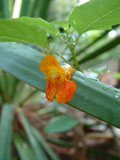
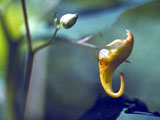
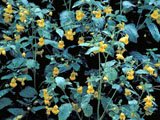
That's what we would ordinarily say. But it just so happens that there ARE some impatiens native to North America. Impatiens capensis (jewelweed) , Impatiens noli-tangere (western touch-me-not) , and Impatiens pallida (pale touch-me-not) all are found in shady, moist woodland areas in North America. As it happens, however, we're pretty sure that the impatiens you are seeking to divide is not a native, but probably Impatiens balsamina or Impatiens walleriana, both originally from the mountains of East Africa, or Impatiens hawkeri, New Guinea impatiens from (where else?) New Guinea.
In terms of what you want to do, it really doesn't matter. They are all, native and non-native, members of the Balsaminaceae Family. It is usually regarded as an annual, but actually is what is called a "tender perennial", which means that the first hint of freezing, and it goes to the compost pile. For propagation, seeding in flats and then transplanting to pots is recommended or just going to the garden store in the spring and buying 4 in. pots all ready to put in the ground. But you already have a nice big plant that has run out of room in the pot, and since, in Pennsylvania, it is obviously living indoors, you can certainly divide it, and now is as good a time as any.
Depending on the size of the root ball, you can probably get several starts from your plant, but suit yourself on how many you want. Tug gently on the base of the plant and lift it out of the pot. Shake off as much dirt as you can, and either using fingers or a knife through the root ball, pull the roots apart. Impatiens are pretty soft and brittle, so you may do some damage to the top of the plant, but don't worry, you're going to trim it anyway. First, trim the bottom of the roots, about 1/3 of the way up, and pull off any dead or dying roots. We always recommend using fresh potting soil, something very fine and designed for house plants. Make sure the pots have good drainage holes. Put some soil in the bottom of the pot, and then, holding the plant about at the height you want it to be, put soil in around the roots. About halfway up, we like to put in some slow release plant food, and then finish filling the pot to the level you want it, and pack it lightly. The finished pots should be put somewhere they can drain and stand in the water that drains out, like a basin or sink. The reason for this is that new potting soil is very dry and the water shoots right through it, leaving the plant roots dry. If it stands for a while in the water, the water will draw back up into the soil and get it thoroughly moist. Now, let it drain. With clippers, trim about 1/3 off the top foliage, and return the plants to a light, warm space.
Images of impatiens native to North America:
More Propagation Questions
Poppies for a wedding in August from Highlands Ranch CO
February 04, 2013 - Are poppies available to buy for weddings in August in Colorado?
view the full question and answer
Why is my yaupon tree not producing berries in Metairie La?
November 04, 2009 - What is the lifespan of a Yaupon Tree? We live in Louisiana, and our Yaupon would always get the white flowers in the Spring but never the red berries. Why is that?
view the full question and answer
Plant cloning or genetic engineering
February 23, 2012 - Can you take one genome (strain) and take a clean cut and put onto another plant another strain?
view the full question and answer
Non-native Moth Mullein as a garden plant from Starksville MS
July 09, 2011 - I collected seeds from a beautiful Moth Mullein growing in a lot which will soon be bulldozed. Would I regret sowing them in the back of a sunny perennial bed this fall. These are from the white-pin...
view the full question and answer
Sunlight needs for native wildflower seedlings from Double Oaks TX
January 27, 2014 - Last December I created a flower bed for my parents' backyard and sowed native wildflower seeds (obtained from Native American Seed). The bed is in full sun most of the day, and the seeds are alread...
view the full question and answer
| Support the Wildflower Center by Donating Online or Becoming a Member today. |