Native Plants

Q. Who is Mr. Smarty Plants?
A: There are those who suspect Wildflower Center volunteers are the culpable and capable culprits. Yet, others think staff members play some, albeit small, role. You can torture us with your plant questions, but we will never reveal the Green Guru's secret identity.

Did you know you can access the Native Plant Information Network with your web-enabled smartphone?

Ask Mr. Smarty Plants
Ask Mr. Smarty Plants is a free service provided by the staff and volunteers at the Lady Bird Johnson Wildflower Center.

rate this answer

Thursday - July 19, 2007
From: Columbia, SC
Region: Southeast
Topic: Edible Plants
Title: Toxicity of leaves and berries of lantana
Answered by: Nan Hampton
QUESTION:
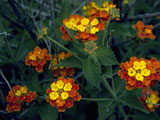
Hi Mr. Smarty Plants!!! I live in Columbia, SC and have fallen in love with the Lantana or Lanta plants. I have a lot of them because of their rapid growth. My question is -- in addition to all the beautiful flowers and hummingbirds they attract, the bushes are producing berries -- a dark blue purple. Are these safe to eat? Thank youANSWER:
Lantana camara (lantana) is on several poisonous plants databases: the Poisonous Plants Informational Database from Cornell University, Poisonous Plants of North Carolina from North Carolina State University, the Texas Toxic Plants database from Texas Cooperative Extension Service and Texas A&M, the Plants Toxic to Animals database from the University of Illinois Veterinary Medicine Library, and the Canadian Poisonous Plants Information System. Most of these databases deal with the agricultural aspects of plant toxicity, but all agree that the leaves and green berries are toxic to livestock and are dangerous to humans as well. It seems to be the green berries that are potentially the most toxic for humans since most people wouldn't consider eating the leaves. The Cornell University site has an account of South African children eating ripe berries with apparently no ill effects, but Mr. Smarty Plants certainly wouldn't experiment with those ripe berries to see if they were OK to eat! Apparently, birds are unaffected by the triterpenoids that affect large mammals since birds are the major dispersal agents of Lantana sp. seeds.They are beautiful plants and the hummingbirds and butterflies love them. Enjoy them—just don't eat the berries!
More Edible Plants Questions
Who ate the Jack-in-the-Pulpit in Ontario?
July 07, 2009 - Something has dug up my clump of Jack-in-the-pulpit at my parents' cottage in the Haliburtons (Ontario, Canada). Leaves, berries and roots are gone. We know we have a black bear who likes our compo...
view the full question and answer
Planting native blueberry bushes in Tennessee
July 07, 2008 - I have long wished to have wild blueberry bushes at my home. They are native to mountainous regions of my state, but I don't know whether or not it is reasonable to expect to be able to grow them wh...
view the full question and answer
Growing Chile Pequin Indoors
December 09, 2015 - About a year ago I visited your page and as a result I planted 8 seeds in spring 2015 from a large Chile Pequin plant that came up wild in my Cedar Park home near Austin. The last harvest was late su...
view the full question and answer
Food and medicinal value of Parsley Hawthorn
March 01, 2013 - I have found several sites that talk about how the parsley hawthorn is edible and how the hawthorn berry in general is really great for the heart, but I did not find any mention of this on your info a...
view the full question and answer
Patience pays off with chile pequin in Austin
September 24, 2011 - Hello. Re my June 08, 2011 message -- Guess what! The chile pequin is finally flowering and setting fruit in its container on my apartment patio. You said patience, you were right, and hooray once aga...
view the full question and answer
| Support the Wildflower Center by Donating Online or Becoming a Member today. |