Native Plants

Q. Who is Mr. Smarty Plants?
A: There are those who suspect Wildflower Center volunteers are the culpable and capable culprits. Yet, others think staff members play some, albeit small, role. You can torture us with your plant questions, but we will never reveal the Green Guru's secret identity.

Did you know you can access the Native Plant Information Network with your web-enabled smartphone?

Ask Mr. Smarty Plants
Ask Mr. Smarty Plants is a free service provided by the staff and volunteers at the Lady Bird Johnson Wildflower Center.

rate this answer

Sunday - May 12, 2013
From: Washington Township, NJ
Region: Mid-Atlantic
Topic: Erosion Control, Groundcovers, Grasses or Grass-like, Shrubs
Title: Low growing erosion control plants for lakeside in Washington Township NJ
Answered by: Barbara Medford
QUESTION:
I live on a small lake in Northern NJ and have installed beautiful Boulders along the water to help stop erosion. Now I want to add plants along the property but would like low growing, soil retention plants to prevent soil erosion. Can you help identify native grasses and low growing shrubs that will help maintain the soil? Thanks so much for your help. Landscapers around here are not knowledgeable as to native plantsANSWER:
That sounds like a very sensible approach to shoreline erosion. We can certainly do our part in locating companion plants native to New Jersey, We feel that your idea of grasses and small shrubs is the most practical solution. Grasses, with their long fibrous roots can hold soil and some shrubs will put out root systems that also assist in preventing erosion. We will go to our Native Plant Database, and scroll down to the Combination Search. There we will select New Jersey for the state, "grass or grasslike" for Habit and 1' to 3' for Height. Since you did not indicate the amount of sunshine the area got each day, we will omit that specification, but you can follow each plant link to our webpage on that plant to discover what its optimal growing conditions are. After that search, we will repeat it, putting "shrub" under Habit. You can run the search yourself putting in whatever heights, bloom times, etc. you are looking for. We will check with the USDA Plant Profiles on each plant (a link is at the bottom of the plant page) to ensure that plant is native to the area of Bergen County, in northeast New Jersey. This gives a little more confidence that the plant can do well in the climate, rainfall and soils in your area.
If you have difficulty locating plants you choose, go to our National Suppliers Directory, type in your town and state or just your zip code in the "Enter Search Location" box and click on GO. This will give you a list of native plant nurseries, seed companies and consultants in your general Area. Each has contact information so you can establish availability before you begin to shop around. We also suggest you visit the websites for the Native Plant Society of New Jersey and the NPSNJ Plant Lists.
Grass and Grass-like:
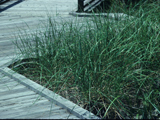
Ammophila breviligulata (American beach grass)
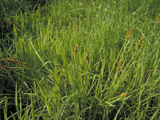
Carex stipata (Owlfruit sedge)
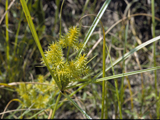
Cyperus odoratus (Fragrant flatsedge)
Elymus hystrix var. hystrix (Eastern bottlebrush grass)
Elymus virginicus (Virginia wildrye)
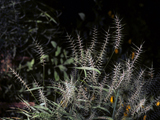
Hordeum jubatum (Foxtail barley)
Shrubs:
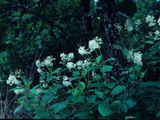
Andromeda polifolia (Bog rosemary)
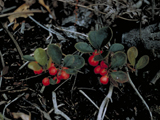
Arctostaphylos uva-ursi (Kinnikinnick)
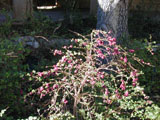
Ceanothus americanus (New jersey tea)
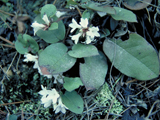
Epigaea repens (Trailing arbutus)
From the Image Gallery
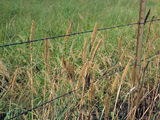
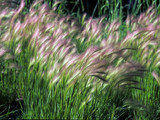
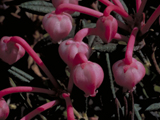
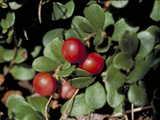
More Groundcovers Questions
Silver ponyfoot becoming invasive in College Station TX
May 08, 2013 - How can I control or get rid of an established Dichondra groundcover? I bought a few plants of D. argentea from your sale a few years ago, and in that time they've done really well in the area I plan...
view the full question and answer
Groundcover for Maryland to replace English ivy
September 21, 2009 - What is a suitable ground cover native replacement for english ivy? Native to Maryland.
view the full question and answer
Salt-tolerant groundcover for shade with no water supply
September 11, 2013 - We have a home in Neptune Beach (Jacksonville) Florida (NE Florida).
We have a large area outside our ground floor master bedroom that is completely covered (there is a large solid deck above it). ...
view the full question and answer
Low maintenance plants for crack in concrete
July 01, 2008 - Dear Mr. Smarty Plants,
I would like to grow some very low maintenance weeds, mosses and flowers out of a crack in a slab of concrete. Can you recommend any species that would do well in this sort...
view the full question and answer
Groundcover for Shade in Spicewood
September 16, 2015 - We live in Spicewood area in Austin, TX. Our front yard is yellow almost all summer, I was thinking of replacing lawn with a ground cover which can live on once a week sprinkler and no mowing. Also th...
view the full question and answer
| Support the Wildflower Center by Donating Online or Becoming a Member today. |