Native Plants

Q. Who is Mr. Smarty Plants?
A: There are those who suspect Wildflower Center volunteers are the culpable and capable culprits. Yet, others think staff members play some, albeit small, role. You can torture us with your plant questions, but we will never reveal the Green Guru's secret identity.

Did you know you can access the Native Plant Information Network with your web-enabled smartphone?

Ask Mr. Smarty Plants
Ask Mr. Smarty Plants is a free service provided by the staff and volunteers at the Lady Bird Johnson Wildflower Center.

rate this answer

Friday - April 19, 2013
From: St. Martinville, LA
Region: Southeast
Topic: Plant Lists, Privacy Screening, Shrubs, Trees
Title: Privacy Screen for Heavy Clay and Full Sun in Louisiana
Answered by: Anne Van Nest
QUESTION:
What would be a fast-growing plant for privacy in Louisiana? I have heavy clay and full sun.ANSWER:
The first place to go to find a list of potential plants is our Native Plant Database. Use the Combination Search feature instead of Recommended Species. This will provide a bigger selection with much more choice to narrow down. The volunteers and staff at the Wildflower Center who maintain the database have partners in different regions to help with these recommended species lists based on what is easy to access in local nurseries.
Under Combination Search, select the following categories: Louisiana, Habit – Shrub then search again for Tree, Duration – Perennial, Light Requirement – Sun, Leaf Retention - evergreen. This will give you 12 plants to consider after some plants were ruled out because they didn't like heavy clay. Next you can narrow down your search further by size, flower color, and soil moisture (dry, moist or wet) requirements. Once you have your list of a few possibilities, then consider their rate of growth and see if they meet your requirements.
Shrubs to consider:
Ilex vomitoria (yaupon)
Lycium carolinianum (Carolina wolfberry)
Morella caroliniensis (Southern bayberry)
Morella cerifera (wax myrtle)
Trees to consider:
Ilex opaca (American holly)
Juniperus virginiana (Eastern red cedar)
Maclura pomifera (osage orange)
Pinus palustris (longleaf pine)
Prunus angustifolia (chickasaw plum)
Prunus carolianiana (cherry laurel)
Quercus virginiana (coastal live oak)
Sideroxylon lanuginosum ssp. rigidum (brazos bumelia)
From the Image Gallery
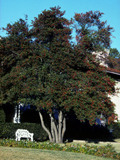
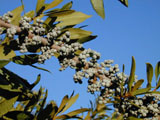
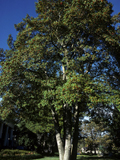

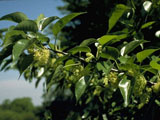
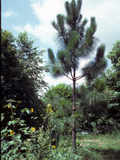
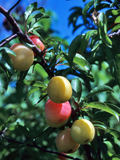
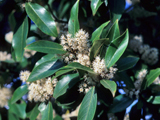
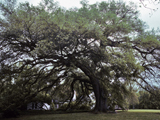
More Shrubs Questions
Foundation plants for Albuquerque.
July 01, 2012 - Hello,
I live in Albuquerque. I am looking for some native/xeric low water usage plants for foundation plants for my home.
They will be foundation plants for a two story home that has a large ponde...
view the full question and answer
Tree for on top of sewer lines from San Antonio
March 16, 2013 - I am looking for an evergreen small tree with taproot to plant in a very small front yard near the sidewalk and possibly on top of or nearly on top of sewer lines. Would a Mt. Laurel be the choice? ...
view the full question and answer
What gives the Creosote bush its characteristic smell?
August 09, 2011 - Good evening, Mr. Smarty Plants,
There is a question which I would please like to ask regarding a plant called "Creosote Bush" (Larrea tridentata)- does it actually smell like the creosote...
view the full question and answer
Flowering Shrub for Houston, TX
April 24, 2014 - I live in Houston, Texas and would like to plant a flowering shrub 3-6 feet in height. It will get sun to part sun, 2-6 hours daily. I have had azaleas in this area and am now looking for something to...
view the full question and answer
Fast Growing Shrub for Oceanside New York Site
April 17, 2015 - Can you recommend a tall, fast-growing shrub for a sandy location (near an ocean beach in New York) in full sun? I’m looking for a privacy shield.
view the full question and answer
| Support the Wildflower Center by Donating Online or Becoming a Member today. |