Native Plants

Q. Who is Mr. Smarty Plants?
A: There are those who suspect Wildflower Center volunteers are the culpable and capable culprits. Yet, others think staff members play some, albeit small, role. You can torture us with your plant questions, but we will never reveal the Green Guru's secret identity.

Did you know you can access the Native Plant Information Network with your web-enabled smartphone?

Ask Mr. Smarty Plants
Ask Mr. Smarty Plants is a free service provided by the staff and volunteers at the Lady Bird Johnson Wildflower Center.

rate this answer

Wednesday - April 10, 2013
From: Lancaster, PA
Region: Mid-Atlantic
Topic: Container Gardens, Ferns
Title: Yellowing fern houseplants from Lancaster PA
Answered by: Barbara Medford
QUESTION:
I have fern houseplants about 9 to 12 months old and they are turning yellow. I don't overwater and they get good light. They are growing well but I don't understand the yellowing and falling off! Hmmmm??? Do you have any answers?ANSWER:
Mr. Smarty Plants is not too smart about house plants, because they tend to be non-natives that can withstand the stresses of living indoors. There are some ferns native to North America, which is where our interests lie, but not many. First, we suggest you read our How-to Article on Container Gardening with Native Plants. Even these are generally meant to be grown outside in the climate, soils and rainfall usual to which the plants are native. So, let us point you at some websites that can better address your situation:
University of Vermont Extension: Growing Ferns Successfully Indoors
Guide to Houseplants: Types of Ferns to Grow Indoors
University of Rhode Island Indoor Ferns
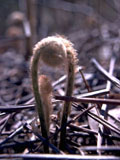
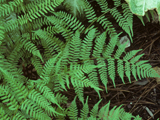
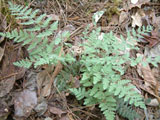
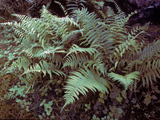
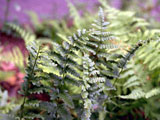
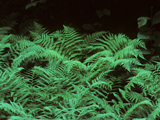
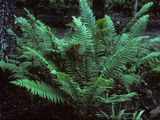
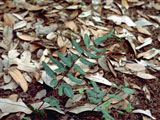
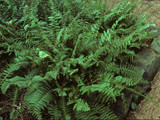
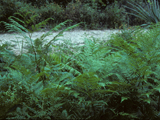
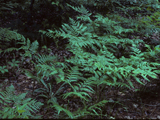
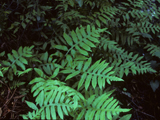
Turns out there are actually 66 ferns native to Pennsylvania, so we chose some for you to look at, in the interest of preserving our advocacy for native plants. You will note from the pictures that they are all shown growing in their natural state outside, so we don't know how any of them would do as indoor plants.
Asplenium resiliens (Blackstem spleenwort)
Athyrium filix-femina (Common ladyfern)
Chaptalia tomentosa (Woolly sunbonnets)
Diplazium pycnocarpon (Glade fern)
Dryopteris cristata (Crested woodfern)
Dryopteris marginalis (Marginal woodfern)
Osmunda cinnamomea (Cinnamon fern)
Pellaea atropurpurea (Purple cliffbrake)
Polystichum acrostichoides (Christmas fern)
Pteridium aquilinum (Western bracken fern)
From the Image Gallery
More Container Gardens Questions
Hanging container for west-facing house in Austin TX
March 03, 2014 - I'd like to put a hanging container in front of my house. The front of my house faces west and gets very hot in the summer time, with full sun in the afternoon/evening. What native Texan plants could...
view the full question and answer
Indoor pot plants
November 20, 2007 - I just moved into a studio apt. where a lot of heat is provided. Do you have a listing of house plants suitable for warm apartments? I have four windows, all with indirect sunlight.
view the full question and answer
Leaves dropping from a potted Mesquite
August 11, 2014 - I have a Prosopis pubescens (Screwbean Mesquite) that I purchased at a nursery in Alpine, TX just a few miles away from me. It was a in nursery style black plastic container. The mesquite is perhaps a...
view the full question and answer
Container gardening for pool in southern California
October 08, 2008 - I have large planters around pool would like to know what plants to use that will not grow to high or to big and will not have large roots home located in camarillo ca.
view the full question and answer
Growing bluebonnets in pot in Flower Mound TX
November 01, 2011 - We received a package of bluebonnet seeds along with the DVD Wildflowers: Seeds of History as a gift. In the film, Andrea DeLong mentions that bluebonnets did not grow well in a rich organic soil. W...
view the full question and answer
| Support the Wildflower Center by Donating Online or Becoming a Member today. |