Native Plants

Q. Who is Mr. Smarty Plants?
A: There are those who suspect Wildflower Center volunteers are the culpable and capable culprits. Yet, others think staff members play some, albeit small, role. You can torture us with your plant questions, but we will never reveal the Green Guru's secret identity.

Did you know you can access the Native Plant Information Network with your web-enabled smartphone?

Ask Mr. Smarty Plants
Ask Mr. Smarty Plants is a free service provided by the staff and volunteers at the Lady Bird Johnson Wildflower Center.

rate this answer

Tuesday - March 26, 2013
From: Cambridge, MD
Region: Mid-Atlantic
Topic: Problem Plants, Shade Tolerant, Ferns, Grasses or Grass-like, Herbs/Forbs
Title: Plants to grow in shady area near a pecan tree in Maryland
Answered by: Nan Hampton
QUESTION:
I live on the Eastern Shore of Maryland. I have planted only natives in my front lawn. My backyard, which sports a pecan tree, fir, fig tree, and others I can't identify is dirt, just dirt. I have tried local grass seeds. Nothing takes. Do you have any suggestions?ANSWER:
I think your problem is twofold: 1) shade and, perhaps, 2) the allelopathic effect of the juglone in the pecan tree. Juglones are chemicals produced by trees in the Family Juglandaceae (Walnut Family) that are capable of inhibiting the growth of some, but not all, other plants. You can see lists of plants susceptible to juglones and those tolerant of juglones from Ohio State University. (Be aware that not all the plants on their list are native to Maryland or even to North America.) It appears that the level of juglone in Carya illinoinensis (pecan) is less than in walnuts. Grasses, in general, seem to be tolerant of juglones. In fact, there have been studies showing that bermudagrass and tall fescue are allelopathic to pecan seedlings!
Here are three grasses and a sedge that occur in Maryland and will grow in the shade or part shade. I have personal experience with inland sea oats growing quite happily under my walnut tree in Texas and suspect the other three species will also be tolerant of your pecan's juglones.
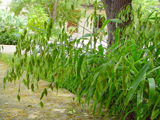
Chasmanthium latifolium (Inland sea oats)
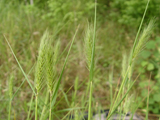
Elymus canadensis (Canada wildrye)
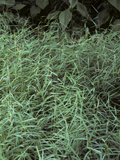
Muhlenbergia schreberi (nimblewill)
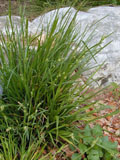
Carex blanda (eastern woodland sedge)
Here are a few herbs and a fern from the Ohio State University list that are native to Maryland and will grow in the shade or part shade:
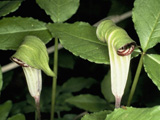
Arisaema triphyllum (Jack in the pulpit)
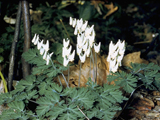
Dicentra cucullaria (Dutchman's breeches)
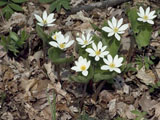
Sanguinaria canadensis (Bloodroot)
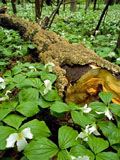
Trillium species such as Trillium grandiflorum (Large-flower wakerobin)
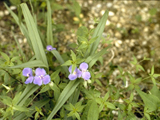
Tradescantia virginiana (Virginia spiderwort)
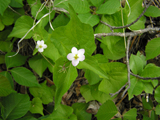
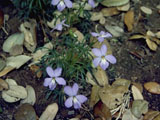
Viola canadensis (Canadian white violet) and Viola pedata (Birdfoot violet) and other violets
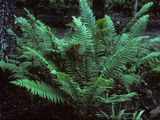
Osmunda cinnamomea (Cinnamon fern)
For all the species named above, you should check the other characteristics shown under GROWING CONDITIONS on the species page to determine if they match those of your site.
From the Image Gallery
More Ferns Questions
Container plants for Arlington TX
February 10, 2012 - Mr. Smarty Plants, I just moved to Arlington, TX. I am trying to create a container garden on my apartment balcony. What flowers, herbs, vegetables, and fruit combinations can I put together that wil...
view the full question and answer
Plants for a moist, wooded area in North Carolina
December 06, 2014 - I am looking to plant some native flowers in a wooded area in Surry County NC. The chosen location is fully shaded beside a creek. The water table typically sets about 2 feet below the surface of th...
view the full question and answer
Smoky Mountains Shaded Slope Plant Suggestions
April 29, 2013 - We live in a very shady spot in Great Smoky Mountains in Western North Carolina. We would like to plant vegetation on a sloped area behind our cottage to stop erosion after building an addition. Our h...
view the full question and answer
Chemical Weed Control in Lady Ferns in North Carolina
August 12, 2014 - Lady Fern (Athyrium filix femina): What herbicide may I use for weeds in a new bed of Lady fern.
view the full question and answer
Environmental factors that affect lifecycle stages of maidenhair fern.
November 07, 2014 - What are the environmental factors that can affect the lifecycle stages of a maidenhair fern, particularly A. trichorleopis?
Thank you
view the full question and answer
| Support the Wildflower Center by Donating Online or Becoming a Member today. |